
Pest Control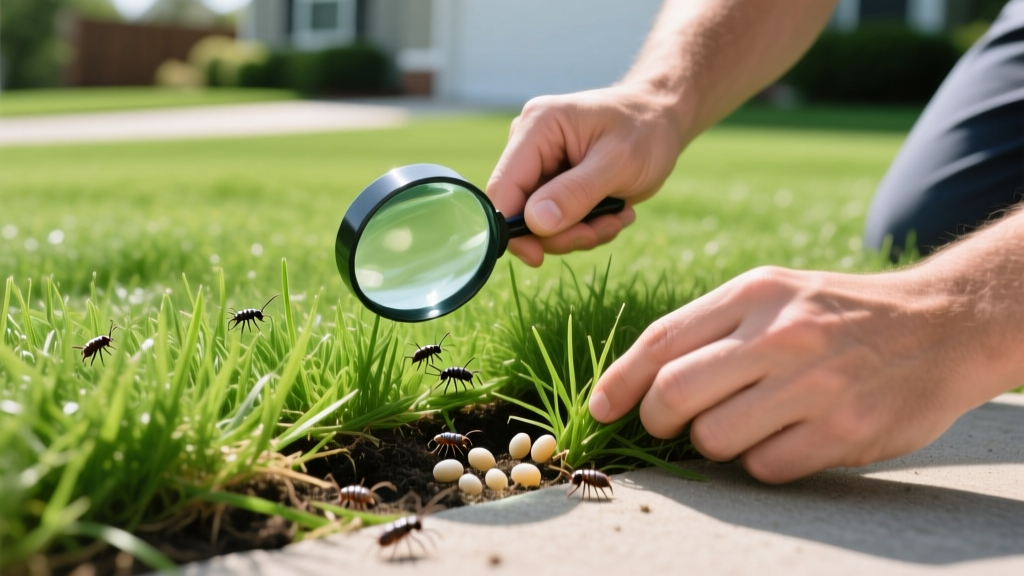
How to Know If You Have Fleas in Your Yard: 4 Detection Tests
The Hidden Threat of Outdoor Flea Incubators
Most homeowners only realize they have a flea problem when their pets begin scratching incessantly or they wake up with clustered, red bites on their ankles. By that point, the infestation has already breached the house. The yard is the primary incubator for Ctenocephalides felis (the cat flea), which accounts for over 95% of residential flea issues in North America. Because adult fleas represent only about 5% of the total population at any given time, relying on visual confirmation of jumping insects is a flawed diagnostic strategy. To effectively manage your landscape, you must learn how to know if you have fleas in your yard before they reach the adult stage and migrate indoors.
Detecting yard fleas requires targeted environmental testing. Below are four field-tested diagnostic methods used by pest management professionals to map microclimates, confirm life stages, and dictate precise treatment protocols.
1. The White Sock Test: Your Primary Diagnostic Tool
The white sock test leverages a flea’s biological host-seeking mechanisms. Fleas detect hosts through body heat, carbon dioxide emissions, and physical vibrations. A bright white background provides immediate visual contrast for dark-colored adults.
Execution Protocol
- Pull on a pair of knee-high, 100% white cotton tube socks. Avoid synthetic blends, as cotton retains heat and moisture more effectively, mimicking mammalian skin.
- Walk slowly through your yard, focusing on shaded zones, perimeter fences, and areas where pets frequently rest or sleep.
- Drag your feet slightly to create low-frequency vibrations and kick up leaf litter.
- Pause every 10 feet for 15 seconds. Fleas require a moment to orient themselves toward the vibration source before jumping.
- Inspect the socks from the ankle to the calf. You are looking for tiny, dark, oval-shaped specks (1.5 to 3.3 millimeters) that rapidly crawl or jump off the fabric.
Field Note: If you conduct this test between 10:00 AM and 2:00 PM during peak summer heat, you may yield false negatives. Fleas retreat to the soil base to avoid desiccation when surface temperatures exceed 95°F. Perform the sock test during early morning or dusk when humidity is higher and surface temperatures drop below 85°F.
2. The Wet Paper Towel Test: Identifying Flea Dirt
Flea feces, commonly known as "flea dirt," is essentially digested host blood. It accumulates in the environments where adult fleas feed and where larvae subsequently hatch and consume it. In the yard, it looks identical to fine topsoil or debris, making visual identification unreliable without a chemical confirmation test.
Conducting the Smear Analysis
Scrape suspected dark specks from your pet’s outdoor bedding, the base of your porch, or shaded grass patches onto a wet white paper towel. Press down gently with your thumb.
| Material Tested | Reaction to Water | Diagnostic Conclusion |
|---|---|---|
| Flea Dirt | Dissolves and smears reddish-brown or rust-colored | Positive for active flea feeding in the immediate area |
| Regular Soil/Sand | Turns muddy brown, gray, or yellow; no red tint | Negative for flea activity; standard environmental debris |
| Soot/Ash | Smears black or dark gray | Negative; likely from fire pits or landscaping materials |
According to Texas A&M AgriLife Extension, the presence of flea dirt in outdoor resting zones confirms that adult fleas are actively feeding in that specific microclimate, even if you cannot see the insects themselves.
3. Visual Confirmation: Spotting the Adults and Larvae
If the sock test yields jumping insects, you need to confirm the species to ensure you are not dealing with springtails or ground beetles, which are harmless nuisance pests. Adult cat fleas are laterally flattened (side-to-side), allowing them to navigate through animal hair and dense grass blades. They lack wings and possess heavily spined hind legs adapted for jumping up to 150 times their body length.
Flea larvae, however, look entirely different. They are 2 to 5 millimeters long, legless, translucent-white with dark brown head capsules, and covered in sparse bristles. You will rarely see them in open grass. To find larvae, use a trowel to gently turn over the top half-inch of soil in heavily shaded, high-humidity areas beneath decks or shrubbery. If you see tiny, worm-like creatures writhing away from the light, you have a confirmed breeding ground.
4. Mapping Environmental Triggers: High-Risk Microclimates
Fleas cannot survive in direct, scorching sunlight. UV radiation and low humidity rapidly desiccate their eggs and larvae. Therefore, knowing how to detect fleas requires understanding landscape architecture. You can map your yard's risk profile by identifying these specific microclimates:
- The Canopy Drip Line: The area directly beneath the outer branches of trees and large shrubs where moisture drips and shade is constant.
- Crawl Space Vents and Deck Undersides: These areas trap humidity and provide shelter from wind, creating ideal pupation zones.
- Pet Transit Corridors: The narrow strips of grass or dirt along fences where dogs run daily, shedding eggs from their coats.
- Leaf Litter Accumulations: Unturned compost piles or neglected garden beds that retain moisture and organic matter for larvae to consume.
The 5% Rule: Why Detection Dictates Your Treatment Strategy
Detecting adult fleas via the sock test is only the first step. Because adults make up just 5% of the population (with 50% eggs, 35% larvae, and 10% pupae), spraying a standard contact insecticide will only provide temporary relief. The pupal stage is encased in a sticky, debris-covered cocoon that is highly resistant to chemical penetration.
Professional Treatment Framework: To break the life cycle, your yard treatment must combine an adulticide with an Insect Growth Regulator (IGR). A standard DIY protocol involves mixing a bifenthrin-based product (like Bifen IT 7.9%) with a pyriproxyfen-based IGR (like NyGuard). The bifenthrin kills the active adults on contact, while the pyriproxyfen mimics juvenile hormones, preventing eggs and larvae from molting into reproductive adults. Expect to spend roughly $45 to $60 on a concentrate kit sufficient for a 5,000-square-foot yard.
Organic and Biological Alternatives
For homeowners avoiding synthetic pyrethroids near koi ponds or pollinator gardens, biological control is highly effective if applied correctly. Beneficial nematodes, specifically the Steinernema carpocapsae species, actively hunt and destroy flea larvae in the soil. A application of 10 million nematodes (costing approximately $35) covers about 3,000 square feet. The Centers for Disease Control and Prevention (CDC) notes that maintaining yard sanitation, such as removing leaf litter and keeping grass mowed to a height of 2.5 inches to allow sunlight penetration, naturally suppresses flea populations by destroying their required humid microhabitats.
Frequently Asked Questions
Can fleas survive in artificial turf?
While artificial turf lacks the organic soil and debris that larvae need to feed, adult fleas can still temporarily harbor in the infill material (like crumb rubber or silica sand) if pets constantly introduce them. However, artificial turf rarely sustains a full breeding cycle unless it is heavily shaded and perpetually damp from poor drainage.
How long does it take for the white sock test to show results?
If an active infestation is present, fleas will typically jump onto the socks within 10 to 30 seconds of you entering their territory and generating vibrations. If you walk the yard for 10 minutes and see nothing, the adult population is either negligible, dormant in the pupal stage, or confined to a different microclimate you haven't tested yet.
Does watering the lawn kill fleas?
Standard lawn irrigation does not drown fleas; in fact, overwatering creates the high-humidity environment larvae require to thrive. However, lightly watering the yard before applying a chemical treatment forces the fleas closer to the surface and opens the soil pores, allowing the insecticide to penetrate the thatch layer more effectively.

