
Pest Control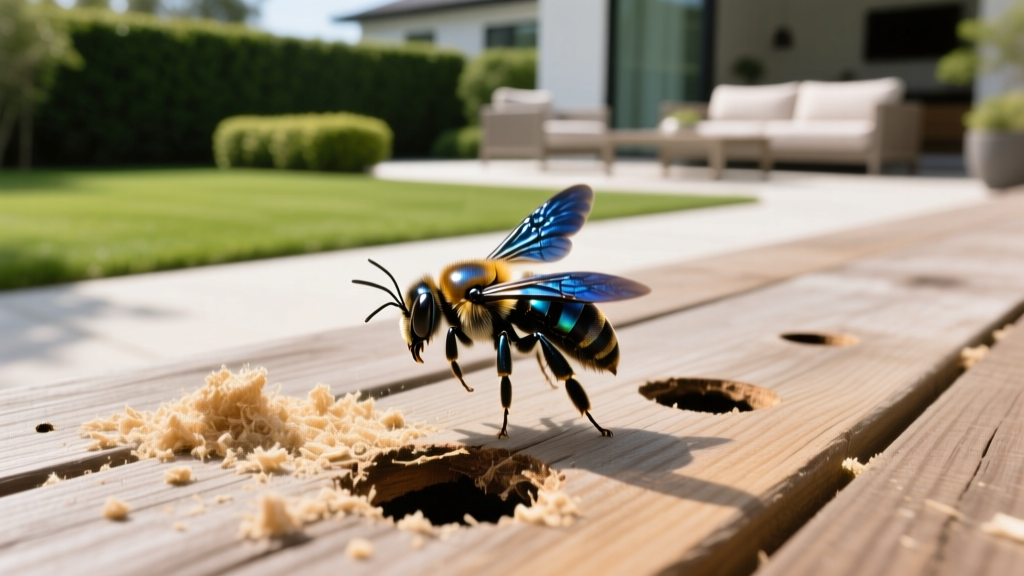
How to Deter Carpenter Bees From Wooden Decks and Fences
The True Cost of Carpenter Bee Damage
Carpenter bees (Xylocopa virginica) are large, solitary insects that excavate perfectly round, half-inch diameter tunnels into untreated wood to lay their eggs. While a single tunnel seems harmless, these bees reuse and expand the same galleries year after year. Over a few seasons, a single network of tunnels can extend up to 10 feet deep into a structural beam, compromising the integrity of your deck, fascia boards, and fencing.
Furthermore, carpenter bee activity triggers a secondary, often more destructive pest problem: woodpeckers. According to University of Florida IFAS, woodpeckers can hear the larvae chewing inside the wood and will aggressively peck through the surface to reach them, causing massive splintering and structural tearing. Learning how to deter carpenter bees is not just about protecting the wood; it is about breaking the ecological chain that invites wood-boring and wood-pecking pests to your yard.
⚠️ Behavioral Warning: Male carpenter bees are highly territorial and will aggressively dive-bomb humans and pets near their nests. However, males lack stingers and are physically harmless. Only females possess stingers, but they are generally docile unless directly handled or trapped inside their tunnel. Wear protective eyewear and long sleeves when treating active nests to prevent accidental stings from defensive females.
Why Carpenter Bees Target Specific Yard Structures
Carpenter bees do not eat wood; they merely excavate it. They show a strong preference for untreated, unpainted, and weathered softwoods. If your yard features the following materials, it is at high risk:
- Cedar and Redwood: Highly preferred due to their soft grain and lack of chemical pressure treatment.
- Pine and Cypress: Commonly used for fencing and fascia boards; highly susceptible when left unstained.
- Weathered Hardwoods: While they prefer softwoods, they will attack oak or ash if the wood has been severely weathered and the protective outer layer has degraded.
Bees typically initiate tunnels on the underside of horizontal surfaces or in sheltered vertical joints where rain cannot easily wash away their pheromones. According to Penn State Extension, the initial entry hole is almost always perfectly circular and measures exactly 1/2 inch in diameter, followed by a sharp 90-degree turn into the grain of the wood.
Chemical and Physical Deterrents Compared
Choosing the right deterrent depends on whether you are protecting new wood (preventative) or treating an active infestation (curative). The table below breaks down the most effective options available in 2026, including their active ingredients and realistic cost expectations.
| Deterrent Type | Active Ingredient / Material | Avg. Cost | Efficacy | Longevity |
|---|---|---|---|---|
| Borate Wood Preservative | Disodium octaborate tetrahydrate | $45 / gallon | 95% | 5+ years |
| Insecticidal Dust | Deltamethrin (e.g., DeltaDust) | $25 / 8 oz | 90% | 6-8 months |
| Exterior Polyurethane | Aliphatic polyurethane resin | $30 / quart | 85% | 2-3 years |
| Exterior Latex Paint | Acrylic polymer emulsion | $35 / gallon | 95% | 5-7 years |
| Almond Oil (Natural) | Bitter almond essential oil | $15 / 16 oz | 30% | 1-2 weeks |
Expert Insight: Transparent wood stains offer almost zero protection against carpenter bees. The bees can easily chew through the thin pigment layer. If you want to maintain the natural look of cedar or redwood, you must apply a borate-based preservative (like Bora-Care) before sealing it with a high-build, exterior-grade polyurethane topcoat.
Step-by-Step Guide to Treating Active Tunnels
If you already see perfectly round holes with coarse, sawdust-like frass piled beneath them, you have an active infestation. Spraying liquid insecticides into the holes is largely ineffective because the liquid pools at the bottom of the tunnel and fails to coat the upper galleries. Instead, use a desiccant or micro-encapsulated dust.
Step 1: Inspect at Dusk
Carpenter bees forage during the day and return to their galleries at night. Inspect your deck and fence lines between 8:00 PM and 10:00 PM using a red-lens flashlight (bees are less sensitive to red light). Mark active holes with a piece of painter's tape so you can locate them easily the next day.
Step 2: Apply Insecticidal Dust
Use a bellows hand duster (such as the JT Eaton Bellow Duster, approximately $15) filled with a waterproof insecticidal dust like DeltaDust (deltamethrin) or Drione Dust (silica gel + pyrethrin). Insert the duster tip about one inch into the hole and puff two to three times. The goal is to leave a light coating of dust on the tunnel walls. When the bee enters, the dust clings to its legs and body, eventually dehydrating or poisoning it deep inside the nest.
Step 3: Wait 48 to 72 Hours
Do not plug the hole immediately. Leaving the hole open allows returning bees to enter, track the dust deeper into the gallery, and expose the larvae. Plugging it too early traps the bees inside, where they will simply chew a new exit hole through the wood, causing more damage.
Step 4: Plug and Seal the Gallery
After 72 hours of no observed activity, it is time to seal the tunnel to prevent future bees from reusing the gallery (carpenter bees strongly prefer existing holes over excavating new ones).
- For standard 1/2-inch holes: Coat a 1/2-inch wooden dowel rod in exterior-grade wood glue and tap it into the hole with a mallet. Snap off the excess and sand it flush.
- For irregular or enlarged holes: Stuff the cavity with copper mesh wire (like Stuf-Fit, commonly used for rodent control), then cap it with an exterior, paintable acrylic wood filler.
Long-Term Yard Maintenance and Prevention
Once active tunnels are treated and plugged, shift your focus to making the yard inhospitable to scouting females in the spring.
💡 Pro Tip: The Paint vs. Stain Rule
If your fascia boards or deck railings are repeatedly targeted, you must switch from stain to paint. A thick coat of exterior latex paint creates a physical barrier that carpenter bees find nearly impossible to chew through. If painting is not an option, apply a residual borate spray in early March before the spring mating flight begins.
If your fascia boards or deck railings are repeatedly targeted, you must switch from stain to paint. A thick coat of exterior latex paint creates a physical barrier that carpenter bees find nearly impossible to chew through. If painting is not an option, apply a residual borate spray in early March before the spring mating flight begins.
Deploying Decoy Traps
Carpenter bee traps (wooden boxes with angled entry holes leading to a plastic bottle) can reduce local populations. Hang these traps at the corners of your deck or the peaks of your fence lines in early April. The bees are attracted to the pre-drilled holes, enter the bottle, and cannot escape. While traps will not eliminate an established infestation, they are highly effective at catching scouting queens looking for new nesting sites.
Managing the Woodpecker Connection
If you notice woodpecker damage on your fence or eaves, treat the area for carpenter bees immediately. Once the larvae are eliminated and the holes are plugged with hard wooden dowels and wood filler, the woodpeckers will lose their food source and move on. Hanging reflective tape or predator decoys (like plastic owls) provides only temporary relief; removing the bee larvae is the only permanent fix for woodpecker damage.
Frequently Asked Questions
Do carpenter bees cause structural damage to homes?
Individually, a single tunnel removes less than an ounce of wood. However, because multiple generations reuse and branch out from the same entry point, a multi-year infestation can hollow out a 4x4 fence post or a deck joist, leading to moisture intrusion, wood rot, and eventual structural failure.
Can I use almond oil or citrus sprays to deter them?
Natural essential oils like bitter almond or citrus can act as mild repellents, but their efficacy is low (around 30%) and they volatilize rapidly in outdoor conditions. To maintain any deterrent effect, you must reapply these oils every 7 to 14 days throughout the spring and summer. For reliable protection, borate treatments and physical sealants are vastly superior.
What time of year are carpenter bees most active?
The primary mating and nesting flight occurs in mid-to-late spring (April through May in most of the US). A secondary, smaller emergence often happens in late summer (August to September) when the new generation of adults emerges from their tunnels to feed on nectar before overwintering inside the wood. Preventative treatments should be applied in early March.

