
Pest Control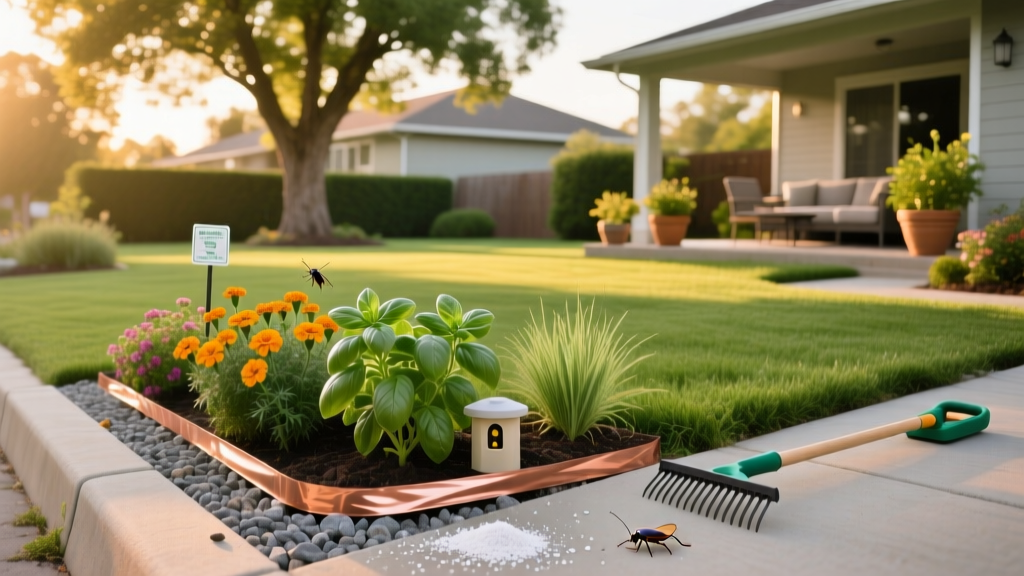
How to Deter Cockroaches: Yard Defense and Perimeter Control
Most homeowners treat cockroach infestations only after the insects have breached the interior. However, peridomestic cockroaches—species that thrive outdoors but migrate inside for shelter and food—breed in the yard, garden beds, and perimeter mulch. To effectively manage these pests, you must establish a robust exterior defense. Learning how to deter cockroaches from your yard requires a multi-layered approach combining habitat modification, strategic chemical barriers, and physical exclusion.
The Outdoor Roach Threat: Identifying Peridomestic Species
Not all cockroaches are indoor dwellers. The German cockroach (Blattella germanica) is strictly an indoor pest, but the larger species invading your home usually originate in the landscape. Identifying the specific peridomestic species in your yard dictates your treatment strategy.
| Species | Scientific Name | Primary Outdoor Habitat | Key Identifying Traits |
|---|---|---|---|
| American Cockroach | Periplaneta americana | Sewers, palm trees, moist woodpiles, irrigation valve boxes | Reddish-brown, 1.5 to 2 inches, pale yellow margin on pronotum |
| Smokybrown Cockroach | Periplaneta fuliginosa | Tree holes, roof shingles, dense ivy, gutters | Uniform mahogany/dark brown, 1.25 to 1.5 inches, strong fliers |
| Oriental Cockroach | Blatta orientalis | Crawlspaces, thick leaf litter, damp soil, foundation edges | Glossy black/dark brown, 1 inch, cannot fly, prefers cooler temps |
According to University of Kentucky Entomology, peridomestic roaches are highly dependent on moisture. If your yard retains excessive water or features deep, damp organic matter, it serves as an ideal breeding ground.
Habitat Modification: Starving and Dehydrating the Perimeter
Chemical treatments will fail if the yard provides unlimited harborage and moisture. You must alter the microclimate around your foundation to make it hostile to cockroaches.
Mulch and Debris Management
Hardwood and pine bark mulches retain moisture and provide excellent shelter for Oriental and Smokybrown cockroaches. To mitigate this:
- Create a Dry Zone: Maintain a 12-to-18-inch mulch-free perimeter directly against the foundation. Use inorganic materials like crushed gravel or river rock in this zone.
- Limit Mulch Depth: Keep landscape bed mulch no deeper than 2 inches. Thicker layers trap ground moisture and create a stable humidity pocket.
- Switch Mulch Types: Replace decaying hardwood with cedar or cypress mulch, which contain natural oils (thujone) that mildly repel insects, or use rubber mulch in high-risk areas.
Moisture and Irrigation Control
Cockroaches can survive a month without food but only a week without water. Audit your yard for hidden moisture sources:
- Gutter Maintenance: Clogged gutters overflow, saturating the soil directly against the foundation. Install stainless steel micro-mesh gutter guards (like LeafFilter or Gutterglove) to prevent organic buildup.
- Grading and French Drains: Ensure the soil slopes away from the house at a minimum grade of 6 inches over the first 10 feet. If water pools near the foundation, install a French drain to redirect it.
- Irrigation Audits: Adjust sprinkler heads so they do not spray directly onto the house siding or foundation. Fix leaking hose bibs and irrigation valve boxes immediately.
Chemical and Organic Barrier Treatments
Once the habitat is modified, apply targeted treatments to eliminate existing populations and prevent new migrations. The EPA recommends using integrated pest management (IPM) strategies, prioritizing baits and targeted residuals over broad-spectrum broadcast sprays.
Pro Tip: Non-Repellents vs. Repellents
Avoid using highly repellent pyrethroids (like bifenthrin) for perimeter roach control. Repellents agitate the insects, often driving them inside your home to escape the treated zone. Instead, use non-repellent termiticides/insecticides or specific micro-encapsulated residuals that allow the roach to cross the barrier, pick up a lethal dose, and die before entering the structure.
Top Perimeter Treatment Options
1. Alpine WSG (Dinotefuran) - Non-Repellent Residual
Alpine WSG is a water-soluble granule that provides a non-repellent barrier. Roaches walk over the treated surface, ingest the active ingredient while grooming, and can transfer it to others in the harborage.
- Cost: $45 - $55 per box (contains five 10g packets).
- Mix Rate: Dissolve one 10g packet per gallon of water.
- Application: Spray a 3-foot wide band on the soil and a 2-foot high band on the foundation. Yields up to 50 gallons per box.
2. Maxforce FC Select Granular Bait
For outdoor crevices, rock walls, and planter beds where liquids are impractical, granular baits are highly effective. The fipronil active ingredient utilizes the domino effect, killing roaches that consume the feces and carcasses of poisoned individuals.
- Cost: $35 - $45 per 8 oz shaker.
- Application: Broadcast lightly into mulch beds, rock gardens, and around tree bases. Reapply every 30 days or after heavy rainfall.
3. Gentrol IGR (Hydroprene) - Population Control
Insect Growth Regulators do not kill adult roaches; they mimic juvenile hormones, causing nymphs to develop into deformed, sterile adults. Mixing Gentrol IGR with your liquid residual breaks the breeding cycle in the yard.
- Cost: $70 - $85 for a 1 oz concentrate bottle or $25 for a box of Gentrol Point Source discs.
- Mix Rate: 1 oz per gallon of water when tank-mixed with Alpine WSG or Tempo SC Ultra.
Strategic Exclusion: Sealing the Fortress
Even with a pristine yard and chemical barriers, physical vulnerabilities will allow roaches inside. Peridomestic species exploit structural gaps to escape extreme heat or heavy rain.
Weep Holes and Vents
Brick veneer homes feature weep holes at the base of the exterior wall to allow trapped moisture to escape. These are direct highways for Smokybrown and American cockroaches. Never seal weep holes with solid caulk or mortar. Instead, stuff them with Stuf-Fit copper mesh or Xcluder fabric. Copper mesh allows air and water to pass through while creating an impenetrable, rust-proof physical barrier that roaches cannot chew through or bypass.
Door Sweeps and Utility Penetrations
- Garage Doors: Install a heavy-duty rubber bottom seal with a T-track. Ensure the seal compresses tightly against the concrete driveway. American roaches frequently hide in garage corners and slip under poorly sealed garage doors.
- Pipe Penetrations: Where HVAC lines, plumbing, and gas lines enter the exterior walls, the gap is often filled with expanding foam. Foam degrades in UV light and roaches can chew through it. Scrape out degraded foam, pack the void tightly with copper mesh, and seal the exterior with a high-quality, UV-resistant silicone or polyurethane sealant (like OSI Quad Max).
Seasonal Yard Defense Calendar
Cockroach activity fluctuates with the seasons. Align your yard defense tasks with their biological triggers to maximize efficacy.
Spring (March - May)
Focus: Habitat modification and early barrier application.
As soil temperatures rise above 60°F, nymphs become active. Rake out winter leaf litter, clear gutters, and apply your first perimeter liquid residual (Alpine WSG + Gentrol IGR) before the spring breeding peak.
Summer (June - August)
Focus: Moisture management and baiting.
Extreme heat and dry spells force roaches to seek water near foundations. Audit irrigation systems for leaks. Refresh granular baits in mulch beds, as summer humidity and frequent watering degrade bait matrixes faster.
Fall (September - November)
Focus: Exclusion and debris removal.
As temperatures drop, Oriental and American roaches aggressively seek overwintering sites indoors. Rake fallen leaves away from the foundation immediately. Inspect and replace damaged weatherstripping, door sweeps, and weep hole mesh.
By shifting your focus from interior extermination to proactive exterior defense, you stop peridomestic cockroaches at the source. Consistent habitat modification, paired with non-repellent chemical barriers and rigorous physical exclusion, creates a hostile environment that forces these pests to bypass your property entirely.

