
Pest Control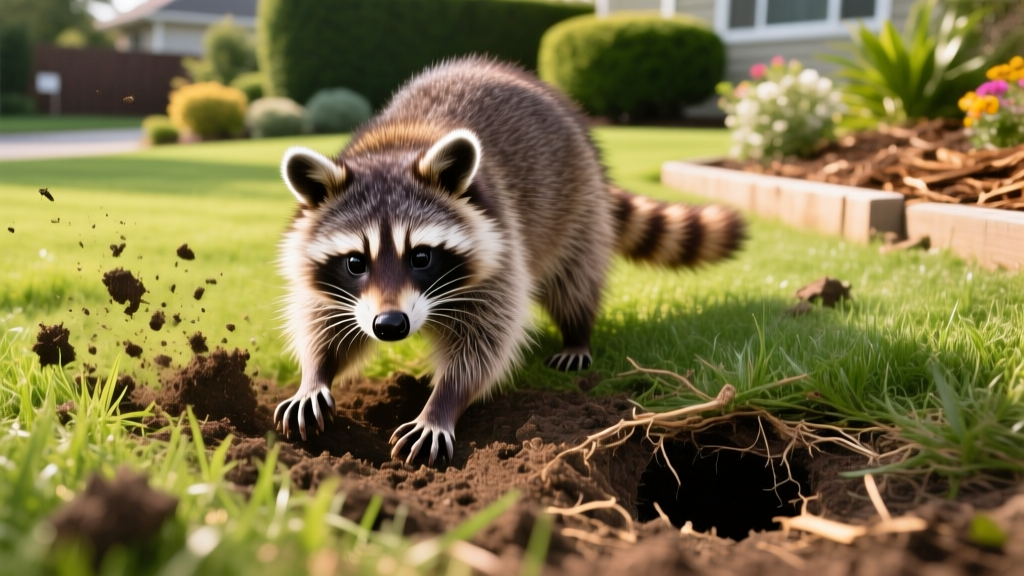
How to Deter Raccoons From Digging Up Your Lawn and Garden
Raccoons (Procyon lotor) possess highly dexterous front paws and an acute sense of smell, making them notorious for peeling back newly laid sod and ravaging vegetable gardens. To effectively deter raccoons, homeowners must address both the primary attractants—specifically soil-dwelling grubs—and the physical access points. Relying on a single method rarely works; a layered approach combining habitat modification, physical exclusion, and sensory disruption is required to protect your property.
The Root Cause: Why Raccoons Tear Up Turf
When a homeowner discovers large sections of their lawn rolled back like a carpet, the culprit is almost always a foraging raccoon. Raccoons do not dig random holes in turf; they systematically peel back the sod to access the root zone. Their primary target is the larvae of scarab beetles, commonly known as white grubs (including Japanese beetles and June bugs). A single raccoon can consume hundreds of grubs in a single night. According to University of Kentucky Entomology, lawns with grub populations exceeding 10 grubs per square foot are highly susceptible to this type of mammalian digging damage. If you fail to eliminate the grub population, surface-level deterrents will eventually fail because the caloric reward outweighs the annoyance of the deterrent.
Physical Exclusion and Barrier Strategies
Physical barriers provide the most reliable long-term protection for high-value areas like vegetable gardens, koi ponds, and newly seeded lawns. Raccoons can climb, dig, and manipulate simple latches, so barrier specifications must be precise.
| Barrier Type | Material Specifications | Estimated Cost | Best Application |
|---|---|---|---|
| Garden Trench Fencing | 1/2-inch galvanized hardware cloth, buried 6 inches deep, extending 12 inches above grade | $1.50 - $2.50 per linear foot | Raised beds, vegetable patches, compost bins |
| Trash Can Security | Heavy-duty ratcheting lid straps (e.g., CritterLid) or gravity-locked lids | $15 - $30 per unit | Residential waste and recycling bins |
| Sod Anchoring | Biodegradable turf staples or galvanized U-pins placed every 12 inches | $25 per 100 pins | Newly laid sod vulnerable to peeling |
| Pond Netting | Heavy-duty polyethylene netting with 1/2-inch mesh, suspended 6 inches above water | $0.20 - $0.40 per square foot | Koi ponds, water gardens |
When installing hardware cloth around garden beds, bending the bottom 6 inches outward into an 'L' shape (facing away from the garden) before burying it prevents raccoons from digging directly at the fence line and undermining the barrier.
Sensory Deterrents: Motion-Activated Sprinklers vs. Ultrasonic Devices
The market is saturated with sensory deterrents, but independent testing reveals a stark divide in efficacy between water-based and sound-based systems.
Motion-Activated Sprinklers
Devices like the Orbit Yard Enforcer (typically priced between $65 and $85) utilize passive infrared (PIR) sensors to detect the body heat and movement of approaching mammals. When triggered, the unit releases a sudden, pressurized burst of water accompanied by a sharp mechanical clicking sound. This dual-stimulus startle response is highly effective. To optimize coverage, position the sprinkler to guard the specific approach vector (e.g., the gap between a fence and a shed) rather than attempting to cover an entire open lawn, which leads to false triggers from wind-blown branches.
Ultrasonic Repellents
Ultrasonic devices emit high-frequency sound waves intended to cause auditory discomfort. However, studies and field reports consistently show that raccoons quickly habituate to ultrasonic frequencies, especially if the sound is not paired with a physical consequence. Furthermore, foliage, fences, and outdoor furniture easily block ultrasonic waves, creating blind spots that raccoons quickly learn to exploit.
WARNING: The Mothball Myth and Legal Risks
Using mothballs (naphthalene or paradichlorobenzene) outdoors to deter raccoons is a persistent DIY myth. According to the Environmental Protection Agency (EPA), using mothballs in any manner not specified on the label is illegal. Outdoors, mothballs rapidly leach toxic chemicals into the soil and groundwater, posing severe risks to pets, children, and local wildlife, while failing to deter raccoons effectively once the scent dissipates in open air.
Eradicating the Food Source: Targeted Grub Control
As noted by Penn State Extension, managing the attractant is the cornerstone of wildlife damage control. If your lawn has no grubs, raccoons will bypass it in favor of easier foraging grounds. Chemical grub preventatives (like imidacloprid) are effective but can harm beneficial pollinators if applied improperly. For an ecologically sound approach, beneficial nematodes are the gold standard.
Nematode Application Protocol
Beneficial nematodes (Heterorhabditis bacteriophora) are microscopic, unsegmented worms that actively seek out and infect white grubs, releasing bacteria that kill the host within 48 hours.
- Timing: Apply when soil temperatures are consistently between 60°F and 85°F. In most temperate zones, this means mid-to-late summer when grubs are actively feeding near the surface.
- Procurement: Purchase live nematodes from a reputable biological control supplier. Expect to pay $35 to $50 for a package of 10 million nematodes, which treats approximately 2,000 square feet.
- Preparation: Mix the nematode sponge or powder into a 5-gallon bucket of cool, distilled, or dechlorinated water. Chlorine in tap water will kill the nematodes before application.
- Application: Apply using a hose-end sprayer or watering can during the early morning or late evening to avoid UV degradation.
- Irrigation: Water the lawn immediately before and after application to wash the nematodes off the grass blades and deep into the soil profile where the grubs reside.
DIY Capsaicin and Garlic Repellent Formulation
While you cannot easily spray an entire lawn with repellents, you can protect specific garden crops (like sweet corn and melons) using a high-potency capsaicin spray. Raccoons have highly sensitive olfactory and gustatory receptors.
- Blend 4 ounces of fresh habanero peppers, one entire bulb of garlic, and 1 tablespoon of biodegradable dish soap with 2 cups of water.
- Strain the mixture through a fine cheesecloth to prevent clogging your pump sprayer.
- Dilute the concentrate into 1 gallon of water.
- Apply directly to the foliage and soil perimeter of target plants. Reapply every 5 to 7 days, or immediately after rainfall exceeding 0.5 inches.
Professional Trapping and Relocation Realities
Many homeowners attempt to trap raccoons using live-catch box traps baited with marshmallows or cat food. However, trapping introduces significant legal and ecological complications. In many jurisdictions, raccoons are classified as rabies vector species. State wildlife agencies frequently prohibit the relocation of trapped raccoons to prevent the artificial spread of rabies and canine distemper into new territories. If a raccoon is trapped, the law often mandates humane euthanasia on-site. Hiring a licensed wildlife control operator typically costs between $250 and $500 for an initial visit and exclusion work, which is often a more permanent and legally compliant solution than DIY trapping.
Frequently Asked Questions
Will ammonia keep raccoons away from my trash cans?
Soaking rags in ammonia and placing them near trash cans is a short-lived tactic. The ammonia evaporates rapidly in outdoor environments, losing its potency within 24 to 48 hours. Furthermore, a hungry raccoon will simply tolerate the odor if the caloric reward inside the bin is high enough. Mechanical locks are vastly superior.
Do raccoons dig deep holes in the lawn?
Unlike skunks, which dig distinct, conical holes 2 to 3 inches deep to extract individual grubs, raccoons use their front paws to grab the edge of the sod and pull backward, peeling large, irregular flaps of turf away from the soil. If you see deep, narrow holes, you are likely dealing with skunks or armadillos, not raccoons.
Are predator urines (like coyote urine) effective?
Predator urines rely on the raccoon's instinctual fear of larger predators. While they may cause temporary avoidance, urban and suburban raccoons frequently coexist with coyotes and realize that the scent is not accompanied by an actual physical threat. The scent also degrades quickly in sunlight and rain, requiring frequent, expensive reapplications.

