
Pest Control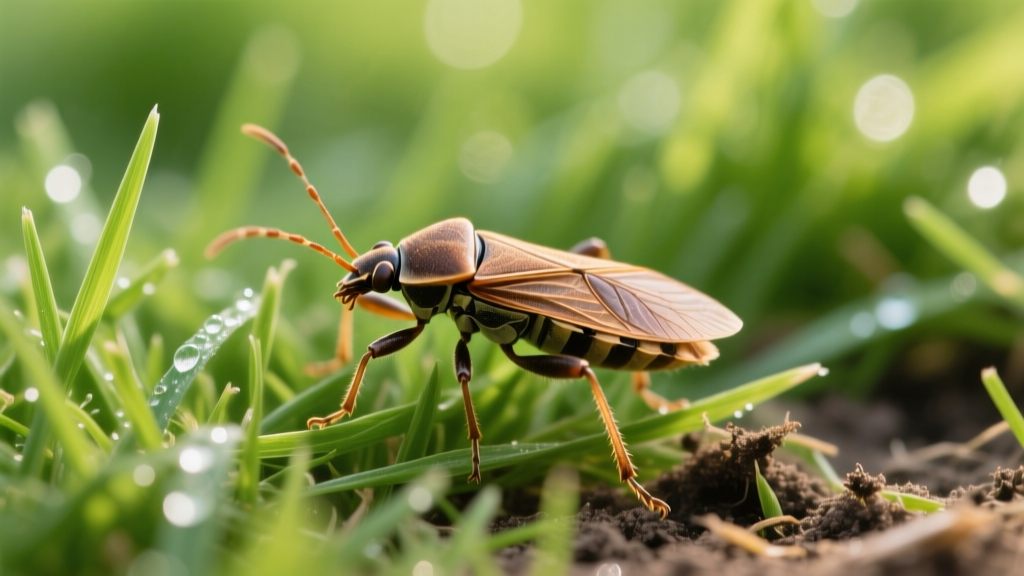
Brown Bug With Wings? Diagnose & Fix the Top 5 Lawn Invaders
The Triage Protocol: Don't Panic, Identify First
Spotting a brown bug with wings in your home or hovering around your porch lights triggers an immediate pest control response. However, blindly spraying a broad-spectrum insecticide is a waste of money and potentially harmful to local pollinators. The term 'brown bug with wings' describes dozens of distinct species, ranging from harmless accidental invaders to severe structural threats.
To execute a proper rescue fix, you must first narrow down the suspect based on flight patterns, body shape, and the specific damage left behind. Below is a comprehensive diagnostic framework and exact chemical and organic rescue protocols for the four most common winged brown invaders plaguing lawns and gardens in 2026.
Suspect 1: The June Bug (Phyllophaga spp.)
Often called May beetles, June bugs are stout, reddish-brown to dark brown beetles measuring 1/2 to 5/8 inches long. They are notorious for their clumsy, erratic flight patterns and their tendency to crash into windows and screens at night.
Symptom Diagnosis
- Adult Behavior: Clumsy fliers, highly attracted to UV and porch lights, active from late May through July.
- Lawn Damage (The Real Threat): The adults do minimal damage, but they lay eggs in your turf. The resulting white grubs feed on grass roots, causing irregular brown patches that detach easily from the soil like loose carpet.
Rescue Fixes
Immediate Adult Control: Swap exterior white bulbs for yellow LED bug lights (2700K or lower) to reduce attraction. For active adults on ornamental plants, apply a Pyrethrin-based spray like Bonide Eight Insect Control ($12-$15 per 16 oz concentrate) directly to foliage at dusk.
Long-Term Grub Eradication: The adult is just the messenger; the grubs are the disease. Apply Milky Spore Powder (Bacillus popilliae) at a rate of 1 teaspoon per 4 square feet. A 40 oz box costs roughly $45 and treats 15,000 square feet. For a faster chemical rescue, use Bayer Advanced 24 Hour Grub Killer (Imidacloprid 0.15%) at a rate of 1.8 lbs per 1,000 sq ft, watering it in immediately with 1/2 inch of irrigation to push the active ingredient into the root zone.
Suspect 2: Brown Marmorated Stink Bug (Halyomorpha halys)
This invasive shield-shaped pest measures about 3/4 inch long and features distinct white bands on its antennae and legs. According to Penn State Extension, they are a massive agricultural and residential nuisance, particularly in the Mid-Atlantic and Northeast.
Symptom Diagnosis
- Physical Traits: Shield-shaped, marbled brown pattern on the back, emits a pungent cilantro-like odor when crushed or threatened.
- Garden Damage: Piercing-sucking mouthparts cause dimpling, corky necrotic spots, and premature fruit drop on tomatoes, peppers, and apples.
- Home Invasion: They seek overwintering sites in autumn, squeezing through 3mm gaps around window frames and attic vents.
Rescue Fixes
Perimeter Defense: In late August and September, apply a microencapsulated Bifenthrin product like Talstar P Professional ($45 per 3/4 gallon). Mix 1 oz per gallon of water and spray a 3-foot band up the foundation and a 3-foot band out onto the soil. This creates a lethal barrier before they migrate indoors.
Organic Garden Rescue: For active garden infestations, use Azadirachtin (the active compound in Neem oil) at a 4.5% concentration. Spray directly on nymph clusters. Adult stink bugs are highly resistant to organic contact sprays, making physical removal via a shop-vac filled with soapy water the most effective non-chemical intervention.
⚠️ Diagnostic Warning: Termites vs. Flying Ants
If your brown bug with wings has a thick, uniform waist and straight, bead-like antennae, it is a termite swarmer. If it has a pinched waist and elbowed antennae, it is a carpenter ant. Misidentifying a termite swarmer and treating it with standard ant bait will result in catastrophic structural damage to your home.
If your brown bug with wings has a thick, uniform waist and straight, bead-like antennae, it is a termite swarmer. If it has a pinched waist and elbowed antennae, it is a carpenter ant. Misidentifying a termite swarmer and treating it with standard ant bait will result in catastrophic structural damage to your home.
Diagnostic Matrix: Quick ID Guide
| Suspect | Size & Shape | Flight Pattern | Primary Damage |
|---|---|---|---|
| June Bug | 1/2 inch, Oval, Stout | Clumsy, erratic, loud buzzing | Root destruction (grub stage) |
| Stink Bug | 3/4 inch, Shield-shaped | Slow, deliberate, clumsy landing | Fruit dimpling, leaf necrosis |
| Termite Swarmer | 3/8 inch, Thick waist | Weak, fluttering, drops wings | Structural wood consumption |
| Wood Cockroach | 1 inch, Flat, Oval | Gliding, short bursts, runs fast | Nuisance (no structural damage) |
Suspect 3: Subterranean Termite Swarmers (Reticulitermes spp.)
According to the University of Kentucky Entomology Department, spring swarms of dark brown to black winged termites are the most visible sign of a hidden, mature colony. These wings are uniform in size, unlike ants, and are often found discarded in piles near windowsills or light sources.
Rescue Fix: The Fipronil Trench Method
Do not use over-the-counter bug sprays on termite swarmers; it only kills the visible reproductives and forces the hidden colony to relocate deeper into your foundation. You must execute a professional-grade soil trenching treatment.
- Dig the Trench: Using a trenching shovel, dig a continuous trench 6 inches wide and 6 inches deep directly against your home's foundation.
- Mix the Termiticide: Use Taurus SC (Fipronil 9.1%). The exact mixing ratio is 0.8 fluid ounces of Taurus SC per 1 gallon of water. A 20 oz bottle costs approximately $85 and yields enough solution to treat 60 linear feet of foundation.
- Apply: Pour 4 gallons of the mixed solution into the trench for every 10 linear feet of foundation. This creates a continuous, non-repellent chemical barrier that termites will unknowingly tunnel through, transferring the Fipronil back to the colony via grooming.
- Backfill: Push the soil back into the trench and tamp it down to seal the chemical band.
Suspect 4: Wood Cockroach (Parcoblatta pennsylvanica)
The Pennsylvania wood cockroach is a chestnut-brown insect measuring 3/4 to 1 inch long. Males have fully developed wings that extend past their abdomen, while females have short, non-functional wing pads. As noted by Penn State Extension, they are primarily outdoor insects that breed in leaf litter and woodpiles, only entering homes accidentally.
Symptom Diagnosis
Unlike the German or American cockroach, wood roaches do not breed indoors, do not carry the same disease vectors, and are not attracted to your pantry. If you see one scurrying across your living room floor, it likely hitchhiked in on firewood or wandered in through a damaged weather strip.
Rescue Fixes
Perimeter Rescue: Apply Onslaught FastCap (a microencapsulated Esfenvalerate + Piperonyl butoxide blend). Mix 1 oz per gallon and spray around door thresholds, garage doors, and woodpile storage areas. The microencapsulation ensures the chemical binds to the waxy cuticle of the roach even on porous surfaces like brick and raw wood.
Source Elimination: Move firewood piles at least 20 feet away from the home's exterior and elevate them on concrete blocks. Keep mulch layers under 2 inches thick and pulled 6 inches away from the foundation to eliminate harborages.
Step-by-Step Post-Rescue Fortification
Killing the active invaders is only half the battle. Implement this 4-point fortification checklist to prevent the next generation of winged brown bugs from establishing a foothold:
- Moisture Control: Both termites and wood roaches require high moisture. Extend downspouts at least 4 feet away from the foundation and grade the soil to a 5% slope away from the house.
- Light Discipline: Replace all exterior 4000K-5000K white LEDs with 2200K amber LEDs. June bugs and stink bugs cannot see the amber spectrum effectively, drastically reducing nighttime congregation on your siding.
- Vegetation Setbacks: Prune all tree branches and shrubs to maintain a strict 18-inch gap between foliage and your roofline or siding. This removes the physical bridges pests use to bypass ground-level chemical barriers.
- Thatch Management: Core aerate your lawn annually and dethatch if the thatch layer exceeds 1/2 inch. Thick thatch provides an insulated, moisture-rich breeding ground for June bug grubs and shields them from surface-applied insecticides.

