
Pest Control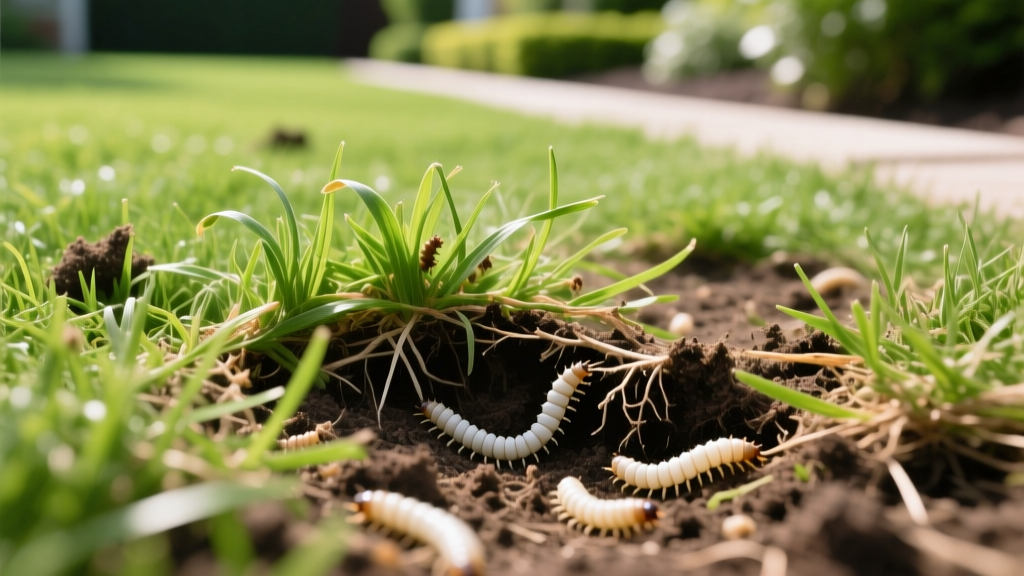
Identify and Fix Severe Grub Grass Damage: Rescue Guide
Decoding the Symptoms: Is It Actually Grub Grass Damage?
White grubs—the larval stage of scarab beetles like the Japanese beetle (Popillia japonica), European chafer (Rhizotrogus majalis), and June beetle (Phyllophaga spp.)—are among the most destructive subsurface turf pests in North America. Unlike surface-feeding insects that chew on leaf blades, grubs live in the soil profile and feed exclusively on the root hairs and primary roots of your turfgrass. This severs the plant's ability to uptake water and nutrients, resulting in localized dead zones that closely mimic severe drought stress.
Because grub grass damage often appears in late summer or early fall when temperatures are still high, homeowners frequently misdiagnose the issue as a watering deficit or a fungal outbreak. Applying fungicides or simply increasing irrigation will not stop an active grub infestation. The root system is physically gone; no amount of surface water will revive the plant until the pests are eradicated and the turf is rehabilitated.
The 'Carpet Roll' Diagnostic Framework
Before purchasing any chemicals, perform the Carpet Roll Test. Grasp a handful of the brown, wilting turf at the edge of the damaged area and pull upward. If the grass rolls back effortlessly like a loose carpet with no resistance, the roots have been completely severed by grubs. Examine the top two inches of the exposed soil. You are looking for plump, C-shaped, grayish-white larvae with distinct brown head capsules and six legs near the thorax. A threshold of 5 to 10 grubs per square foot warrants immediate curative intervention.
Differentiating Grub Damage from Look-Alike Stressors
Misidentifying the cause of your brown lawn leads to wasted money and further turf decline. Use this comparison matrix to isolate grub grass damage from other common late-summer lawn ailments.
| Symptom / Feature | Active Grub Infestation | Drought Stress | Brown Patch Fungus |
|---|---|---|---|
| Root Attachment | None; turf rolls back easily | Firm; roots are intact and anchored | Firm; roots remain attached |
| Damage Pattern | Irregular, scattered brown patches | Uniform yellowing/browning across zones | Circular rings with smoke-gray margins |
| Soil / Thatch Evidence | C-shaped white larvae present | Dry, hydrophobic soil; no pests | White mycelium visible in morning dew |
| Secondary Signs | Increased bird, skunk, or raccoon digging | Footprints remain visible on turf | Lesions on individual grass blades |
The 48-Hour Rescue Protocol for Active Infestations
If you have confirmed active grubs exceeding the threshold in late summer or early fall, preventative products like Imidacloprid will no longer work. You must deploy a fast-acting curative insecticide. The industry standard for rescue treatments is Trichlorfon (commonly sold as Dylox or Bayer Advanced 24 Hour Grub Killer Plus).
Step 1: Calculate and Apply the Curative Rate
Trichlorfon is highly effective against large, third-instar grubs that are actively feeding near the surface in autumn. A standard 10 lb bag of granular Trichlorfon (1.33% active ingredient) typically covers 5,000 square feet and costs between $18 and $24. Set your broadcast spreader according to the manufacturer's label—usually setting 5 or 6 on a Scotts Classic Drop Spreader. Apply the granules evenly across the affected zones, extending three feet into the surrounding healthy green turf to catch migrating larvae.
Step 2: Immediate Hydration and Activation
Trichlorfon has a very short half-life in the soil and degrades rapidly when exposed to UV light and high pH thatch. You must water the product into the root zone immediately after application. Apply exactly 0.5 inches of irrigation using a sprinkler and a rain gauge. This moves the active ingredient off the leaf blades, through the thatch layer, and into the top two inches of soil where the grubs are feeding. Failure to water in Trichlorfon within 12 hours will result in near-total chemical degradation and zero grub mortality.
Applying curative trichlorfon to a dry thatch layer without immediate irrigation is the most common failure mode in grub rescue. The active ingredient degrades in UV light within hours, leaving the root zone completely untreated and wasting the homeowner's investment.
— Turfgrass Entomology Best Practices, University of Kentucky Entomology
Step 3: Monitor for Vertebrate Scavengers
Even after a successful chemical application, dead or dying grubs emit distress pheromones that attract skunks, raccoons, and crows. These animals will tear up your lawn to eat the poisoned larvae. To protect your turf during the 7-day mortality window, lay down bird netting or use motion-activated sprinklers to deter nocturnal digging.
Rehabilitating the Canopy: Post-Rescue Turf Repair
Eradicating the grubs does not magically turn brown grass green. Because the root system was consumed, the affected turf is dead and must be replaced. Wait 10 to 14 days after your Trichlorfon application to ensure the chemical has sufficiently broken down before introducing new seed.
- Core Aeration: Run a core aerator over the damaged patches to break up soil compaction and create micro-pockets for seed-to-soil contact.
- Slice Seeding: For large dead zones, rent a slice seeder. This machine cuts shallow trenches into the soil and drops seed directly into them, ensuring high germination rates.
- Seed Selection: Choose a turf-type tall fescue blend for drought and traffic resistance, or a Kentucky bluegrass mix for rhizomatous spreading that will naturally fill in surrounding gaps. Expect to pay $40-$60 for a 50 lb bag of premium seed.
- Topdressing: Apply a 1/4-inch layer of compost over the newly seeded areas to retain moisture and provide organic nutrients.
Breaking the Life Cycle: Preventative Strategies for Next Season
Curative treatments are stressful on the lawn and the environment. The most effective long-term strategy against grub grass damage is a preventative application in late spring. According to research from the Penn State Extension, the most reliable preventative active ingredient is Chlorantraniliprole (found in Scotts GrubEx1 and professional-grade Acelepryn).
Unlike older neonicotinoids, Chlorantraniliprole is highly targeted and poses minimal risk to pollinators. However, it requires 60 to 90 days to fully translocate into the root zone. You must apply it between mid-May and mid-June. A standard $28 bag covers 10,000 square feet. By the time beetle eggs hatch in late July and early August, the chemical will be present in the roots, killing the first-instar grubs before they can grow large enough to cause visible turf damage.
For comprehensive regional timing and species-specific identification, always consult your local cooperative extension office, such as the University of Minnesota Extension, to align your preventative applications with the exact life cycle of the scarab beetles native to your hardiness zone.

