
Pest Control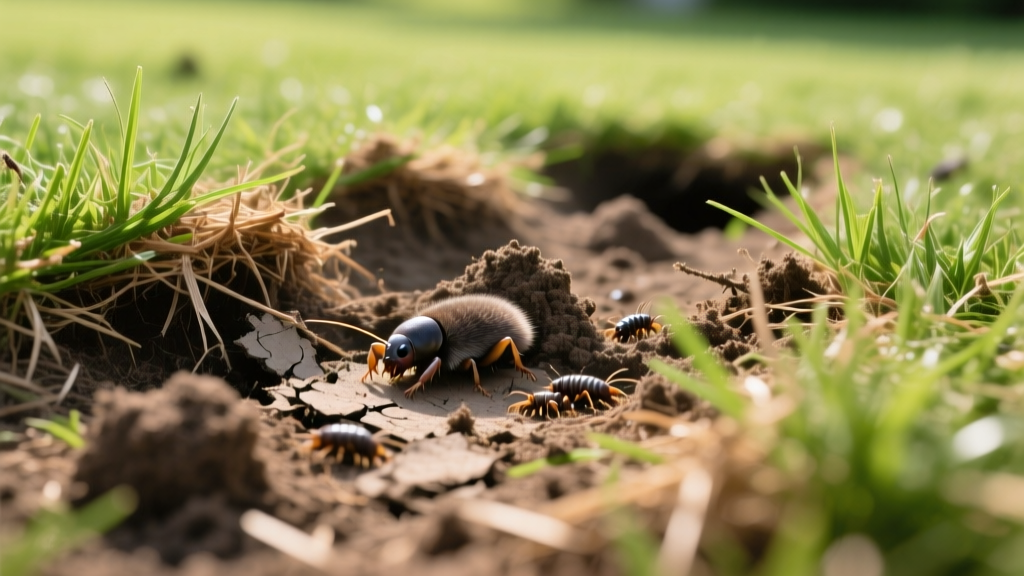
Mole Cricket Damage: Symptom Diagnosis and Lawn Rescue Fixes
The Hidden Threat: Why Mole Crickets Destroy Turf
Mole crickets are among the most destructive turfgrass pests in the southeastern United States, particularly in coastal and sandy-soil regions. Unlike surface-feeding insects, mole crickets inflict a dual-threat attack. First, their subterranean tunneling physically uproots grass, severing the root system and creating air pockets that cause rapid soil desiccation. Second, species like the tawny mole cricket (Neoscapteriscus vicinus) are voracious herbivores that chew through root zones and basal stems, while the southern mole cricket (N. borellii) primarily causes mechanical damage through aggressive burrowing.
Homeowners often misdiagnose the resulting irregular brown patches as drought stress, fungal disease, or white grub activity. However, treating for the wrong pathogen or pest wastes time and money while the infestation multiplies. Accurate symptom diagnosis is the mandatory first step before deploying any rescue fixes.
Symptom Diagnosis: Confirming Mole Cricket Damage
Visual inspection alone is insufficient because the insects spend daylight hours deep underground. Above ground, you will notice spongy, loose soil that gives way underfoot, small mounds of pushed-up dirt resembling miniature mole hills, and grass blades that pull up effortlessly due to severed roots. To definitively confirm an active infestation, you must force the insects to the surface.
The 15-Second Soap Flush Test
This is the industry-standard diagnostic protocol recommended by turfgrass entomologists:
- Mix the Solution: Combine 1.5 fluid ounces of lemon-scented dish soap (the citrus oils act as a severe irritant to their spiracles) with 1 gallon of water.
- Target the Zone: Identify a 2-foot by 2-foot area at the margin of a damaged brown patch where the grass is still partially green.
- Apply and Wait: Pour the solution evenly over the 4-square-foot area. Wait 3 to 5 minutes.
- Count and Identify: Count the nymphs and adults that emerge. Look for the tawny mole cricket's distinct dactyls (the enlarged, spade-like front digging claws) to differentiate them from native, harmless field crickets.
Differential Diagnosis Matrix
Because subterranean pests and soil-borne fungi share visual similarities, use this comparison framework to isolate the exact cause of your turf decline.
| Symptom / Indicator | Mole Cricket Damage | White Grub Infestation | Brown Patch Fungus |
|---|---|---|---|
| Soil Texture | Spongy, loose, raised tunnels visible | Sod rolls back like a carpet | Firm, no structural soil change |
| Root Condition | Severed, chewed, uprooted | Completely missing, eaten away | Intact, but leaf sheaths are rotted |
| Surface Evidence | Small dirt mounds, 2-inch tunnel openings | Birds, skunks, or raccoons digging holes | Smoke rings on leaf margins in morning |
| Soap Flush Result | Nymphs/adults emerge within 5 minutes | No reaction (grubs stay deep) | No reaction (fungal issue) |
Assessing Severity: The Intervention Threshold
Finding one mole cricket does not necessitate a full-scale chemical eradication. According to turfgrass management guidelines from Clemson University Extension, the economic and aesthetic injury threshold is generally 2 to 4 mole crickets per square foot. However, in highly visible front lawns or on stressed turfgrass species like Bahiagrass, treating at a threshold of 1 per square foot is advisable to prevent rapid secondary desiccation.
Rescue Fixes: Eradicating the Infestation
Once confirmed, your rescue strategy must align with the insect's life cycle. Treating large, mature adults in the spring is largely ineffective and economically wasteful. The optimal window for rescue treatments is mid-June through July, when the spring-laid eggs have hatched into small, vulnerable nymphs that are actively feeding near the soil surface.
Biological Control: Entomopathogenic Nematodes
For homeowners seeking organic or highly targeted rescue fixes, the nematode Steinernema scapterisci (commercially available as Nematac S) is the gold standard. Unlike broad-spectrum chemicals, this specific nematode species exclusively targets mole crickets. It enters the pest's body and releases symbiotic bacteria that kill the host within 48 hours.
- Application Rate: Approximately 1 billion nematodes per acre, or roughly $15 to $25 for a 5,000 sq. ft. residential lawn pack.
- Crucial Environmental Requirement: Soil temperatures must be consistently above 70°F. Apply in the late evening and immediately irrigate with 0.25 inches of water to wash the nematodes into the root zone and prevent UV degradation.
Chemical Interventions: Active Ingredients and Timing
If the infestation is severe and requires immediate knockdown, synthetic insecticides are necessary. According to NC State Extension, the choice of active ingredient depends on the target life stage:
- Neonicotinoids (e.g., Imidacloprid, Thiamethoxam): Best for early-stage nymphs in June. These systemic chemicals are absorbed by the grass roots and kill nymphs as they feed. Products like Merit 75 WP cost around $40-$60 for a year's supply for a standard lawn.
- Pyrethroids (e.g., Bifenthrin, Lambda-cyhalothrin): Provide rapid contact knockdown for larger, late-summer nymphs and adults. Best applied as a liquid spray rather than granules to ensure penetration into the tunnel openings.
⚠️ Critical Application Warning
Never apply granular insecticides to dry, heavily thatched lawns. Mole crickets tunnel deep in dry conditions. You must irrigate the lawn with 0.5 inches of water 24 hours before application to draw the pests upward, apply the granules, and then immediately water in with another 0.25 inches to move the active ingredient into the top 2 inches of the soil profile.
Turf Rehabilitation: Repairing the Physical Damage
Eradicating the pest is only half the battle. The mechanical tunneling leaves the soil structurally compromised, leading to rapid moisture loss and secondary weed invasion. Follow this 3-step rehabilitation protocol to rescue the physical turf matrix:
- Deep-Core Aeration: Rent a heavy-duty core aerator and make two perpendicular passes over the damaged zones. This collapses the hollow mole cricket tunnels, re-establishing soil-to-root contact and eliminating the air pockets that cause desiccation.
- Sand Topdressing: Apply a 1/4-inch layer of coarse, washed horticultural sand over the aerated areas. Use a drag mat or the back of a landscaping rake to work the sand into the aeration holes. This permanently alters the soil structure, making it less hospitable for future tunneling while improving drainage.
- Overseeding with Resilient Cultivars: If the turf is beyond saving, overseed bare patches with mole-cricket-resistant cultivars. 'Empire' Zoysia and 'TifTuf' Bermudagrass possess dense, aggressive rhizome networks that tolerate subterranean feeding far better than St. Augustinegrass or Bahiagrass. Keep the top 1 inch of soil consistently moist for 14 days to ensure seed or sprig establishment.
Long-Term Preventative Frameworks
Rescue fixes stabilize the lawn, but long-term health requires altering the environment. Mole crickets thrive in over-irrigated, sandy soils with thick thatch layers. Implement a strict dethatching schedule when thatch exceeds 0.5 inches, and transition to deep, infrequent watering cycles (1 inch per week, applied in a single session) to encourage deep root growth that can withstand minor subterranean pruning. By combining accurate soap-flush diagnostics with precisely timed biological or chemical interventions, you can permanently break the mole cricket life cycle and restore your turf's structural integrity.

