
Pest Control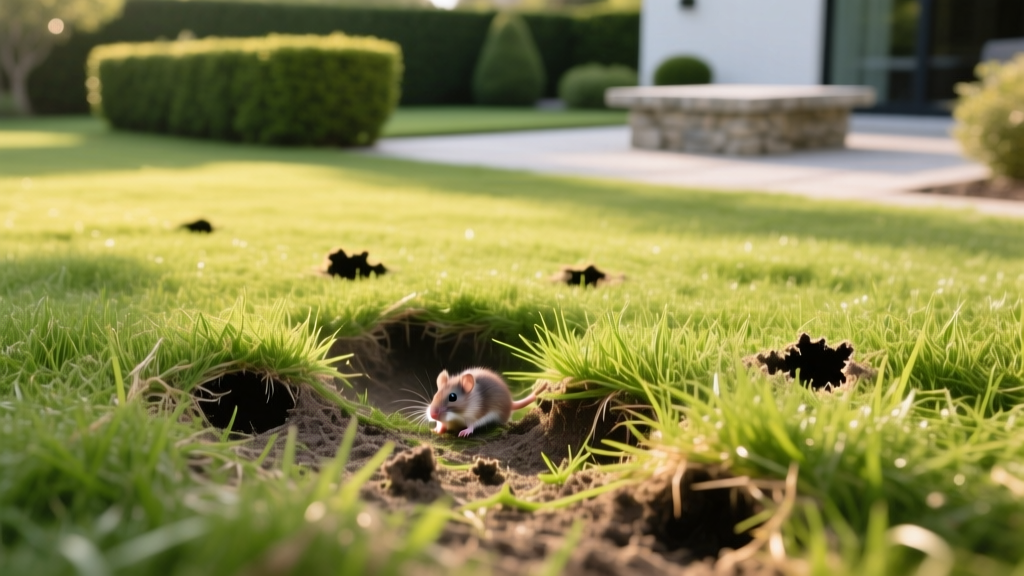
Vole Grass Damage: Symptom Diagnosis and Lawn Rescue Fixes
Waking up to a lawn scarred by winding, bare-soil trails is a frustrating experience for any homeowner. While many immediately assume moles are the culprit, the vast majority of surface-level turf destruction is actually caused by voles. Meadow voles (Microtus pennsylvanicus) and pine voles (Microtus pinetorum) are voracious herbivores that can decimate thousands of square feet of turfgrass overnight, particularly under the cover of winter snow or during early spring population booms.
Successfully rescuing your lawn requires accurate symptom diagnosis followed by a targeted eradication and repair protocol. Misidentifying the pest leads to wasted money on ineffective mole traps or subterranean baits. Below is a comprehensive, field-tested guide to diagnosing vole grass damage, eliminating the colony, and executing a rapid lawn restoration.
The Apple Sign Test: Confirming Voles vs. Moles
Before purchasing any traps or seed, you must confirm the presence of voles. Voles are surface foragers that create visible runways, whereas moles are insectivores that create subsurface tunnels and volcano-shaped mounds. To definitively confirm active vole grass damage, turf professionals rely on the "Apple Sign Test," a method endorsed by university extension offices.
How to Perform the Apple Sign Test
- Cut an unpeeled apple into small, one-inch cubes.
- Locate a suspected vole runway in your lawn and clear away any debris or loose grass clippings.
- Place a small wire mesh cage (like a piece of hardware cloth bent into a dome) over a section of the runway to protect the bait from birds and pets.
- Place two apple cubes under the cage, directly in the runway path.
- Wait 24 hours. If the apple shows distinct, parallel gnaw marks or is entirely missing, you have an active vole infestation.
Pest Identification Matrix: Voles vs. Moles vs. Gophers
Accurate identification dictates your entire rescue strategy. Use this comparison matrix to verify the symptoms in your yard.
| Feature | Voles (Meadow/Pine) | Moles (Eastern/Star-nosed) | Pocket Gophers |
|---|---|---|---|
| Surface Signs | 1 to 2-inch wide clear runways through grass; no soil mounds. | Volcano-shaped soil mounds; raised, spongy ridges. | Fan-shaped soil mounds plugged with dirt; no surface runways. |
| Diet | Herbivores (grass stems, roots, tree bark, bulbs). | Insectivores (earthworms, grubs, soil insects). | Herbivores (plant roots, tubers, crops). |
| Damage Type | Clipped grass at 45-degree angles; girdled tree trunks. | Uprooted turf from tunneling; root desiccation. | Plants pulled entirely underground; severed roots. |
| Primary Control | Standard mouse traps, habitat modification. | Scissor-jaw mole traps, grub control. | Macabee gopher traps, subterranean baits. |
Mapping the Damage: Identifying Runways and Gnawing
Once confirmed, map the extent of the vole grass damage. Voles rarely venture far from their protective runways. You will notice the grass within the 1.5-inch wide trails is clipped extremely short, often exposing the bare soil beneath. According to the University of California Integrated Pest Management program, voles clip grass at a sharp 45-degree angle, which distinguishes their feeding marks from the frayed tips left by dull mower blades or rabbit grazing.
Inspect the base of nearby trees and shrubs as well. Pine voles, in particular, feed heavily on root systems and can girdle the cambium layer of ornamental trees just below the soil line, leading to sudden canopy dieback months after the initial lawn damage occurs.
Immediate Rescue Fixes: Eradicating the Colony
You cannot repair the lawn while the colony is still active; they will simply destroy your new seed. The most effective, environmentally responsible rescue fix for residential lawns is targeted snap-trapping. Avoid ultrasonic repellents and mothballs, which university studies consistently show have zero efficacy against voles.
Strategic Trap Placement Protocol
Purchase standard wooden or plastic snap traps, such as the Victor Easy Set Mouse Trap (Model M093). Voles have poor eyesight and rely on tactile navigation along their runways.
- Baiting: Use a mixture of peanut butter and dry oatmeal. The oatmeal prevents the vole from simply licking off the peanut butter, forcing them to pull the trigger mechanism.
- Placement: Place the trap perpendicular to the runway, with the trigger end facing directly into the path. Do not place the trap inside the runway, as this alters the tunnel profile and will cause the vole to detour around it.
- Concealment: Voles suffer from agoraphobia and avoid open spaces. Cover the trap and a small section of the runway with a shoebox or a piece of dark plastic piping with entry holes cut at both ends. This simulates a safe, enclosed tunnel.
- Spacing: In heavily damaged areas, place traps every 10 to 15 feet along the primary runways. Check and reset daily at dusk.
⚠️ Toxicity Warning on Rodenticides: Avoid using broadcast anticoagulant baits (like diphacinone or bromadiolone) for vole control in residential lawns. These pose a severe secondary poisoning risk to neighborhood cats, owls, and hawks that consume the lethargic, poisoned voles. Trapping is the gold standard for localized turf rescue.
Lawn Restoration Protocol: Filling Runways and Overseeding
Once trapping yields zero catches for three consecutive days, begin the turf rescue phase. Vole runways compact the soil and destroy the root matrix, requiring more than just tossing seed on top.
Step 1: Soil Preparation and Topdressing
Use a stiff steel rake to aggressively scarify the bare runways, breaking up the compacted soil and removing dead, matted grass. Create a custom topdressing mix to fill the depressions. A highly effective, fast-draining mix for runway repair consists of 40% screened topsoil, 40% organic compost, and 20% coarse masonry sand. Shovel this mix into the runways, using the back of a landscaping rake to level it flush with the surrounding healthy turf.
Step 2: Selecting the Right Seed Blend
Do not use cheap contractor-grade seed for repairs. Voles prefer tender, young shoots, so you need a rapidly establishing, aggressive turfgrass. For cool-season lawns, a Turf-Type Tall Fescue (TTTF) blend is ideal. Tall fescue develops deep, extensive root systems that are more resilient to minor vole grazing than Kentucky bluegrass. Look for premium blends like Jonathan Green Black Beauty Ultra or Scotts Turf Builder Tall Fescue Mix.
Step 3: Seeding and Germination
- Application Rate: Apply seed at a rate of 5 to 6 lbs per 1,000 square feet for targeted overseeding.
- Seed-to-Soil Contact: Lightly drag a leaf rake over the seeded runways to push the seed 1/8 inch into the topdressing mix.
- Starter Fertilizer: Apply a high-phosphorus starter fertilizer (e.g., a 10-18-10 NPK ratio) to accelerate root development. Expect to pay around $25 to $35 for a 15 lb bag covering 5,000 sq ft.
- Moisture Management: Water the repaired runways lightly 2 to 3 times daily for the first 14 days to keep the top inch of soil consistently moist. Once seedlings reach 2 inches, transition to deep, infrequent watering.
Long-Term Habitat Modification to Prevent Return
Repairing the grass is only half the battle. According to Penn State Extension, voles thrive in environments that provide dense ground cover and protection from aerial predators. Modifying your landscape architecture is the most cost-effective long-term rescue fix.
The 3-Foot Mulch Rule
Voles use thick layers of landscape mulch as insulated highways to travel between your lawn and the root zones of your prized ornamentals. Pull all wood chip, pine straw, or rubber mulch back to create a strict 3-foot bare-soil buffer around the base of all trees and shrubs. If mulch is necessary for moisture retention, use crushed gravel or river rock, which voles find difficult to burrow through.
Adjusting Mowing Heights
While it is tempting to scalp the lawn to expose voles to predators, cutting your grass below 2.5 inches stresses the turf and reduces its ability to recover from runway damage. Maintain cool-season grasses at a 3.0 to 3.5-inch mowing height. This height is short enough to discourage vole nesting but tall enough to shade out competing weeds and promote deep grass roots. During the final fall mow before winter, drop the height to 2.5 inches; tall grass matting under snow provides the perfect insulated environment for winter vole feeding.
Targeted Repellent Applications
For immediate protection of newly seeded runways while the grass establishes, apply a castor oil and garlic-based repellent, such as Bonide Mole & Vole Repellent Granules. Apply at a rate of 1 lb per 1,000 square feet and water it in thoroughly. While repellents will not eradicate an established colony, they create an unpleasant sensory barrier that forces foraging voles to bypass your newly repaired turf in search of easier meals. Reapply every 30 days or immediately after heavy rainfall exceeding 0.5 inches.

