
Pest Control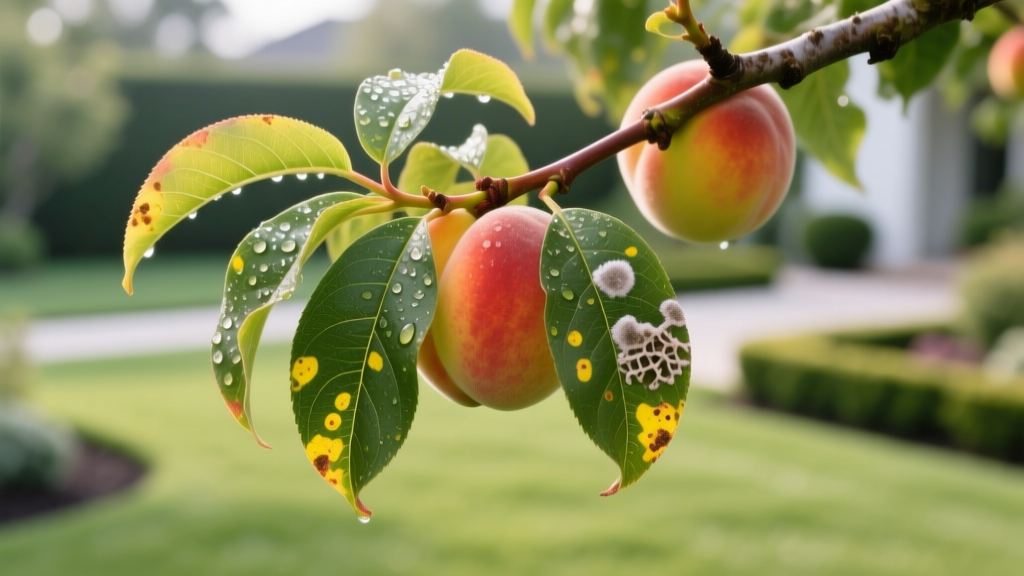
How to Diagnose and Treat Disease on Peach Tree Leaves and Fruit
The Visual Triage: Symptom-to-Disease Diagnostic Matrix
Identifying a disease on peach tree foliage, bark, or fruit requires precise observation. Misdiagnosing a bacterial infection as a fungal one leads to wasted chemical applications and accelerated crop loss. Use this diagnostic matrix to match visual symptoms to the underlying pathogen before initiating rescue protocols.
| Visual Symptom | Primary Pathogen | Disease Name | Infection Window |
|---|---|---|---|
| Leaves thicken, curl, and turn reddish-purple in spring | Taphrina deformans | Peach Leaf Curl | Wet, cool early spring (bud swell) |
| Small, dark, angular spots on leaves; fruit develops firm brown rot | Xanthomonas arboricola | Bacterial Spot | Windy, rain-heavy spring and early summer |
| Soft brown lesions on fruit with concentric rings of tan spores | Monilinia fructicola | Brown Rot | Warm, humid periods near harvest |
| Amber gum oozing from bark; sunken, discolored cankers on scaffolds | Leucostoma persoonii | Cytospora Canker | Year-round, worsens after winter freeze injury |
Rescue Protocols for Fungal Infections
Peach Leaf Curl (Taphrina deformans)
Once you see the characteristic red, blistered leaves, the infection cycle is already complete for the current season. The fungus overwinters in bark crevices and infects emerging tissue during bud swell. Rescue efforts in the current year focus on reducing tree stress, while actual eradication requires strict dormant-season timing.
Critical Timing Warning: Applying copper-based fungicides after buds have opened will not cure leaf curl and will cause severe phytotoxicity (leaf burn). Treatment must occur during the dormant season.
- Current Year Rescue: Thin the canopy to reduce competition for resources. Apply a high-nitrogen foliar feed (such as a 20-20-20 water-soluble fertilizer at 1 tbsp per gallon) to help the tree push out a second, healthy flush of leaves in early summer.
- Eradication Protocol: Apply a fixed copper fungicide (like Liqui-Cop or Kocide 3000) in late fall after 90% of leaves have dropped, and again in late winter just before bud swell. Use a rate of 3 to 4 tablespoons of copper octanoate concentrate per gallon of water. Ensure thorough coverage of all bark and bud scales.
Brown Rot (Monilinia fructicola)
Brown rot is the most destructive pre- and post-harvest disease on peach tree fruit. The pathogen enters through insect wounds or directly through the fruit cuticle during prolonged wet periods. According to the University of Minnesota Extension, brown rot can decimate 90% of a crop in humid climates if left unmanaged during the ripening phase.
Active Rescue Steps:
- Sanitary Pruning: Immediately remove all mummified (shriveled, blackened) fruit from the tree and the ground. These harbor overwintering spores.
- Canopy Thinning: Prune out interior crossing branches to increase airflow. Fruit must dry within 2 hours of a rain event to prevent spore germination.
- Chemical Intervention: Apply a systemic fungicide containing Myclobutanil (e.g., Spectracide Immunox) or Captan. Begin applications at petal fall and continue every 10 to 14 days until harvest. Strictly observe the Pre-Harvest Interval (PHI) listed on the label—typically 7 to 14 days for Myclobutanil—to ensure fruit safety.
Managing Bacterial and Cankering Diseases
Bacterial Spot (Xanthomonas arboricola)
Bacterial spot is notoriously difficult to manage because copper, the standard bactericide, can damage peach foliage if applied at high rates during the growing season. The Clemson Home & Garden Information Center notes that highly susceptible cultivars (like 'Elberta') may require weekly sprays in wet years, while resistant cultivars (like 'Contender') rarely need intervention.
Treatment Matrix:
- Dormant Stage: Apply a Bordeaux mixture (copper sulfate and hydrated lime) at a 10-10-100 ratio (1 lb copper, 1 lb lime, 10 gallons water) to reduce overwintering bacterial populations on the bark.
- Shuck-Fall to Harvest: Switch to a low-rate copper-oxytetracycline tank mix (e.g., Mycoshield). Apply at 1.5 lbs per 100 gallons of water. Do not apply copper when temperatures exceed 85°F to avoid marginal leaf necrosis.
Cytospora Canker (Perennial Canker)
There is no chemical cure for Cytospora canker. This opportunistic fungus enters through pruning wounds, sunscald, or winter freeze damage. Rescue relies entirely on surgical excision and wound management.
Surgical Excision Protocol: Use a sharp, sterilized pruning saw to cut out the canker. You must remove at least 6 to 8 inches of healthy-looking wood below the visible necrotic margin. Sterilize your blade with 70% isopropyl alcohol between every single cut to prevent spreading the spores to healthy scaffolds.
After excision, do not apply pruning paint or sealants; these trap moisture and accelerate secondary rot. Allow the wound to callous naturally in dry weather. If the canker has girdled more than 50% of the main trunk, removal of the entire tree is the only viable option to protect adjacent orchard stock.
2026 Fungicide and Bactericide Cost Breakdown
Budgeting for disease management requires understanding the cost per application. Below is a breakdown of standard residential and small-orchard products available in 2026, calculated for a standard 15-foot backyard peach tree requiring roughly 2 gallons of spray volume per application.
| Product / Active Ingredient | Target Disease | Average Retail Price | Cost Per Application (2 Gal) |
|---|---|---|---|
| Liqui-Cop (Copper Octanoate) | Leaf Curl, Bacterial Spot | $18.99 / 16 oz | $2.37 |
| Spectracide Immunox (Myclobutanil) | Brown Rot, Scab | $15.49 / 14 oz | $1.10 |
| Monterey Fungi-Fighter (Propiconazole) | Brown Rot, Rust | $22.99 / 16 oz | $1.72 |
| Mycoshield (Oxytetracycline) | Bacterial Spot | $45.00 / 1 lb | $3.37 |
Preventative Orchard Sanitation Checklist
Chemical rescue fixes will fail if the immediate environment continuously reinfects the tree. Implement this seasonal sanitation checklist to break the disease triangle:
- Autumn Leaf Removal: Rake and destroy all fallen leaves by late November. Do not compost peach leaves, as home compost piles rarely reach the 140°F threshold required to kill Taphrina and Xanthomonas spores.
- Winter Whitewashing: Paint the lower 24 inches of the trunk with a 50/50 mix of white interior latex paint and water. This prevents winter sunscald, which creates the micro-cracks where Cytospora spores enter.
- Spring Mulch Management: Keep organic mulch at least 6 inches away from the root flare. Piling mulch against the trunk keeps the bark damp and invites Phytophthora crown rot.
- Tool Sterilization: Maintain a pump sprayer filled with a 1:9 ratio of household bleach to water. Drench pruning tools for 30 seconds before moving from a diseased tree to a healthy one.

