
Pest Control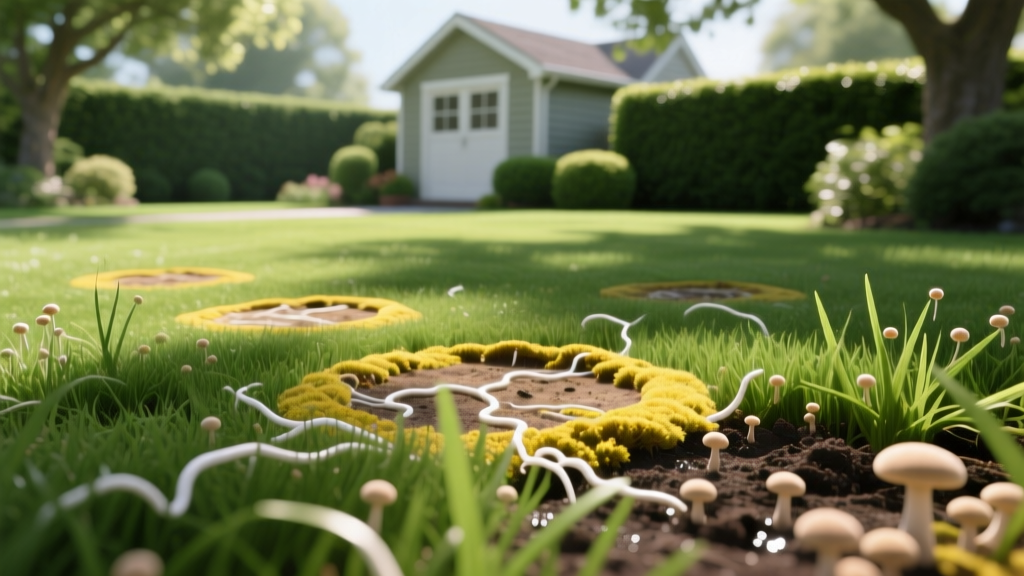
Fungus in Yard: Symptom Diagnosis and Emergency Rescue Fixes
When fungal pathogens invade your turf, the window between minor cosmetic damage and total root-zone collapse is often less than 72 hours. High humidity, poor drainage, and nighttime temperatures above 65°F create a biological incubator that can destroy months of lawn care work in a single weekend. Successfully treating fungus in yard environments requires moving past generic 'lawn disease' sprays and executing a precise, symptom-driven rescue protocol.
This guide bypasses surface-level advice to provide exact diagnostic triage, professional-grade fungicide rotation strategies, and calibrated application metrics to halt active outbreaks immediately.
The 5-Minute Symptom Triage Protocol
Before purchasing any chemical control, you must confirm the pathogen and rule out abiotic stressors. Misdiagnosing drought stress or chinch bug damage as a fungal infection will waste money and accelerate turf decline.
Diagnostic Decision Tree:
- The Tug Test: Grasp a handful of dying grass and pull. If it lifts easily with missing or chewed roots, suspect grubs or billbugs, not fungus.
- The Time Check: Fungal lesions expand rapidly during periods of prolonged leaf wetness (nighttime/early morning). If the damage appeared during a hot, dry, windy week, suspect irrigation failure or chinch bugs.
- The Lesion Check: Use a 10x jeweler's loupe to inspect the margin between green and brown tissue. Fungal infections display distinct hourglass bands, water-soaked margins, or mycelium (cobweb-like threads) in morning dew. Abiotic damage shows uniform necrosis without distinct lesion borders.
Top 3 Lawn Fungi: Visual Symptoms & Rescue Protocols
According to the NC State TurfFiles database, the vast majority of severe residential turf losses are caused by three specific pathogens. Here is how to identify and neutralize them.
1. Brown Patch (Rhizoctonia solani)
Symptom Profile: Irregular circular patches ranging from 6 inches to 3 feet in diameter. In the early morning, you may observe a dark, water-soaked 'smoke ring' at the outer edge of the patch. Individual leaf blades show tan lesions with dark brown borders.
Primary Targets: Tall Fescue, Perennial Ryegrass, Bermudagrass.
Emergency Rescue Fix: Apply a curative rate of Azoxystrobin (FRAC Group 11). For liquid formulations like Syngenta Heritage SC, mix 0.4 to 0.8 fluid ounces per 1,000 square feet. For granular options like Scotts DiseaseEx Lawn Fungicide, apply at the heavy curative rate of 3.5 pounds per 1,000 square feet. Do not apply nitrogen fertilizer while Brown Patch is active; it will fuel the pathogen.
2. Dollar Spot (Clarireedia jacksonii)
Symptom Profile: Small, distinct circles roughly the size of a silver dollar (2-3 inches) that eventually coalesce into large, irregular dead zones. Close inspection of individual blades reveals pale, hourglass-shaped bands with reddish-brown margins.
Primary Targets: Bermudagrass, Zoysia, Bentgrass, Fescues.
Emergency Rescue Fix: Dollar spot thrives in nitrogen-deficient turf. The rescue protocol requires a dual approach: apply a contact/penetrant fungicide like Propiconazole (FRAC Group 3) at 0.37 fl oz per 1,000 sq ft, followed 48 hours later by a light application of slow-release nitrogen (e.g., 0.25 lbs N/1,000 sq ft using Milorganite or sulfur-coated urea) to stimulate leaf growth out of the infection zone.
3. Fairy Ring (Chlorophyllum molybdites & others)
Symptom Profile: Arcs or rings of dark green, hyper-stimulated grass, often bordered by a thin line of dead turf. In Type 2 Fairy Ring, the soil inside the ring becomes severely hydrophobic (water-repellent), leading to localized dry spot symptoms even with heavy irrigation. Mushrooms may appear after rain.
Primary Targets: All turfgrass species, particularly in sandy or high-thatch soils.
Emergency Rescue Fix: Fungicides are largely ineffective for Type 2 Fairy Ring because the pathogen lives deep in the thatch/soil profile and the primary damage is caused by hydrophobic fungal mycelium. The rescue fix requires applying a premium soil surfactant/wetting agent (such as Aquatrols Revolution or Cascade Plus) at 3 oz per 1,000 sq ft, followed immediately by deep-tine aeration and heavy irrigation to break the water-repellent barrier.
Professional Fungicide Matrix & Cost Analysis
Selecting the right active ingredient is critical. Overusing a single chemical class leads to rapid pathogen resistance. Always rotate FRAC (Fungicide Resistance Action Committee) codes. Data below reflects 2026 professional and premium-consumer pricing.
| Active Ingredient | Brand Example | FRAC Code | Curative Rate / 1k sq ft | Est. Cost / 1k sq ft |
|---|---|---|---|---|
| Azoxystrobin | Heritage SC / Scotts DiseaseEx | 11 (QoI) | 0.4 - 0.8 fl oz | $12.00 - $16.00 |
| Propiconazole | Banner Maxx II / BioAdvanced | 3 (DMI) | 0.37 fl oz | $4.50 - $6.00 |
| Fluxapyroxad | Xzemplar | 7 (SDHI) | 0.18 fl oz | $22.00 - $28.00 |
| Pyraclostrobin + Boscalid | Honor Guard / Signature Xtra | 11 + 7 | 0.2 - 0.4 oz | $9.00 - $12.00 |
Emergency Rescue Application Protocol
Applying the correct chemical at the wrong volume or under the wrong weather conditions will result in treatment failure. Follow this exact calibration and application sequence for liquid fungicides.
Step 1: Sprayer Calibration
Foliar diseases (like Dollar Spot and Powdery Mildew) require the chemical to coat the grass blade. Root and crown diseases (like Summer Patch) require the chemical to reach the soil.
- For Foliar Rescue: Calibrate your backpack sprayer to deliver 2 gallons of water per 1,000 square feet. Use a flat-fan nozzle (e.g., TeeJet 8002VS) at 30-40 PSI to ensure fine droplet coverage on the leaf surface.
- For Soil/Root Rescue: Increase carrier volume to 3 to 4 gallons per 1,000 square feet to flush the active ingredient past the thatch layer into the root zone.
Step 2: The Surfactant Multiplier
Most premium liquid fungicides (like Xzemplar or Heritage) do not require an added non-ionic surfactant (NIS) because they contain built-in adjuvants. However, if you are using a generic Propiconazole or Chlorothalonil product, adding a NIS (like LescoAquax or a generic 80/20 NIS) at 0.125% v/v (roughly 1/2 teaspoon per gallon of water) is mandatory to break the surface tension of the water droplet and allow the chemical to penetrate the leaf cuticle.
⚠️ Critical Weather Constraint: Never apply a rescue fungicide if the UV index is above 8 and temperatures exceed 85°F. The liquid carrier will flash-evaporate before the chemical can penetrate the stoma, leaving toxic salt residues that will chemically burn the already stressed turf. Apply strictly between 6:00 PM and 8:00 PM, or before 7:00 AM.
Step 3: Post-Application Watering Rules
Should you water the lawn immediately after spraying? The Penn State Extension Turfgrass Pathology program provides a clear directive based on the disease target:
- DO NOT water in if treating foliar diseases (Dollar Spot, Brown Patch, Powdery Mildew). The chemical must remain on the leaf tissue for 24-48 hours to halt the infection.
- DO water in (apply 0.1 to 0.2 inches of irrigation) if treating root/crown diseases (Fairy Ring, Summer Patch, Spring Dead Spot) to move the active ingredient into the soil profile.
Post-Rescue Cultural Adjustments
Chemical rescue stops the bleeding, but cultural adjustments prevent the hemorrhage from returning. Fungal pathogens are opportunistic; they exploit microclimates created by poor lawn management.
- Irrigation Timing Shift: Immediately stop watering between 6:00 PM and midnight. Shift all irrigation cycles to 4:00 AM - 6:00 AM. This ensures the grass blades dry rapidly once the sun rises, collapsing the 'leaf wetness duration' metric that fungi require to germinate spores.
- Mower Blade Sanitation: Fungal spores cling to mower decks and blades. After mowing an infected zone, spray the underside of your mower deck with a 10% bleach solution or a commercial quaternary ammonium disinfectant before moving to a healthy section of the yard.
- Thatch Management: If your thatch layer exceeds 0.5 inches, it acts as a sponge, holding moisture against the grass crowns and harboring fungal mycelium. Schedule a core aeration and dethatching (power raking) for the next optimal growing season (early fall for cool-season grasses, late spring for warm-season grasses).
Frequently Asked Triage Questions
Can I mix a fungicide with a liquid weed killer to save time?
No. Mixing broadleaf herbicides (like 2,4-D or Triclopyr) with systemic fungicides can cause antagonistic chemical reactions, reducing the efficacy of both products. Furthermore, herbicides cause temporary turf stress, which compromises the grass's natural immune response exactly when it needs to fight off the fungal pathogen. Separate applications by at least 5 to 7 days.
How long does it take to see results after a curative application?
A true curative fungicide will not 'cure' the already brown, dead tissue. The grass blades that are necrotic will remain brown until they are mowed off and replaced by new growth. However, you should see a cessation of disease spread within 48 to 72 hours. The 'smoke rings' or advancing margins will stop expanding, and new emerging leaves from the crown will be healthy and green.
Is baking soda or neem oil effective for yard fungus?
While sodium bicarbonate (baking soda) and neem oil possess mild fungistatic properties, they are strictly preventative and highly ineffective against active, established turfgrass pathogens like Rhizoctonia or Clarireedia. Relying on organic home remedies during an active outbreak will result in severe turf loss. Reserve neem oil for minor ornamental garden powdery mildew, and use synthetic or advanced biological fungicides (like Bacillus amyloliquefaciens strain D747) for lawn rescue operations.

