
Pest Control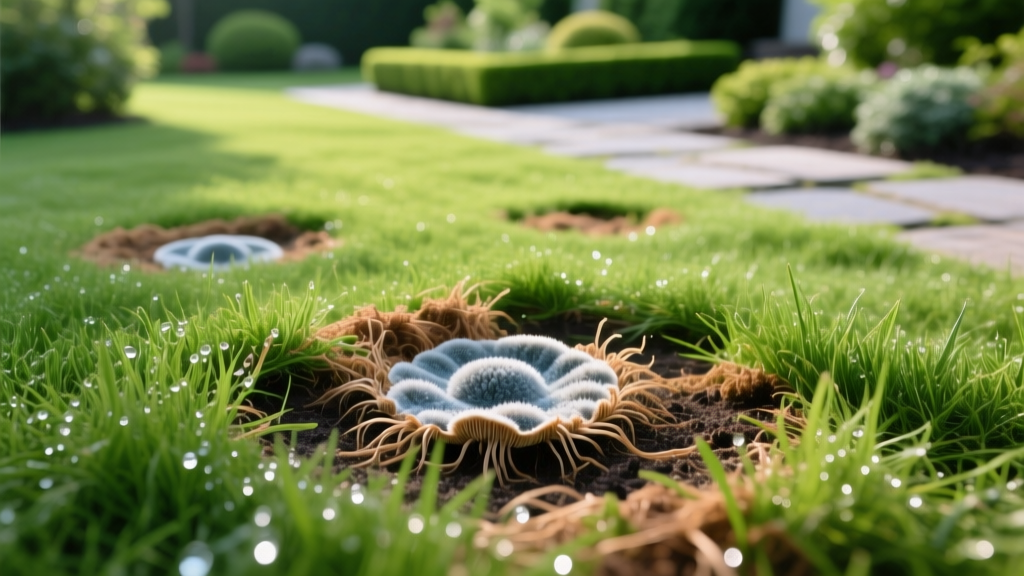
Identifying Common Yard Fungus Types: Symptoms and Rescue Fixes
The High Cost of Fungal Misdiagnosis
Applying the wrong fungicide to a misidentified lawn disease is the most expensive mistake homeowners make in turf management. Fungal pathogens have distinct life cycles, environmental triggers, and chemical resistance profiles. Broadcasting a generic contact fungicide on a systemic root disease like Fairy Ring will yield zero results, while repeatedly applying the same strobilurin chemistry to Dollar Spot will rapidly breed resistant pathogen strains. Accurate diagnosis of specific yard fungus types requires observing lesion patterns, mycelium structures, and the time of day symptoms manifest.
Symptom Matrix: Matching Visual Clues to Yard Fungus Types
Before purchasing chemical controls, cross-reference your lawn's symptoms with this diagnostic matrix. Turfgrass pathology relies on the intersection of grass species, temperature, and visual markers to confirm the pathogen.
| Pathogen | Primary Grass Targets | Visual Symptoms | Environmental Triggers |
|---|---|---|---|
| Brown Patch | Tall Fescue, Ryegrass, Bentgrass | Irregular tan lesions with dark borders; 'smoke rings' in morning | Night temps > 70°F, high humidity |
| Dollar Spot | Bermuda, Zoysia, Fescue, Bluegrass | Silver-dollar-sized bleached spots; cobweb mycelium at dawn | Low soil nitrogen, high canopy moisture |
| Powdery Mildew | Kentucky Bluegrass, Fescue (in shade) | White, talcum-like powder on leaf surfaces; yellowing | Shaded areas, 60-70°F, poor air flow |
| Fairy Ring | All turf species | Dark green arcs, rings of mushrooms, or dead hydrophobic soil | Thatch buildup, buried woody debris |
Deep Dive: 4 Major Yard Fungus Types and Rescue Protocols
1. Brown Patch (Rhizoctonia solani)
Brown patch is the most destructive summer disease for cool-season grasses, particularly Tall Fescue. The pathogen attacks the leaf sheath, causing the blade to rot at the base and pull away easily when tugged. According to NC State TurfFiles, the hallmark diagnostic feature is the 'smoke ring'—a dark, water-soaked border visible at the outer edge of the patch during early morning hours before the sun dries the canopy.
Rescue Fix: Apply a systemic FRAC Group 11 fungicide like Azoxystrobin (Heritage G). The precise curative rate is 2 to 4 lbs per 1,000 square feet. Water it in immediately with 1/8 inch of irrigation to move the active ingredient into the soil profile and thatch layer where the pathogen resides. Expect a 2026 retail cost of approximately $65 for a 30lb bag, treating up to 15,000 sq ft.
2. Dollar Spot (Clarireedia jacksonii)
Formerly known as Sclerotinia homoeocarpa, this pathogen thrives when turf is nitrogen-deficient. The lesions feature distinct hourglass shapes with reddish-brown margins. If you inspect the lawn at dawn while dew is present, you will see thick, white, cobweb-like mycelium spanning the grass blades.
Rescue Fix: Correct the nitrogen deficiency immediately with a quick-release fertilizer (e.g., 46-0-0 urea at 1 lb of nitrogen per 1,000 sq ft). Concurrently, apply a FRAC Group 3 DMI fungicide like Propiconazole (Honor Guard PPZ) at a rate of 1 to 2 fluid ounces per 1,000 sq ft. Mix with a non-ionic surfactant at 0.25% v/v to ensure the chemical penetrates the waxy leaf cuticle.
3. Powdery Mildew (Erysiphe graminis)
Powdery mildew is strictly an aesthetic and vigor issue, rarely killing the turf outright but severely weakening it. It manifests almost exclusively in dense shade with poor air circulation. The UC IPM Pest Notes emphasize that chemical control is futile if the microclimate is not altered.
Rescue Fix: Prune lower tree branches to increase sunlight penetration and air movement. Apply Myclobutanil (Spectracide Immunox) at 1.5 oz per gallon of water, covering 500 sq ft. For long-term resolution, overseed the shaded zone with a shade-tolerant fine fescue blend, such as creeping red fescue or chewings fescue, which possess higher genetic resistance to E. graminis.
4. Fairy Ring (Basidiomycetes species)
Fairy rings present as three distinct types: Type I (dead, hydrophobic soil ring), Type II (dark green stimulated growth ring), and Type III (mushroom fruiting bodies). The primary issue with Type I is that the fungal mycelium creates a waxy, water-repellent barrier in the soil, inducing localized drought stress.
Rescue Fix: Fungicides are largely ineffective against the deep mycelial mats of Fairy Ring. The rescue protocol requires physical disruption. Use a hollow-tine aerator to punch through the hydrophobic layer. Follow up with a heavy application of a soil penetrant surfactant, such as Cascade Aqua-Spiker or Revolution, applied at 3 oz per 1,000 sq ft, and water deeply to force moisture past the waxy barrier.
Chemical Rescue: Managing Fungicide Resistance
A critical failure point in residential lawn care is the repeated use of a single chemical class. Pathogens mutate rapidly; relying solely on strobilurins (FRAC 11) will result in resistant Dollar Spot and Brown Patch populations within two to three application cycles.
The Rotation Rule: Never apply the same FRAC code more than twice consecutively. Rotate your rescue treatments. If your first curative application is Azoxystrobin (FRAC 11), your follow-up application 14 days later must be a triazole like Propiconazole (FRAC 3) or a SDHI like Fluxapyroxad (FRAC 7).
Preventative Cultural Fixes: Altering the Microclimate
Chemical rescues only buy time. According to Rutgers Turfgrass Research, permanent suppression of yard fungus types requires modifying the cultural environment to make it hostile to pathogens and favorable to turf recovery.
- Irrigation Timing: Shift watering schedules strictly to the pre-dawn hours (4:00 AM - 6:00 AM). Watering in the evening leaves the canopy wet for 12+ hours, guaranteeing spore germination. Watering at midday wastes up to 30% of moisture to evaporation.
- Mowing Height Calibration: Scalping turf below its optimal height reduces the photosynthetic factory and stresses the root system. Raise Tall Fescue to 3.5 inches and Bermuda to 1.5 inches. Never remove more than 1/3 of the leaf blade in a single pass.
- Thatch Management: A thatch layer exceeding 0.5 inches acts as a sponge for fungal spores and a barrier to fungicide penetration. If your thatch is too thick, schedule a deep core aeration and top-dressing with compost to introduce microorganisms that naturally decompose the thatch matrix.
- Soil Testing: Before the next growing season, pull 10 core samples and send them to a university extension lab. Target a soil pH between 6.0 and 6.8. Acidic soils (below 5.5) lock up essential nutrients and increase turf susceptibility to Dollar Spot and Red Thread.

