
Pest Control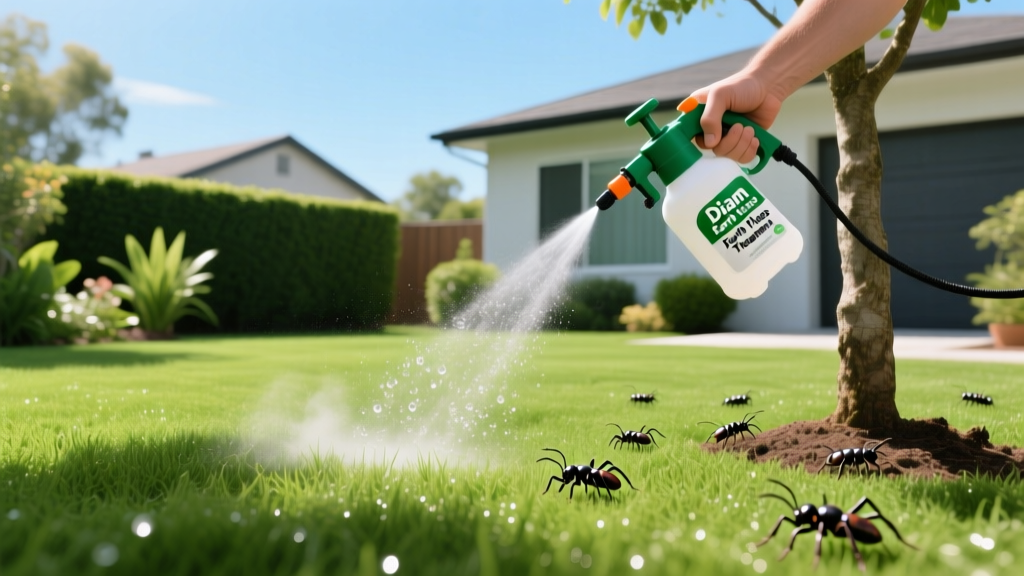
Diam Earth Fleas Treatment: A Complete Yard Defense Guide
Understanding Diam Earth Fleas Defense
When homeowners search for diam earth fleas solutions, they are referring to diatomaceous earth (DE), a naturally occurring siliceous sedimentary rock crumbled into a fine white powder. In the context of yard defense, DE is a mechanical insecticide, not a chemical one. It relies on the microscopic, razor-sharp edges of fossilized diatoms to lacerate the waxy exoskeleton of adult fleas and their larvae, leading to fatal desiccation. Because it works mechanically, fleas cannot develop biological resistance to it, making it a cornerstone of organic, long-term pest management strategies.
However, applying DE in an outdoor environment presents unique challenges compared to indoor use. Wind, rain, and morning dew can severely compromise its efficacy. To successfully break the flea life cycle in your yard, you must understand the precise application rates, product grades, and environmental timing required to maintain an active desiccant barrier.
The Science of Desiccation and the Flea Life Cycle
Fleas undergo complete metamorphosis: egg, larva, pupa, and adult. Diatomaceous earth is highly effective against the larval and adult stages. When a flea crawls through a properly applied layer of DE, the silica particles absorb the lipids from the insect's cuticle. According to the National Pesticide Information Center (NPIC), this lipid absorption causes the insect to lose water rapidly and die from dehydration within 24 to 48 hours.
The critical vulnerability in this treatment is the pupal stage. Flea pupae are encased in a sticky, protective cocoon that is virtually impervious to DE. Pupae can remain dormant in your soil for weeks, emerging only when they detect the vibrations and carbon dioxide of a host. Therefore, a single application of diam earth will not eradicate an infestation. You must maintain the DE barrier to kill emerging adults before they can mate and lay new eggs.
⚠ CRITICAL SAFETY WARNING: Food Grade vs. Pool Grade
Never use pool-grade or filter-grade diatomaceous earth in your yard. Pool-grade DE is calcined (heat-treated), which converts the amorphous silica into crystalline silica. Inhaling crystalline silica poses a severe risk of silicosis and is classified as a human carcinogen. Always purchase Food Grade DE, which contains less than 1% crystalline silica and is safe for use around pets and children once the dust has settled. Even with food-grade DE, you must wear an N95 particulate respirator during application to avoid inhaling the fine abrasive dust.
Product Selection and Cost Matrix
Not all food-grade DE products are milled equally. The particle size distribution dictates how well it adheres to grass blades and soil surfaces. Below is a comparison of the top-performing DE products for yard application as of 2026.
| Brand / Product | Weight & Avg Price | Milling Quality | Best Application Method |
|---|---|---|---|
| Harris Food Grade DE | 4 lb / $14.99 | Fine, uniform powder. Excellent adherence. | Handheld broadcast spreader or bulb duster. |
| Safer Brand Ant & Crawling Insect Killer | 4 lb / $12.50 | Slightly coarser. Good for soil penetration. | Shaker can or drop spreader. |
| Earthworks Health Food Grade DE | 10 lb / $27.00 | Ultra-fine, high-purity. Best for large lawns. | Push broadcast spreader (lowest setting). |
Step-by-Step Yard Application Protocol
Achieving a lethal dose of DE requires a visible but thin dusting. If applied too heavily, fleas will simply walk around the piles. If applied too thinly, the desiccation process fails. The target application rate is 1 lb per 1,000 square feet.
- Mow and Rake: Cut your grass to the lowest healthy setting for your turf type (e.g., 1.5 inches for Bermuda, 2.5 inches for Fescue). Rake heavily to remove thatch and expose the soil surface where flea larvae reside.
- Ensure Absolute Dryness: DE is completely inert when wet. Apply only when the grass is bone-dry and no rain is forecasted for at least 48 hours. Late afternoon is ideal, allowing the dust to settle before evening dew forms.
- Calibrate Your Spreader: If using a broadcast spreader, set the aperture to the smallest possible opening (usually a 1/4-inch gap). You want a gentle dusting, not a granular pour.
- Target the Perimeter: Fleas avoid direct sunlight. Concentrate 70% of your product along fence lines, under shrubs, around dog houses, and in shaded transition zones.
- The Chalk Line Test: After spreading, inspect the grass blades. You should see a faint, chalky white coating on the blades and soil. If the soil looks completely white and opaque, you have applied too much. If you cannot see any dust, apply a second light pass.
- Isolate Pets: Keep dogs and cats indoors during application and for at least two hours afterward to allow the airborne particulate matter to settle completely.
The Moisture Paradox: Managing Dew and Rain
The single greatest point of failure in outdoor diam earth fleas treatments is moisture management. When DE absorbs water, the silica particles clump together, losing their microscopic sharp edges and their ability to absorb lipids from the flea's exoskeleton. Once wet, DE must dry out completely to regain its insecticidal properties, but heavy rains will wash it into the soil profile where it is useless against surface-dwelling adults.
"The biggest mistake homeowners make is applying DE once and expecting a permanent cure. Outdoor environments are dynamic. You must treat DE as a temporary barrier that requires active maintenance, especially in humid climates where morning dew neutralizes the powder daily."
To maintain an effective barrier, you must reapply DE every 7 to 10 days, and immediately after any rainfall exceeding 0.25 inches. Because the flea pupal stage can last anywhere from 7 to 14 days (and sometimes longer), you must commit to this reapplication schedule for a minimum of 21 to 28 days to ensure you catch and kill the newly emerged adults before they can reproduce.
Advanced Integration: Combining DE with Beneficial Nematodes
For severe infestations, relying solely on DE leaves the pupal and deep-soil larval stages vulnerable. According to University of Kentucky Entomology, integrating biological controls provides a comprehensive yard defense. The most effective synergy is pairing DE with Steinernema carpocapsae (beneficial nematodes).
While DE patrols the surface and thatch layer, killing emerging adults, beneficial nematodes are watered into the soil. These microscopic worms actively hunt and infect flea larvae and pre-pupae in the top 2 inches of soil, releasing bacteria that kill the host within 48 hours.
Application Sequence:
- Day 1: Apply beneficial nematodes via a hose-end sprayer in the early evening. Water the lawn lightly to wash them into the soil.
- Day 3: Once the grass and topsoil have completely dried out, apply your food-grade DE to the surface.
- Day 10: Reapply DE after the morning dew has evaporated.
This two-pronged approach attacks the flea population from both the subterranean larval stage and the surface-level adult stage, reducing the overall population by up to 90% within a single month.
Frequently Asked Questions
Will diam earth harm my earthworms or beneficial soil microbes?
No. Earthworms have a thick, mucous-coated cuticle that protects them from the desiccating effects of DE. Furthermore, DE is essentially inert silica once incorporated into the soil, posing no threat to mycorrhizal fungi or soil bacteria.
Can I mix DE with water and spray it on my lawn?
While you can mix DE with water to apply it via a pump sprayer (using a ratio of 1/4 cup DE per gallon of water), it will only become effective once the water completely evaporates and leaves a dry dusting on the grass. Spraying it wet offers no immediate knockdown effect and risks clogging your sprayer nozzle due to the abrasive nature of the silica.
How long does it take to see results?
You will notice a reduction in adult flea activity within 48 to 72 hours of the first dry application. However, true eradication of the yard population requires breaking the reproductive cycle, which takes a minimum of three weeks of consistent, dry-surface maintenance.

