
Pest Control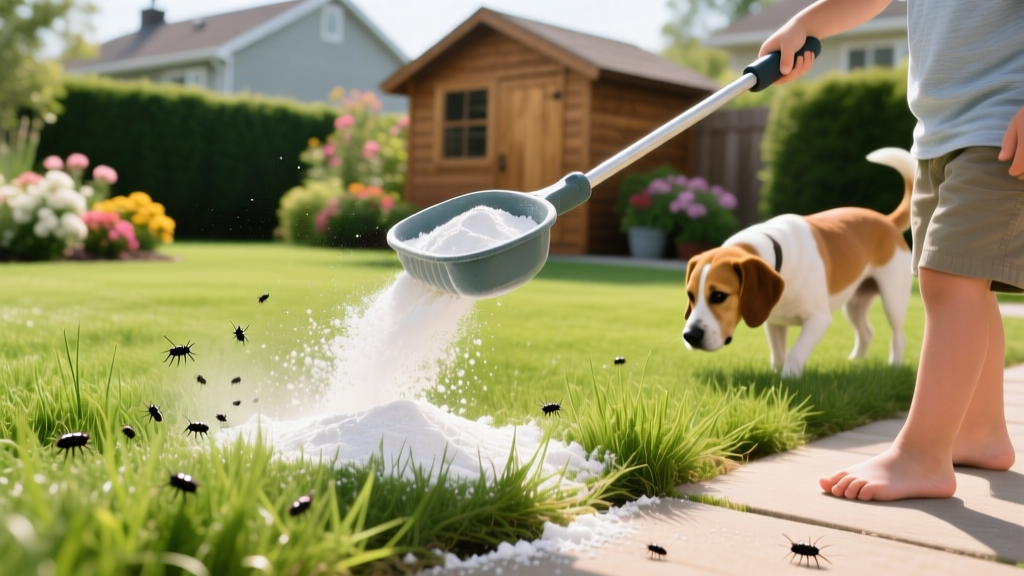
Diatomaceous Earth Flea Control: A Complete Yard Defense Guide
Most homeowners fail at flea management because they treat their pets but ignore the environment. According to the Centers for Disease Control and Prevention, adult fleas on your dog or cat represent only about 5% of the total population. The remaining 95%—eggs, larvae, and pupae—are hiding in your yard. For those seeking a non-toxic, environmentally sound approach to outdoor pest management, diatomaceous earth flea control is a highly effective mechanical weapon, provided it is applied with scientific precision rather than guesswork.
The Mechanics of Desiccation: How DE Actually Works
Diatomaceous earth (DE) is not a chemical poison; it is a mechanical insecticide. Composed of the fossilized remains of microscopic algae called diatoms, food-grade DE consists primarily of amorphous silica. Under a microscope, DE particles look like shards of broken glass, measuring between 10 and 50 micrometers in diameter.
When a flea walks across a treated surface, the microscopic shards abrade the insect's waxy outer cuticle. Once this protective lipid layer is compromised, the flea rapidly loses moisture and dies from desiccation (dehydration). Because this is a physical mode of action, fleas cannot develop genetic resistance to DE, making it a sustainable long-term defense strategy.
CRITICAL SAFETY WARNING: Pool-Grade vs. Food-Grade DE
Never use pool-grade (filter-grade) diatomaceous earth in your yard or home. Pool-grade DE undergoes a calcination process that alters its chemical structure, creating high levels of crystalline silica, which is highly toxic to human and animal lungs. Always purchase Food-Grade DE, which contains less than 1% crystalline silica. Even with food-grade DE, inhaling the fine dust can cause respiratory irritation. Always wear an N95 particulate respirator during application.
Strategic Yard Mapping: Targeting Flea Microclimates
The most common failure mode in diatomaceous earth flea control is broadcasting the powder across the entire sunlit lawn. Fleas are highly susceptible to UV radiation and desiccation from direct sunlight; they do not survive in open, dry, sunny grass. Instead, they congregate in shaded, humid microclimates with 70% to 85% relative humidity.
To maximize your return on investment and labor, restrict your DE application to the following high-risk zones:
- Perimeter Foundations: The shaded 2-foot band where your home's foundation meets the soil, especially on north-facing walls.
- Under-Structure Cavities: Beneath wooden decks, porches, and raised patios where pets frequently rest.
- Canine Transit Routes: The specific paths your dog takes from the door to their favorite shaded relief areas.
- Shaded Mulch and Leaf Beds: Areas under dense shrubbery, ivy, or pine straw where moisture is trapped.
- Outdoor Pet Housing: Inside and immediately surrounding dog houses, kennels, and outdoor feeding stations.
Step-by-Step Outdoor Application Protocol
Achieving lethal efficacy requires the right tools and environmental conditions. DE is completely ineffective when wet, so timing your application around the weather forecast is mandatory.
Step 1: Environmental Preparation
Mow the grass in your targeted transition zones as short as possible. Remove wet leaf litter, thick thatch, and debris. The goal is to expose the bare soil and create a dry surface for the DE to adhere to.
Step 2: Moisture Verification
Check the soil moisture. If the ground is damp from morning dew or recent rain, wait. Applying DE to damp soil causes the powder to clump and lose its abrasive, desiccating properties. Apply only when the top inch of soil and surrounding hardscapes are bone-dry.
Step 3: Precision Application Rates
For targeted outdoor zones, the optimal application rate is 1 to 2 pounds of food-grade DE per 1,000 square feet. A standard 4-pound bag (typically costing between $15 and $22) is sufficient to heavily treat 2,000 to 4,000 square feet of microclimate zones.
- For soil and mulch beds: Use a hand-crank broadcast spreader or a shaker can to apply a barely visible, fine dusting. If you can see thick white piles, you have applied too much; insects will simply walk around the piles.
- For crevices, deck joints, and kennel corners: Use a handheld bulb duster. The bulb duster injects a fine, aerosolized cloud of DE deep into cracks where flea larvae hide.
Cost and Efficacy Matrix: DE vs. Chemical Alternatives
Understanding how diatomaceous earth stacks up against conventional chemical treatments helps you build a comprehensive Integrated Pest Management (IPM) strategy. Below is a comparative analysis based on 2026 market pricing and entomological efficacy.
| Treatment Type | Target Life Stage | Est. Cost per 1k sq ft | Rain Resistance | Pet & Wildlife Safety |
|---|---|---|---|---|
| Food-Grade DE | Adults | $3.50 - $5.50 | None (Washes away) | High (Once settled) |
| Bifenthrin (Pyrethroid) | Adults & Larvae | $8.00 - $12.00 | Moderate | Low (Highly toxic to cats, fish, and bees) |
| IGR (Pyriproxyfen) | Eggs & Larvae | $10.00 - $14.00 | High | High (Mimics insect hormones only) |
| S. carpocapsae Nematodes | Larvae & Pupae | $15.00 - $20.00 | High (Requires moisture) | High (100% organic biological control) |
Overcoming the Primary Failure Mode: The Moisture Cycle
The National Pesticide Information Center notes that DE's efficacy is entirely dependent on its dry state. When DE absorbs water, the microscopic pores fill, and the abrasive edges lose their ability to scratch the flea's exoskeleton.
The Reapplication Framework
Do not treat DE as a 'set and forget' solution. You must reapply the dust immediately after any rainfall, heavy morning dew, or automated sprinkler cycle. To reduce maintenance, apply DE only in covered areas (under decks, inside dog houses) and use alternative treatments like IGRs or nematodes for open, exposed soil beds that receive regular irrigation.
Advanced IPM: Pairing DE with Beneficial Nematodes
For severe yard infestations, relying solely on diatomaceous earth leaves a critical gap in your defense: the pupal stage. Flea pupae are encased in a sticky, protective cocoon that is highly resistant to both desiccation and chemical sprays. To achieve total yard defense, pair your dry DE application with Steinernema carpocapsae beneficial nematodes.
- Apply Nematodes First: Mix the nematodes with water and spray them onto the lawn and shaded soil beds at dusk. These microscopic worms actively hunt and infect flea larvae and pre-emerged adults in the soil.
- Allow the Soil to Dry: Wait 48 to 72 hours for the top layer of soil and hardscapes to dry completely.
- Apply DE as a Topical Barrier: Once dry, apply your food-grade DE to the hardscape perimeters, deck joints, and dry mulch beds. The nematodes handle the moist soil layers, while the DE handles the dry surface transit zones.
'Integrating mechanical desiccants like DE with biological controls like nematodes creates a multi-tiered defense matrix. You are simultaneously attacking the adult fleas on the surface and the developing larvae in the soil matrix, effectively collapsing the local population cycle.'
Frequently Asked Questions
Will diatomaceous earth harm earthworms or beneficial soil insects?
Food-grade DE has minimal impact on earthworms. Earthworms have a thick, mucous-coated exterior that protects them from the abrasive silica particles. Furthermore, earthworms reside deep in the moist soil profile, while DE is applied to the dry surface. However, DE is non-selective and will kill beneficial surface-dwelling insects like ground beetles if they walk through it.
How long does it take for DE to kill a flea?
DE is not an instant knockdown agent. Once a flea's exoskeleton is abraded, it typically takes 12 to 48 hours for the insect to die from dehydration. You will not see immediate results; expect a noticeable reduction in adult flea populations over 7 to 14 days of consistent, dry application.
Can I apply DE directly to my dog's fur for yard defense?
While food-grade DE is sometimes used as a pet dust, it is highly drying to the skin and can cause severe respiratory issues if the dog inhales the dust while shaking or grooming. For yard defense, treat the environment, not the animal. Use veterinarian-approved topical or oral flea preventatives (like isoxazolines) for direct pet protection.

