
Pest Control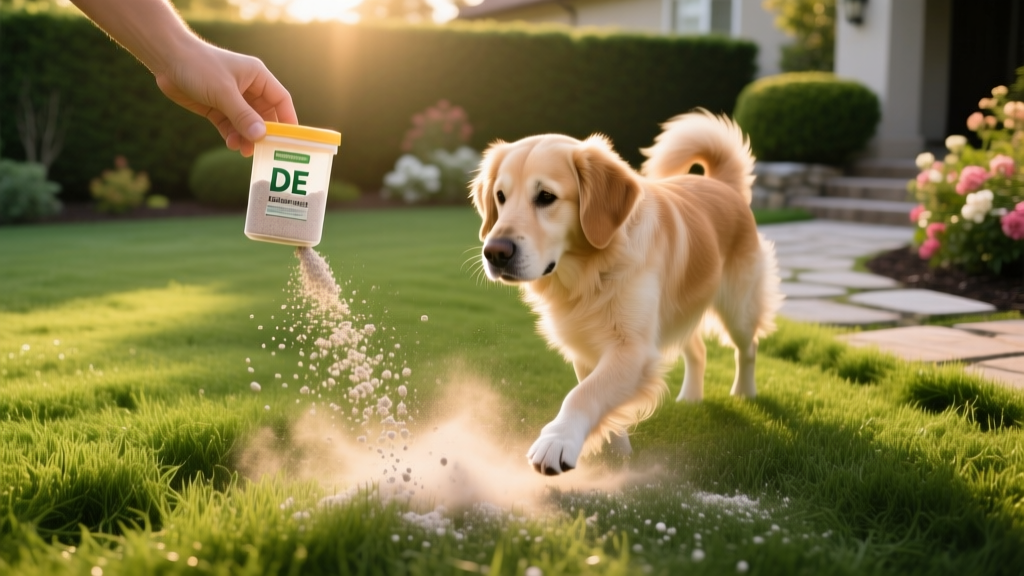
How to Use Diatomaceous Earth for Fleas on Dogs: A Yard & Pet Guide
Treating a flea infestation requires a dual-pronged approach. While finding the right topical solution for your pet is critical, focusing solely on the animal ignores the root of the problem. Adult fleas living on your dog represent only about 5% of the total flea population. The remaining 95%—eggs, larvae, and pupae—are hiding in your yard and home. Understanding how to use diatomaceous earth for fleas on dogs is only half the battle; deploying it strategically in your outdoor environment is what actually breaks the breeding cycle.
The Science of Diatomaceous Earth: How It Kills Fleas
Diatomaceous earth (DE) is a naturally occurring, soft sedimentary rock formed from the fossilized remains of diatoms, a type of hard-shelled microalgae. When milled into a fine powder, it consists primarily of amorphous silicon dioxide.
DE does not kill fleas chemically; it kills them mechanically and physically. Under a microscope, DE particles look like shards of glass. When a flea crawls through the powder, these microscopic edges abrade the waxy outer layer of the insect's exoskeleton. Once this lipid barrier is compromised, the flea rapidly loses moisture and dies of desiccation. Because this is a physical mechanism of action, fleas cannot develop biological resistance to DE, making it a highly reliable long-term defense tool.
Choosing the Right Grade: Food vs. Filter
The most critical mistake homeowners make is purchasing the wrong type of diatomaceous earth. DE is processed in two primary ways, and using the wrong one poses severe health risks to both you and your dog.
| Feature | Food-Grade DE | Filter-Grade (Pool) DE |
|---|---|---|
| Processing | Uncalcined (naturally dried) | Calcined (heated to extreme temperatures) |
| Crystalline Silica Content | Less than 1% | Up to 60% or higher |
| Safety for Pets | Safe for topical use and incidental ingestion | Highly toxic; causes severe respiratory damage |
| Primary Use | Pest control, agricultural feed additive | Swimming pool filtration systems |
Always verify that the packaging explicitly states "Food Grade" and lists the crystalline silica content at less than 1%. According to the National Pesticide Information Center (NPIC), inhaling crystalline silica can lead to silicosis, a severe and irreversible lung disease. Never use pool-grade DE in your yard or on your pets.
Step-by-Step: How to Use Diatomaceous Earth for Fleas on Dogs
Applying DE directly to your dog requires care to avoid respiratory irritation. While food-grade DE is non-toxic if ingested, inhaling any fine particulate matter can cause temporary respiratory distress.
⚠️ Safety Warning: Always wear an N95 mask and safety goggles when applying DE. Keep your dog's face away from the powder, and never apply it on windy days to prevent airborne dust from blowing back into your or your pet's eyes and lungs.
- Prep the Coat: Ensure your dog's coat is completely dry. DE will clump and lose effectiveness if applied to damp fur.
- Measure the Dose: For a medium-sized dog (30-50 lbs), use approximately 1 to 2 tablespoons of food-grade DE. For large breeds, use up to 3 tablespoons.
- Apply with Gloves: Wear nitrile or rubber gloves. Part the fur and rub the powder directly down to the skin, focusing on the neck, base of the tail, and underbelly where fleas congregate.
- Avoid the Head: Stop applying at the base of the neck. Do not dust the face, ears, or snout.
- Let it Set: Leave the powder on the dog for 24 to 48 hours. This gives the DE time to desiccate adult fleas hiding in the undercoat.
- Brush and Bathe: After 48 hours, brush the dog thoroughly outdoors to remove the dead fleas and excess powder, followed by a moisturizing bath, as DE can dry out your dog's skin and coat.
Yard Defense: Breaking the Flea Life Cycle Outdoors
According to the Companion Animal Parasite Council (CAPC), flea larvae thrive in shaded, humid environments with temperatures between 70°F and 85°F. Sunlight and heat kill larvae, which is why they hide under decks, in tall grass, and beneath shrubbery. To achieve true insect yard defense, you must treat these microclimates.
Targeted Outdoor Application Rates
Broadcasting DE across your entire sun-baked lawn is a waste of product and money. Fleas do not survive in direct, hot sunlight. Focus your efforts strictly on shaded transition zones.
- Application Rate: Apply 1 lb of food-grade DE per 1,000 square feet of targeted shaded area.
- Equipment: Use a manual bellows duster (like the JT Eaton 407 Duster) rather than shaking it by hand. A bellows duster shoots the powder deep into the thatch layer and soil crevices where larvae hide, minimizing airborne dust.
- Key Target Zones: Under wooden decks, inside dog houses, along shaded fence lines, beneath porches, and in dense shrub beds where your dog frequently rests.
- Soil Prep: Mow the lawn short and rake away heavy leaf litter in shaded areas before applying. DE needs to reach the soil surface and thatch layer to be effective.
📊 Flea Life Cycle Data: Under optimal yard conditions (75°F, 70% humidity), a flea egg hatches into a larva in just 2 to 12 days. The larval stage lasts 4 to 18 days before spinning a cocoon. Pupae can remain dormant in your yard soil for up to 5 months, waiting for the vibrations of a passing dog to emerge. Consistent environmental treatment is the only way to break this cycle.
The Moisture Problem: When DE Fails and What to Do
The primary failure mode of diatomaceous earth is moisture. Because DE kills via desiccation, it becomes completely inert the moment it gets wet. If it rains, or if your sprinkler system activates, the powder turns into a paste and loses its mechanical killing properties.
How to manage moisture limitations:
- Check the Forecast: Only apply DE outdoors when you have a guaranteed 48-hour window of dry weather.
- Reapplication Protocol: You must reapply DE after every rainfall or heavy morning dew event during peak flea season (late spring through early fall).
- Humidity Limits: In environments where ambient humidity consistently exceeds 65%, DE's efficacy drops significantly because the powder absorbs moisture from the air. In highly humid climates, DE should be used as a supplementary treatment alongside insect growth regulators (IGRs) like pyriproxyfen.
Cost Analysis: DE vs. Conventional Topical Flea Treatments
Integrating DE into your pest control strategy offers significant long-term cost savings, particularly for multi-pet households and large yards.
| Treatment Type | Estimated Cost | Coverage / Duration | Environmental Impact |
|---|---|---|---|
| Food-Grade DE (4 lb bag) | $15 - $22 | Treats 4,000 sq ft of yard + multiple dogs for months | Zero chemical runoff; safe for soil microbiome |
| Oral Preventatives (e.g., NexGard, Bravecto) | $25 - $35 per month | One dog per dose; does not treat the yard | Excreted chemicals can enter waterways |
| Professional Yard Spraying | $150 - $250 per visit | 5,000 sq ft; lasts 3-4 weeks | Broad-spectrum insecticides harm beneficial pollinators |
While oral preventatives are excellent for protecting the dog's internal health against tapeworms and flea-borne anemia, they do nothing to reduce the environmental flea burden in your yard. Using DE for yard defense reduces the overall population, making your dog's primary preventative work less intensely.
Frequently Asked Questions
Can I mix diatomaceous earth with water to spray it on my lawn?
No. Mixing DE with water creates a slurry that clogs sprayer nozzles and renders the powder completely ineffective. Once the water evaporates, the DE dries into solid clumps that lack the surface area and mobility required to abrade a flea's exoskeleton. Always apply DE as a dry dust.
Is diatomaceous earth harmful to earthworms or beneficial soil insects?
When applied correctly to the surface thatch and shaded zones, DE has minimal impact on earthworms, which live deep in the soil profile. However, it is non-selective and will kill beneficial surface-dwelling insects like ladybugs and ground beetles if applied directly to them. Target your application strictly to flea-harbor zones rather than broadcasting it across flower beds.
How long does it take for DE to kill fleas in the yard?
Unlike chemical neurotoxins that cause immediate 'knockdown,' DE takes time. Adult fleas typically die within 24 to 48 hours of continuous contact with the dry powder. Larvae may take up to 72 hours to desiccate. Patience and maintaining a dry application layer are mandatory for success.

