Pest Control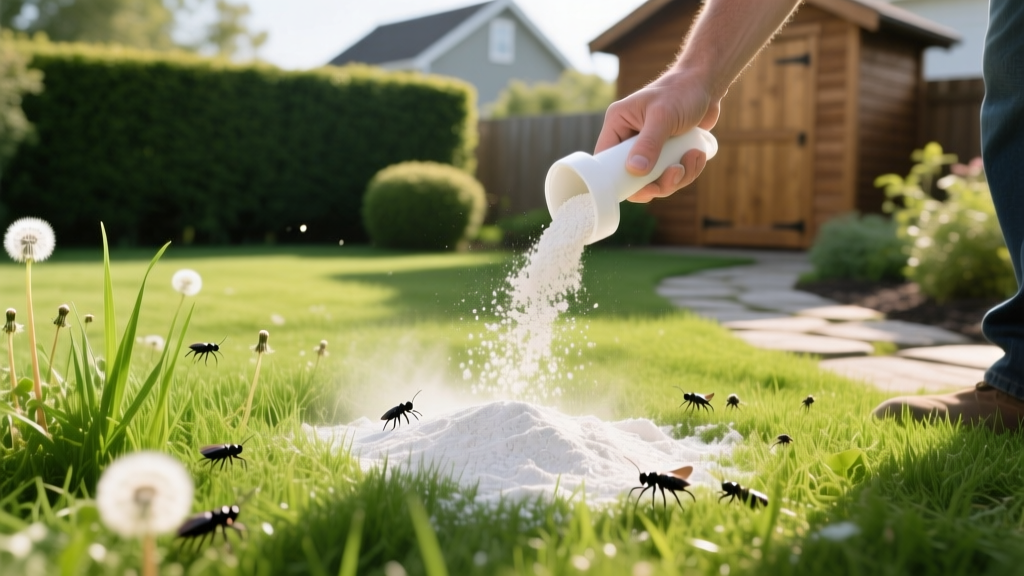
Diatomaceous Earth for Fleas: Yard Defense & Application Guide
Many homeowners searching for outdoor pest solutions encounter the term demetrius earth for fleas due to common voice-to-text and autocorrect errors. The correct scientific and commercial name is diatomaceous earth (DE). When applied correctly, food-grade diatomaceous earth is one of the most effective, non-toxic mechanical insecticides available for yard defense against the cat flea (Ctenocephalides felis), which accounts for over 90% of yard flea infestations in North America.
Unlike chemical pesticides that target the nervous system, DE relies on physical destruction. This guide provides a professional-grade protocol for mapping, applying, and maintaining a diatomaceous earth barrier in your yard to break the flea life cycle without resorting to synthetic pyrethroids.
The Mechanics of Desiccation: How DE Kills Fleas
Diatomaceous earth is composed of the fossilized remains of microscopic, aquatic organisms called diatoms. Under a microscope, DE particles look like shards of glass. When a flea crawls through a properly applied layer of DE, the microscopic silica shards abrade the waxy, waterproof exoskeleton (cuticle) of the insect.
Once this lipid barrier is compromised, the flea rapidly loses moisture to the surrounding air and dies of fatal desiccation (dehydration). Because this is a mechanical mode of action, fleas cannot develop genetic resistance to DE, making it a highly reliable long-term defense strategy. According to the National Pesticide Information Center (NPIC), DE is most effective against crawling insects that come into direct, sustained contact with the dust.
⚠️ CRITICAL SAFETY WARNING: Food Grade vs. Filter Grade
Never use pool-grade or filter-grade DE in your yard. Filter-grade DE is heat-treated (calcined), converting its naturally occurring amorphous silica into crystalline silica, a known human carcinogen that causes severe respiratory disease (silicosis). For yard and pet use, you must purchase Food Grade DE, which contains less than 1% crystalline silica. Always verify the label explicitly states "Food Grade" or "OMRI Listed" before purchase.
Never use pool-grade or filter-grade DE in your yard. Filter-grade DE is heat-treated (calcined), converting its naturally occurring amorphous silica into crystalline silica, a known human carcinogen that causes severe respiratory disease (silicosis). For yard and pet use, you must purchase Food Grade DE, which contains less than 1% crystalline silica. Always verify the label explicitly states "Food Grade" or "OMRI Listed" before purchase.
Strategic Yard Mapping: Targeting Flea Microclimates
A common failure point for DIYers is broadcasting DE across the entire lawn. Fleas do not thrive in open, sunny, well-mowed grass; they require specific microclimates to survive. DE is completely ineffective when wet, so applying it to open, irrigated lawns is a waste of material. Focus your application strictly on shaded, dry microclimates where flea larvae and adults harbor.
Primary Target Zones
- Under Structures: Beneath decks, porches, and sheds where rain cannot penetrate and soil remains dry.
- Pet Resting Areas: Inside and immediately surrounding dog houses, kennels, and shaded patio corners.
- Perimeter Edges: The dry soil gap between your home's foundation and the mulch line.
- Leaf Litter & Brush: Shaded areas under trees where organic matter accumulates and retains humidity (note: you must rake and remove heavy leaf litter before applying DE, or the dust will bind to the leaves rather than the soil).
Step-by-Step Application Protocol
To achieve lethal desiccation without creating hazardous airborne dust clouds, follow this precise application methodology.
- Prep the Zone: Mow the grass in target shaded areas and rake away wet debris. Allow the soil to dry completely. If the soil is damp from morning dew, wait until mid-afternoon.
- Don PPE: Wear a NIOSH-approved N95 respirator (such as the 3M 8210), safety goggles, and long sleeves. While food-grade DE is safe to ingest, inhaling fine silica dust irritates the mucous membranes of the lungs.
- Calibrate the Output: The target application rate is 1 lb of DE per 100 square feet. The layer should be barely visible—think of a light dusting of powdered sugar on a dark table. If you can see thick white piles, you have applied too much, which actually deters fleas from walking through it.
- Apply to the Soil: Use a bulb duster to inject the powder directly into the thatch layer, soil cracks, and base of structural pillars. Avoid applying DE to blooming flowers or active pollinator zones to protect bees and ladybugs.
- Settle Time: Keep pets and children out of the application zone for 2 to 4 hours until the dust has fully settled onto the soil surface.
Application Tools & Cost Breakdown (2026 Market)
Using the right tool prevents product waste and ensures the dust reaches the soil level rather than floating away in the wind. Standard broadcast spreaders (like the Scotts Whirl) will clog immediately due to DE's fine particle size and moisture-attracting properties.
| Tool Type | Recommended Model | Est. Cost | Best Use Case |
|---|---|---|---|
| Manual Bulb Duster | Harris Red Bulb Duster | $12 - $15 | Small cracks, foundation edges, under decks |
| Rotary Hand Duster | Pest Pistol Roto Duster | $45 - $55 | Large shaded areas, dog runs, crawl spaces |
| Pump Duster | Dustick Pro Extension Duster | $80 - $110 | High eaves, deep crawlspace reach |
| Product (Food Grade) | Safer Brands 8 lb Bag | $24 - $28 | Covers approx. 800 sq ft at proper rates |
Troubleshooting Matrix: Why Your Application Might Fail
If you are still seeing fleas jump onto your pets after applying DE, review this diagnostic matrix to identify the failure point.
| Symptom | Probable Cause | Corrective Action |
|---|---|---|
| Fleas still active after 48 hours | Dust applied too thickly; fleas are walking around the piles. | Use a push broom to sweep and thin the dust into a microscopic layer. |
| Flea population drops, then rebounds in 2 weeks | DE does not kill flea pupae (cocoons). New adults are hatching. | Reapply a fresh, light dusting every 7-10 days for three cycles to catch emerging adults before they lay eggs. |
| Dust turns into a clumpy paste | Moisture exposure from rain, sprinklers, or heavy morning dew. | DE loses its desiccation properties when wet. Wait for the area to dry completely, sweep away clumps, and reapply. |
| Pets still scratching indoors | Yard treatment is working, but indoor carpets/hardwood harbor the infestation. | Treat the interior of the home simultaneously using indoor-safe DE or an Insect Growth Regulator (IGR) like Noviflumuron. |
Environmental Limitations & Moisture Management
The Achilles heel of diatomaceous earth is moisture. Because DE works by absorbing the lipids and moisture from the insect's exoskeleton, if the DE itself is already saturated with water from the environment, it cannot absorb moisture from the flea. According to entomological research from the University of Kentucky, mechanical desiccants require a relatively dry environment to maintain efficacy.
In humid climates or during rainy seasons, you must integrate DE with physical yard modifications. Trim back tree canopies to allow sunlight to penetrate shaded soil, fix leaky outdoor spigots, and adjust sprinkler heads so they do not spray onto your DE-treated perimeter zones. If your yard receives more than 0.5 inches of rain, assume the DE barrier is neutralized and plan for reapplication once the soil surface dries.
Frequently Asked Questions
Is "demetrius earth" a different product than diatomaceous earth?
No. "Demetrius earth" is strictly a misspelling and search engine typo for diatomaceous earth. There is no pest control product registered under the name Demetrius. When shopping, always look for the active ingredient listed as Silicon Dioxide (SiO2) or Amorphous Silica on the packaging to ensure you are getting the correct product.
Will food-grade DE harm my dogs or cats if they lick it off their paws?
Food-grade diatomaceous earth is non-toxic to mammals and is even used as an anti-caking agent in commercial pet foods and livestock feed. Once the dust has settled (usually 2-4 hours post-application), it is entirely safe for pets to walk on and groom themselves. The only risk is respiratory irritation during the active application phase while the dust is airborne.
Can I mix DE with water and spray it?
No. Wetting DE to spray it through a pump sprayer will instantly neutralize its insecticidal properties. Furthermore, once the water evaporates, the DE will dry into hard, clumpy streaks that fleas will simply walk over without making the necessary full-body contact required for desiccation. DE must always be applied as a dry dust.