
Pest Control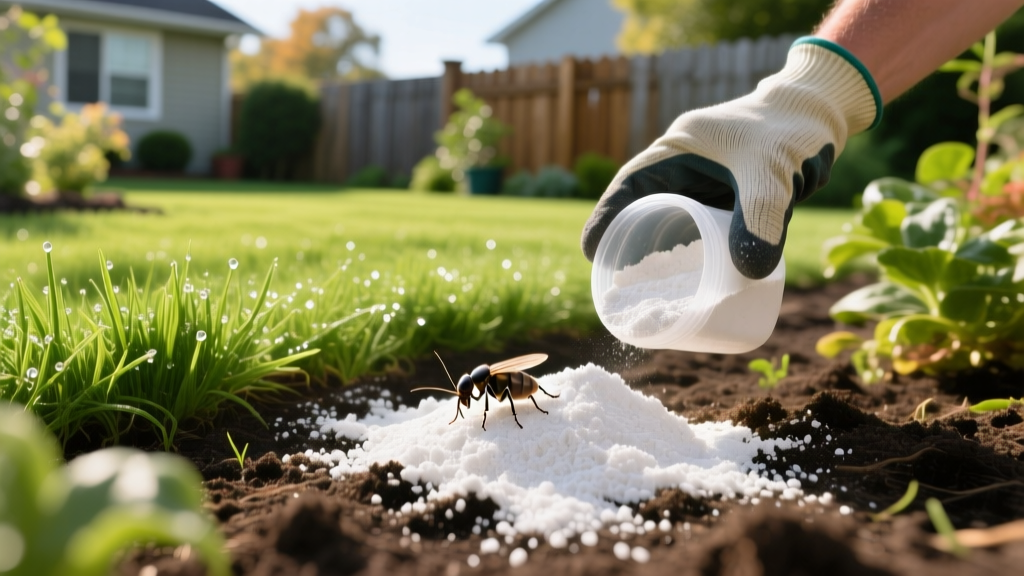
Using Diatomaceous Earth for Fleas: Yard Defense Guide
The Mechanics of Desiccation: Why DE Works on Fleas
Diatomaceous earth (DE) is not a poison; it is a mechanical insecticide. Composed of the fossilized remains of diatoms (microscopic aquatic algae), DE consists primarily of amorphous silicon dioxide. When adult fleas (Ctenocephalides felis) or their larvae crawl across treated surfaces, the microscopic, razor-sharp silica particles abrade the insect's waxy epicuticle. This lipid layer is essential for moisture retention. Once compromised, the flea rapidly loses water and dies from desiccation, typically within 24 to 48 hours.
Because DE relies on physical destruction rather than chemical toxicity, fleas cannot develop genetic resistance to it. However, this mechanical action requires specific environmental conditions to succeed in an outdoor yard setting.
CRITICAL SAFETY WARNING: Inhaling fine silica dust can cause respiratory irritation and, over prolonged exposure, silicosis. Always wear an NIOSH-approved N95 or P100 particulate respirator, safety goggles, and long sleeves when applying dry DE outdoors, even when using "food grade" products.
Selecting the Right Grade: Food vs. Filter
The most common and dangerous mistake homeowners make is purchasing the wrong type of DE. Diatomaceous earth is processed differently for various industrial applications, fundamentally altering its chemical structure and safety profile.
| DE Grade | Crystalline Silica Content | Processing Method | Yard Safety |
|---|---|---|---|
| Food Grade | < 1% | Milled and dried | Safe for yard use (with PPE) |
| Filter / Pool Grade | Up to 60% | Calcined (heat-treated) | TOXIC - Never use outdoors |
According to the National Pesticide Information Center (NPIC), calcination transforms the naturally occurring amorphous silica into crystalline silica, which is a known human carcinogen when inhaled. For yard defense, you must exclusively source products explicitly labeled as "Food Grade" or approved for organic gardening by the OMRI (Organic Materials Review Institute).
Step-by-Step Yard Application Protocol
Fleas do not uniformly distribute across a lawn. They avoid direct ultraviolet (UV) sunlight, which desiccates them naturally. Instead, they congregate in shaded, humid microclimates: under decks, along fence lines, beneath shrub canopies, and in areas where pets frequently rest. Targeting these specific zones saves material and increases efficacy.
Method 1: Dry Dusting (For Under-Deck and Hardscape Crevices)
Dry dusting is highly effective in protected, non-wind-exposed areas like under porches, inside dog houses, and along dry stone walls.
- Calculate Coverage: Apply at a rate of 1 pound per 1,000 square feet. A barely visible, translucent dusting is ideal. If you can see thick white piles, you have applied too much; fleas will simply walk around the mounds.
- Use a Bulb Duster: A handheld bulb duster or a bellows hand duster (like the JT Eaton Bellow Hand Duster) injects the powder deep into cracks and thatch without creating massive airborne dust clouds.
- Target the Perimeter: Create a 2-foot continuous dust barrier along the foundation of your home and the interior perimeter of your fencing to intercept migrating fleas.
Method 2: The Wet Slurry Technique (For Lawns and Thatch)
Applying dry DE to an open lawn is largely ineffective because wind disperses it and it fails to penetrate the turf canopy. The professional workaround is the wet slurry method.
- Mix the Slurry: Combine 1/4 cup of food-grade DE with 1 gallon of water in a pump-action garden sprayer. Agitate vigorously. DE does not dissolve; it suspends.
- Spray the Canopy: Spray the mixture directly into shaded turf, focusing on the thatch layer and soil surface. The water carries the heavy silica particles deep into the grass canopy where flea larvae reside.
- Allow to Dry: DE has zero insecticidal activity while wet. Once the water evaporates (usually within 2 to 4 hours depending on humidity), the DE is left behind as a microscopically thin, highly lethal coating on the grass blades and soil.
Environmental Constraints and Failure Modes
Understanding why DE fails is just as important as knowing how to apply it. Based on guidelines from the Environmental Protection Agency (EPA), DE is classified as a mechanical dust, making it highly susceptible to environmental displacement.
- The Moisture Problem: Rain, heavy dew, and overhead irrigation neutralize DE's desiccating properties. If your yard receives rain, the slurry or dust must be reapplied once the surface dries.
- Wind Displacement: Dry dusting on a breezy day will strip your yard of the treatment and pose a severe inhalation risk to you and your neighbors. Only apply dry DE when wind speeds are below 5 mph.
- Soil Incorporation: Raking DE deeply into the soil renders it useless. It must remain on the surface or within the upper thatch layer where adult fleas and larvae physically travel.
Cost Analysis and Product Recommendations
Food-grade DE is highly cost-effective compared to synthetic pyrethroid sprays, especially when treating large shaded acreage.
| Product | Net Weight | Approx. Cost (2026) | Best Application Method |
|---|---|---|---|
| Harris Food Grade DE | 4 lbs | $15 - $18 | Dry dusting & slurry |
| Safer Brand Ant & Crawling Insect Killer | 1.25 lbs | $10 - $12 | Precision dry dusting |
| Diatomaceous Earth Food Grade (Generic Bulk) | 10 lbs | $25 - $30 | Large property slurry |
For a standard 5,000 square foot shaded backyard, a 4-pound bag of Harris Food Grade DE ($16) provides enough material for two full slurry applications, totaling roughly $3.20 per treatment. This represents a fraction of the cost of hiring a professional exterminator for a synthetic bifenthrin treatment, which typically ranges from $150 to $250 per visit.
Integrating DE into a Broader Yard Defense Strategy
Diatomaceous earth is a powerful tool, but it is not a standalone silver bullet for severe flea infestations. For comprehensive yard defense, integrate DE with cultural and biological controls:
- Canopy Management: Prune lower tree branches and thin dense shrubs to allow maximum UV penetration to the soil surface. Fleas cannot survive in direct, hot sunlight.
- Nematode Application: Apply beneficial nematodes (Steinernema carpocapsae) to the soil. While DE handles the surface thatch and adult fleas, nematodes actively hunt and destroy flea pupae and larvae in the deeper soil layers where DE cannot reach.
- Moisture Control: Fix leaky spigots and adjust sprinkler heads to prevent overspray onto shaded hardscapes. Lowering ambient yard humidity accelerates the desiccation process once fleas contact your DE barriers.
By combining the mechanical lethality of food-grade diatomaceous earth with targeted environmental modifications, you can establish a robust, chemical-free perimeter that breaks the flea life cycle and protects your outdoor living spaces.

