
Pest Control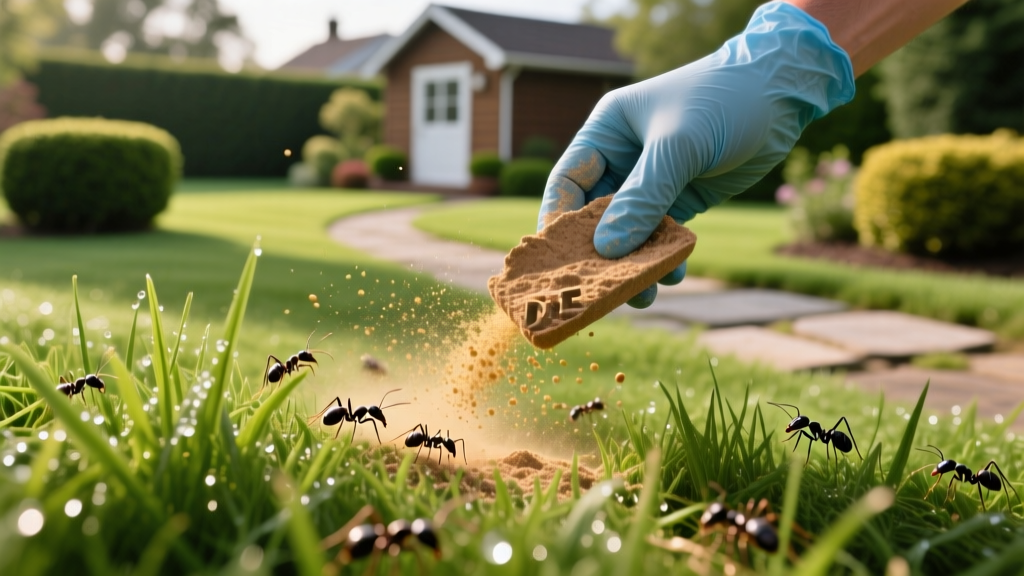
Diatomaceous Earth for Insect Control: A Tactical Lawn Playbook
The Mechanics of Desiccation: How DE Actually Works
Using diatomaceous earth for insect control is often misunderstood as a physical cutting mechanism. Homeowners frequently assume the microscopic fossilized shells of diatoms act like shards of glass, slicing through an insect's exoskeleton. This is a persistent myth. According to the Environmental Protection Agency (EPA), the primary mode of action for amorphous silicon dioxide is lipid absorption.
Insects rely on a waxy outer layer called the epicuticle to retain moisture. When an insect crawls through diatomaceous earth (DE), the highly porous silica particles absorb these protective lipids. Stripped of their waterproofing, the insects die from severe desiccation (dehydration), a process that typically takes 24 to 72 hours depending on ambient humidity and the insect's size. Because this is a mechanical and physical action rather than a chemical one, insects cannot develop genetic resistance to DE.
Food Grade vs. Filter Grade: The Critical Safety Matrix
The most dangerous mistake a homeowner can make is purchasing the wrong grade of DE. Pool-grade DE is calcined (heat-treated), which converts the amorphous silicon dioxide into crystalline silica—a known human carcinogen that causes silicosis. For pest management, you must exclusively use food-grade or pest-control-grade DE.
| Characteristic | Food / Pest Grade DE | Filter / Pool Grade DE |
|---|---|---|
| Crystalline Silica Content | < 1% (Safe for mammalian ingestion) | > 30% (Highly toxic to inhale) |
| Processing Method | Milled and purified (uncalcined) | Heat-treated (calcined) at high temps |
| Efficacy on Insects | High (retains porous lipid-absorbing structure) | Negligible (pores are fused and smoothed) |
| Primary Use Case | Perimeter pest control, grain storage, animal feed | Swimming pool filtration, industrial clarifying |
Tactical Application Playbook: Target-Specific Strategies
Blanket applications waste product and reduce efficacy. DE must be deployed strategically based on the biology of the target pest. The University of Kentucky Entomology Department emphasizes that DE is only effective when applied to dry surfaces where crawling insects are forced to cross it.
1. Perimeter Defense (Ants, Earwigs, Millipedes)
For structural invaders, create a continuous, unbroken barrier. Apply a thin, barely visible layer of DE along the foundation of your home, around window sills, and beneath door sweeps. A thick pile of DE is counterproductive; insects will simply walk around a mound, but they will unknowingly walk through a microscopically thin dusting, ensuring maximum lipid contact.
2. Turf and Lawn Pests (Chinch Bugs, Fleas, Ticks)
When treating lawns, DE must reach the soil surface and thatch layer where these pests reside. Broadcast food-grade DE at a rate of 1 to 2 lbs per 1,000 square feet. Use a crank-style duster to ensure even distribution. Critical rule: Do not apply before a rainstorm or heavy morning dew. Once DE becomes wet, the silica pores fill with water, rendering it completely useless for lipid absorption until it dries out entirely.
⚠️ The Moisture Paradox: DE is hydrophilic. In regions with consistent humidity above 65% or frequent morning fog, DE will absorb ambient moisture from the air, drastically reducing its desiccation speed. In these environments, reapply every 48 hours or switch to a silica gel desiccant product (like Tri-Die) which performs better in high-humidity microclimates.
3. The Mucus Bypass: Why DE Fails on Slugs and Snails
Many gardeners waste time and money dusting DE around hostas and lettuce to deter slugs. This is a failure of biological understanding. Slugs and snails secrete a thick, continuous mucus trail that acts as a physical buffer. The DE particles become trapped in the slime, preventing them from reaching the pest's epidermis. For gastropods, abandon DE and deploy iron phosphate baits (e.g., Sluggo) or copper tape barriers instead.
Pro-Grade Equipment and Product Economics
Shaking DE from a shaker can results in uneven clumping and excessive airborne dust. Investing in the right application equipment ensures precise placement and protects your respiratory system.
- Harris Food Grade DE (4 lb bag): Typically retails for $18–$22. Includes a basic scoop and shaker cap. Excellent for small perimeter jobs.
- Safer Brand Diatomaceous Earth (4 lb bag): OMRI-listed for organic gardening, usually priced around $15–$18. Slightly finer micron size, ideal for indoor baseboard applications.
- Bulk Agricultural DE (50 lb bag): Costs $55–$75. The most economical choice for large turf applications or extensive farm perimeters.
- JT Eaton 400 Pistol-Grip Duster (~$28): Features a metal wand and internal agitator ball to prevent clumping. Delivers a fine, consistent mist into wall voids and deep thatch.
- Dustin-Mizer Crank Duster (~$45): Essential for broadcasting DE across large lawn areas. The crank mechanism pushes air through the hopper, creating a 10-foot dust cloud.
Step-by-Step Deployment Protocol
Follow this exact sequence to maximize lethality while minimizing health risks.
- Equip PPE: Even though food-grade DE is non-toxic to ingest, inhaling any fine particulate matter causes lung irritation. Wear a NIOSH-approved N95 respirator (e.g., 3M 8210) and ANSI-rated safety goggles to keep dust out of your eyes.
- Check the Forecast: Ensure zero precipitation is forecasted for the next 48 hours. Wait until late afternoon when morning dew has fully evaporated from the grass blades.
- Clear the Zone: Rake away heavy leaf litter and mulch from the application zone. DE must be applied to the hard surfaces, soil, or thatch where pests actually travel, not on top of debris they will walk over.
- Apply in Micro-Layers: Squeeze the bellows duster gently. The goal is a translucent dusting. If you can easily see a white pile of powder, you have applied too much.
- Monitor and Reapply: Inspect the barrier after 72 hours. Wind, foot traffic, and settling will degrade the line. Re-touch the perimeter as needed.
Environmental Impact and Non-Target Risks
While DE is an organic, naturally occurring mineral, it is a broad-spectrum mechanical insecticide. It does not discriminate between a destructive chinch bug and a beneficial ground beetle.
Ecological Best Practice: Never apply DE directly to blooming flowers, as foraging bees and pollinators will become coated in the dust and suffer desiccation. Keep applications strictly to the ground level, foundation perimeters, and non-flowering turf zones. Earthworms are generally unaffected by surface applications of DE, as their subterranean mucus layers and soil environment protect them from the dry surface dust.
By understanding the precise mechanics of lipid absorption, selecting the correct amorphous silica grade, and deploying the powder with tactical precision, diatomaceous earth becomes one of the most formidable, resistance-proof tools in your pest management arsenal.

