
Pest Control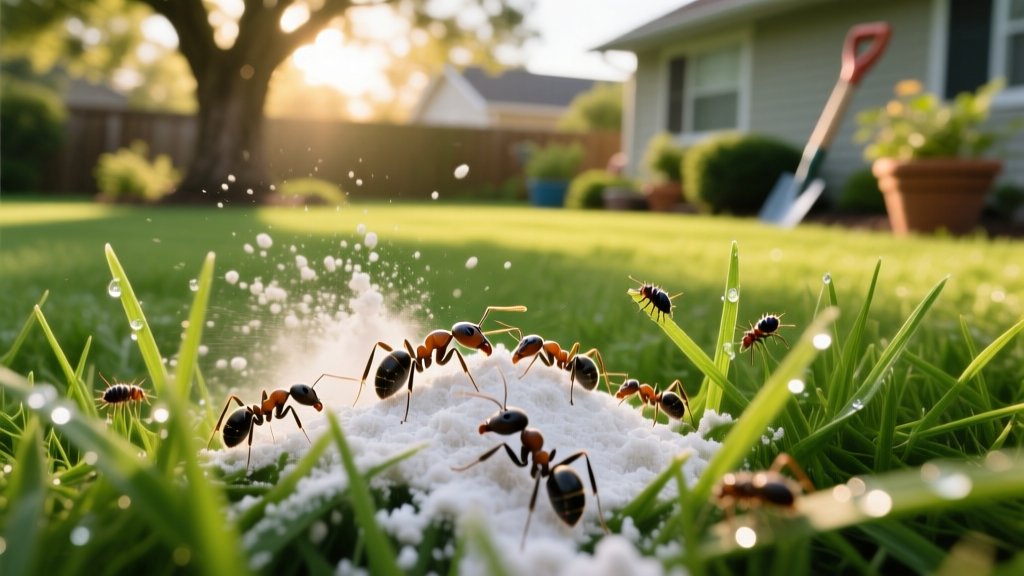
Diatomaceous Earth Pest Control Playbook: A Tactical Lawn Guide
Diatomaceous earth (DE) is one of the most misunderstood tools in the organic lawn care arsenal. Often dismissed by conventional exterminators as a "home remedy," DE is actually a highly effective, mechanically acting desiccant when deployed with precision. Unlike neurotoxic chemical pesticides that pests can develop resistance to, DE kills through physical destruction. However, its efficacy is entirely dependent on proper grade selection, microscopic application thickness, and strict moisture management.
This playbook strips away the anecdotal guesswork. Below is a tactical, data-driven guide to executing diatomaceous earth pest control in your lawn and garden, complete with exact application rates, product specifications, and environmental safeguards.
The Mechanics of Desiccation: How DE Actually Works
Diatomaceous earth is composed of the fossilized remains of diatoms, a type of hard-shelled microalgae. Under a microscope, DE particles resemble jagged shards of glass. When crawling insects with exoskeletons—such as ants, fleas, and cockroaches—walk across a treated surface, these microscopic shards abrade the waxy lipid layer of their cuticle.
Once this waterproof barrier is compromised, the insect rapidly loses moisture to the surrounding environment and dies of desiccation. Because this is a mechanical process rather than a chemical one, pests cannot develop biological resistance to DE. According to the National Pesticide Information Research Center (NPIC), DE's abrasive and absorptive properties make it a highly reliable physical insecticide, provided the target insect has a waxy outer cuticle.
Sourcing the Right Grade: Food vs. Filter vs. Pool
The most critical failure point in DE application is purchasing the wrong grade. DE is processed differently for various industrial applications, and using the wrong type poses severe respiratory risks and ecological damage.
| Grade Type | Silica Composition | Primary Use | Lawn Safety Profile | Avg. Cost (4 lbs) |
|---|---|---|---|---|
| Food Grade | Amorphous silicon dioxide (<1% crystalline) | Pest control, livestock feed additive | Safe for lawns, pets, and humans (when dry) | $14 - $18 |
| Filter / Pool Grade | Calcined (high crystalline silica content) | Swimming pool filtration systems | TOXIC. Causes severe respiratory damage (silicosis) | $10 - $15 |
CRITICAL WARNING: Never use pool-grade or filter-grade DE in your yard. The calcination process alters the silica structure into crystalline silica, which is a known human carcinogen and causes irreversible lung scarring. Always verify the label explicitly states "Food Grade" or "OMRI Listed" for organic use. The CDC National Institute for Occupational Safety and Health (NIOSH) strictly warns against inhaling crystalline silica dust.
For lawn applications, Harris Food Grade Diatomaceous Earth (4 lb bag, typically $16) and Safer Brand Ant & Crawling Insect Killer (1.5 lb shaker, typically $12) are reliable, widely available options that meet the amorphous silica requirement.
The Application Playbook: Step-by-Step Deployment
Applying DE is not as simple as dumping it on the grass. If applied too thickly, insects will simply walk over the pile. If applied when wet, it becomes entirely inert. Follow this deployment sequence for maximum efficacy.
- Site Preparation: Mow your lawn to a standard height (2.5 to 3 inches) and clear away heavy thatch or wet leaf litter. DE must make contact with the soil surface and the hardscaping perimeters where pests travel.
- Mandatory PPE: Even though Food Grade DE is non-toxic if ingested, inhaling any fine particulate dust irritates the mucous membranes. Wear a NIOSH-approved N95 respirator mask and safety goggles during application.
- Tool Selection: Do not use a standard broadcast spreader; the particles are too fine and will clog the gears. Use a bulb duster (like the Harris Powder Duster, ~$12) for targeted crevice work, or a mechanical crank duster (like the Earthway 2050P, ~$35) for larger perimeter broadcasts.
- The "Micro-Layer" Technique: Apply the dust so lightly that the grass blades and soil are barely tinted white. A barely visible film is lethal to insects; a thick, white cake acts as a physical barrier they will bypass.
Target-Specific Tactics: Ants, Fleas, and Slugs
Different pests require different tactical approaches. Use the following metrics to guide your application rates and placement strategies.
Fire Ants and Pavement Ants
- Mound Treatment: Do not just dump DE on top of the mound. Use a stick to poke 3 to 4 holes into the sides and top of the mound, then puff DE directly into the tunnels using a bulb duster. Follow up with a light dusting over the surface.
- Perimeter Defense: Create a continuous 2-inch wide, microscopically thin band of DE along the foundation of your home and around concrete patios where pavement ants forage.
- Rate: Approximately 1/4 cup per mound; 1 lb per 100 linear feet for perimeter bands.
Fleas and Ticks
- Broadcast Application: For yard-wide flea control, apply DE at a rate of 1 to 2 lbs per 1,000 square feet. Focus heavily on shaded areas, under decks, and around dog houses, as flea larvae avoid direct sunlight and thrive in these microclimates.
- Edge Cases: DE will not kill flea eggs or pupae. It only kills adult fleas and larvae that crawl through the dust. Combine DE treatment with regular mowing and nematode applications for a complete lifecycle disruption.
Slugs and Snails
- Barrier Rings: Slugs secrete a thick mucus that can sometimes allow them to bridge small gaps of DE. To counter this, create a barrier ring at least 2 inches wide and 1/2 inch thick around the base of vulnerable hostas, lettuce, and garden borders.
- Pro-Tip: Mix DE with crushed eggshells to increase the physical abrasiveness of the barrier, overwhelming the slug's mucus production.
The Reapplication Matrix: Weather & Irrigation
Moisture is the ultimate kryptonite for diatomaceous earth. Because DE works by absorbing the lipids and moisture from the insect's cuticle, if the DE itself is already saturated with water from rain or dew, it cannot absorb moisture from the pest.
The Weather Protocol:
- High Humidity (>75% RH): Efficacy drops significantly. DE will clump and lose its abrasive edge. Wait for drier atmospheric conditions.
- Light Rain / Heavy Dew: The DE will temporarily stop working while wet, but if applied to a dry surface initially, it will regain its efficacy once the sun dries it out completely.
- Heavy Rain / Sprinkler Systems: The DE will be washed into the soil profile, rendering it useless against surface crawlers. You must reapply immediately after the soil surface dries.
Tactical Adjustment: Switch your irrigation system from overhead spray to drip irrigation or soaker hoses in garden beds where DE is actively deployed. This keeps the soil surface dry and preserves the dust barrier.
Ecological Impact: Protecting Pollinators
While DE is non-toxic to mammals, birds, and earthworms (earthworms have a thick mucus coating and lack the jointed exoskeletons that DE targets), it is non-selective when it comes to insects. It will kill beneficial insects, including bees and ladybugs, if they come into direct contact with the dust.
"To protect local pollinator populations, never apply DE directly to the blossoms or flowering buds of any plant. Schedule all broadcast applications for late evening or dusk, when bees have returned to their hives and the wind is calm, ensuring the dust settles on the soil rather than drifting onto foliage."
By restricting application to the soil surface, foundation perimeters, and non-flowering zones, you can maintain a robust diatomaceous earth pest control strategy without disrupting the local pollinator ecosystem.
Tactical Summary Checklist
- Buy: Food Grade / OMRI Listed DE only (Amorphous silica).
- Wear: N95 Respirator during deployment.
- Apply: Microscopically thin layers; avoid thick caking.
- Target: Dry soil, hardscape perimeters, and ant mound interiors.
- Maintain: Reapply after heavy rain; avoid overhead irrigation.

