
Pest Control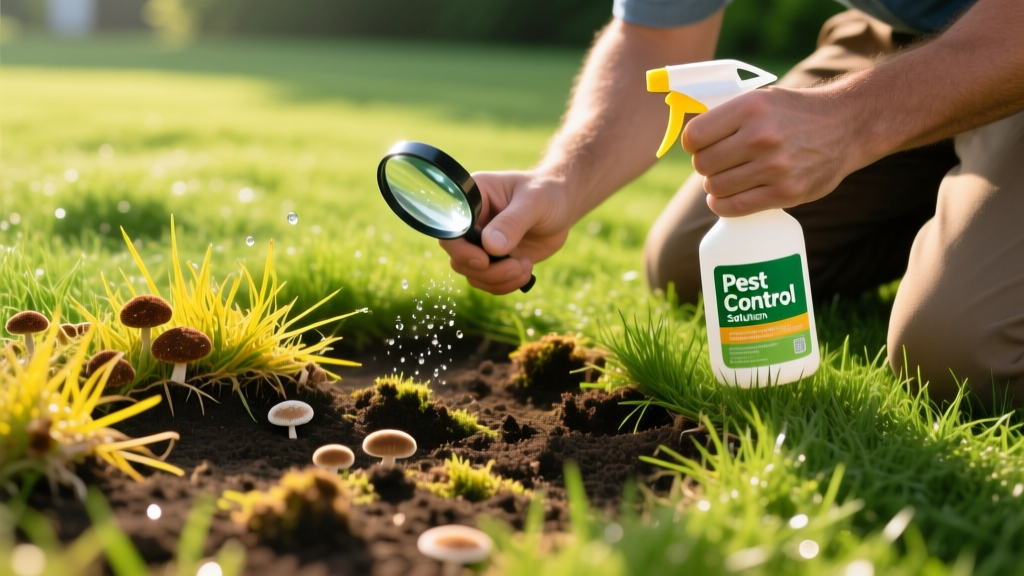
Diseased Lawn Rescue: Diagnose Symptoms and Apply Fast Fixes
Spotting irregular brown patches or strange lesions on your turf triggers immediate panic for most homeowners. However, applying a random fungicide without proper identification often wastes money and accelerates chemical resistance. A diseased lawn requires a methodical diagnostic approach before any rescue treatment is deployed. Fungal pathogens thrive on specific combinations of moisture, temperature, and turf stress, meaning the underlying cause is just as important as the pathogen itself.
This guide bypasses generic advice and provides a clinical framework for diagnosing turf diseases, selecting the correct active ingredients based on FRAC (Fungicide Resistance Action Committee) codes, and executing targeted rescue protocols to halt the spread within 72 hours.
The 5-Minute Visual Diagnostic Framework
Before purchasing any chemical controls, you must differentiate between abiotic stress (drought, dog urine, fertilizer burn) and biotic disease. Use these three field tests to confirm a fungal presence:
The Tug Test (Rule Out Grubs & Drought): Grab a handful of declining grass and pull upward. If the turf rolls back like a carpet with no roots attached, you have a grub infestation or severe drought desiccation, not a foliar disease. If the roots hold firm but the leaf blades are blighted, suspect a fungal pathogen.
The Shear Test (Identify Lesions): Inspect the margin where green grass meets brown grass. Look at individual leaf blades. Fungal diseases leave distinct lesions—hourglass shapes, bleached tips, or dark-bordered rings. Drought stress causes uniform tip-to-base browning without distinct mid-blade lesions.
The Smoke Ring Check (Early Morning Only): Walk your lawn between 6:00 AM and 8:00 AM while dew is heavy. Active Brown Patch and Pythium Blight will display a dark, purplish-black "smoke ring" at the outer edge of the expanding patch. By noon, this ring dries up and becomes invisible.
Symptom-to-Disease Decision Matrix
According to University of Minnesota Extension turf pathologists, accurate visual identification dictates your chemical strategy. Use this matrix to match your lawn's symptoms to the primary suspect.
| Visual Symptom Pattern | Suspect Pathogen | Primary Grass Targets | Optimal Trigger Conditions |
|---|---|---|---|
| Circular patches (1-3 ft), tan lesions with dark brown borders | Brown Patch (Rhizoctonia solani) | Tall Fescue, Ryegrass, St. Augustine | Night temps > 65°F + 10+ hours leaf wetness |
| Silver-dollar sized spots, hourglass lesions with purplish margins | Dollar Spot (Clarireedia jacksonii) | Bermuda, Zoysia, Bentgrass, Fescue | Low soil nitrogen + heavy morning dew |
| Irregular yellow/orange pustules on leaf blades, rubs off on shoes | Lawn Rust (Puccinia spp.) | Kentucky Bluegrass, Ryegrass | Cool nights, dry soil, slow grass growth |
| Dark green rings, sometimes with mushrooms, hydrophobic soil beneath | Fairy Ring (Basidiomycetes) | All turfgrasses | High thatch, decaying wood debris in soil |
Targeted Rescue Fixes: Fungicide Protocols
Once identified, immediate chemical intervention is required to stop active mycelial growth. Homeowners generally rely on systemic fungicides, which are absorbed by the plant and translocated to protect new growth. However, selecting the right active ingredient is only half the battle; understanding FRAC resistance groups is critical for long-term turf survival.
The FRAC Rotation Rule (Crucial for Success)
Fungi mutate rapidly. If you apply Azoxystrobin (FRAC Group 11) repeatedly, the surviving spores will develop genetic resistance, rendering the product useless for the rest of the season. You must rotate chemical classes.
- FRAC Group 11 (Strobilurins): Azoxystrobin. Excellent for Brown Patch and broad-spectrum prevention. Product picks: Scotts DiseaseEX ($25 per 10 lbs, covers 5,000 sq ft) or Syngenta Heritage SC ($160/gallon, professional liquid).
- FRAC Group 3 (DMI Triazoles): Propiconazole or Myclobutanil. Highly curative for Dollar Spot and Rust. Product picks: Bayer BioAdvanced Fungus Control ($20 per 32 oz hose-end) or Quali-Pro Propiconazole ($90/gallon).
- FRAC Group 12 (Phenylpyrroles): Fludioxonil. Excellent contact and penetrant action, often used as a rotation partner for Group 11.
Expert Calibration Tip: For foliar diseases like Dollar Spot and Rust, fungicides must coat the leaf blade. Calibrate your sprayer to deliver 1.5 to 2.0 gallons of water per 1,000 square feet. If you use less water, the chemical hits the soil and bypasses the infected foliage. Do not water in foliar fungicides immediately after application; allow 4 hours for leaf absorption.
Cultural Rescue Protocols (Fixing the Root Cause)
Fungicides are temporary bandages. If the microenvironment remains conducive to the pathogen, the disease will return the moment the chemical residual expires (typically 14-21 days). Implement these cultural corrections simultaneously with your chemical rescue.
1. Irrigation Timing Overhaul
Fungal spores require continuous leaf wetness to germinate. Watering in the evening leaves grass wet for 12+ hours, guaranteeing Brown Patch outbreaks. Shift your irrigation controller to run strictly between 4:00 AM and 6:00 AM. This coincides with the natural dew period, allowing the sun and wind to dry the canopy by mid-morning, effectively cutting the leaf wetness duration in half.
2. Nitrogen Balancing for Dollar Spot
Unlike Brown Patch, which exploits high-nitrogen, lush turf, Dollar Spot aggressively attacks nitrogen-starved grass. If your matrix diagnosis points to Dollar Spot, apply a quick-release nitrogen source (like Urea, 46-0-0) at a rate of 0.5 lbs of actual nitrogen per 1,000 sq ft to stimulate the plant to outgrow the infection. Pair this with a Propiconazole application for a dual-action rescue.
3. Hydrophobic Soil & Fairy Ring Management
Fairy Ring fungi decompose organic matter deep in the soil profile, creating a waxy, hydrophobic layer that repels water. The grass inside the ring dies of drought stress, not direct fungal infection.
The Fix: Rent a core aerator and punch holes 3 inches deep through the ring. Apply a commercial wetting agent (such as Aqua-Aid or a non-ionic surfactant) at 3 oz per 1,000 sq ft, followed by heavy, slow irrigation to break the soil tension and rehydrate the root zone.
When to Abandon Rescue and Renovate
Not every diseased lawn can be saved. If Pythium Blight (often called "cottony blight" due to its white, web-like mycelium in the morning) is left untreated for more than 5 days in 90°F heat, the crown tissue will rot. Once the crown (the white nub at the base of the grass blade) turns brown and mushy, the plant is dead. No fungicide will resurrect dead crowns. If more than 40% of your lawn's crown tissue has succumbed to rot, cease chemical applications, scalp the dead tissue with a dethatching rake, and plan for a complete overseed or sod renovation in the early fall.
Frequently Asked Questions
Can I apply fungicide and fertilizer on the same day?
Yes, but with caveats. Granular fungicides (like Scotts DiseaseEX) and granular fertilizers can be applied in the same spreader pass. However, if using liquid systemics, avoid tank-mixing with high-salt liquid fertilizers, as the salt can cause the fungicide to precipitate out of the solution, clogging your sprayer nozzles and reducing efficacy.
Does mowing spread lawn disease?
Absolutely. Mowing an active Brown Patch or Dollar Spot outbreak will physically drag mycelium across the lawn, inoculating healthy grass. During an active rescue phase, raise your mowing height by 0.5 inches to reduce plant stress, and thoroughly wash your mower deck with a 10% bleach solution or Lysol after cutting the infected zones.

