
Pest Control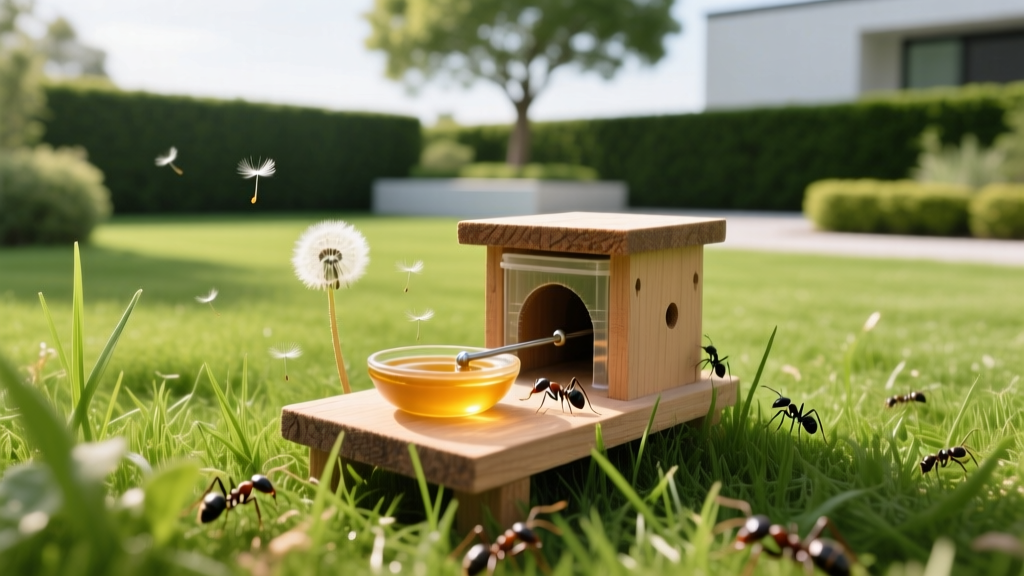
How to Build a Natural Ant Trap for Organic Lawn Pest Control
The Science of Colony Elimination: Why Contact Killers Fail
When treating lawn-destroying species like pavement ants (Tetramorium immigrans) or field ants (Formica spp.), homeowners often reach for fast-acting chemical contact sprays containing bifenthrin or permethrin. While these synthetic pyrethroids kill foraging workers on contact, they only eliminate 5% to 10% of the total colony. The queen, safely buried 2 to 3 feet beneath your turfgrass, simply accelerates egg production to replace the lost workers, leading to a rebound effect within 14 days. Furthermore, these chemicals decimate beneficial soil microbiomes and earthworm populations essential for lawn aeration.
Building an effective natural ant trap relies on a completely different biological mechanism: trophallaxis. This is the mouth-to-mouth transfer of liquid food among colony members. By engineering a slow-acting organic bait, foraging workers consume the toxin, carry it back to the nest, and feed it directly to the queen and larvae. According to the University of California Integrated Pest Management (UC IPM) program, slow-acting baits are the only proven method for achieving total colony collapse in mature ant mounds without broadcasting toxic chemicals across your lawn.
⚠ Critical Warning: The Fast-Kill Trap
If your DIY bait concentration is too high, worker ants will die before reaching the nest. This creates "bait aversion," where surviving ants associate the food source with death and permanently avoid your trap. Precision in your dilution ratios is non-negotiable.
Top 3 DIY Natural Ant Trap Recipes
Commercial organic liquid baits (like Terro) cost roughly $6.00 for a 12-pack of pre-filled stations. While convenient, they often dry out within 48 hours on a hot, sun-baked lawn. A DIY approach costs approximately $0.12 per station and allows you to customize the matrix based on the colony's current nutritional phase. You will need a base of 20 Mule Team Borax (typically $4.99 for a 4 lb box at most hardware stores), which the EPA recognizes as a low-toxicity, naturally occurring mineral salt.
Recipe 1: The Classic Borax-Sucrose Gel (For Sweet Foragers)
- Ingredients: 1 part Borax (sodium tetraborate), 3 parts white granulated sugar, 1 cup warm water.
- Preparation: Borax does not dissolve well in cold water. Heat the water to roughly 150°F, stir in the sugar and Borax until completely clear. Soak standard cotton balls in the solution.
- Target Concentration: This yields roughly a 2.5% Borax concentration by volume, the exact threshold required to allow workers to survive the 2-hour journey back to the queen.
Recipe 2: Boric Acid & Peanut Butter Paste (For Grease/Protein Foragers)
During early spring, colonies prioritize protein and lipids for brood rearing and will ignore sugar baits.
- Ingredients: 1 teaspoon food-grade Boric Acid powder, 2 tablespoons crunchy peanut butter.
- Preparation: Mash the boric acid into the peanut butter until uniformly mixed. The oils in the peanut butter mask the bitter taste of the boric acid and protect the bait from rapid dehydration in outdoor environments.
Recipe 3: Spinosad & Apple Jelly Matrix (OMRI-Listed Hybrid)
For severe infestations where borax is failing, Spinosad—a natural substance made by a soil bacterium (Saccharopolyspora spinosa)—is highly effective. Look for an OMRI-listed product like Monterey Garden Insect Spray.
- Ingredients: 1/2 teaspoon Spinosad concentrate, 2 tablespoons apple jelly.
- Preparation: Mix thoroughly. Apple jelly provides a high-fructose lure that mimics the honeydew produced by aphids, a primary food source for many turf-dwelling ant species.
Seasonal Foraging Matrix: When to Use Which Bait
One of the most common reasons a natural ant trap fails is a mismatch between the bait matrix and the colony's seasonal dietary requirements. Use this framework to select your recipe:
| Season | Primary Colony Need | Preferred Bait Matrix | Trap Adjustment |
|---|---|---|---|
| Early Spring | Protein / Lipids (Brood) | Peanut Butter + Boric Acid | Deploy near foundation edges and retaining walls |
| Peak Summer | Carbohydrates (Energy) | Sugar Water + Borax | Place directly over lawn mounds and aeration holes |
| Late Autumn | Fats / Oils (Storage) | Spinosad + Apple Jelly | Target foraging trails leading to winter hibernation sites |
The "Solo Cup Moat" Deployment Strategy
The greatest enemy of any outdoor natural ant trap is lawn irrigation and rainfall. Water dilutes the borax concentration and ruins the structural integrity of cotton ball baits. To weatherproof your traps, utilize the Solo Cup Moat technique:
- Prepare the Bait Station: Place your soaked cotton ball or peanut butter dollop inside a small, shallow container (a plastic bottle cap or a cut-down pill bottle works perfectly).
- Create the Moat: Take a standard red plastic party cup and cut four 1-inch vertical slits at the very bottom rim. Ants are highly attracted to the color red and dark spaces, while the slits prevent larger insects like beetles from entering.
- Deploy: Invert the red cup over the bait station, pressing it slightly into the soil to anchor it against wind. The cup acts as an umbrella, protecting the bait from sprinkler heads and rain while maintaining a humid microclimate that prevents the sugar gel from crystallizing.
💡 Pro-Tip: The Pre-Baiting Phase
Before introducing the toxin, place untainted sugar water or plain peanut butter in your traps for 48 hours. This establishes the location as a reliable food source. Once you observe heavy, consistent traffic, swap in the borax-laced bait. This eliminates initial hesitation and accelerates colony uptake.
Troubleshooting: Why Your Natural Ant Trap Isn't Working
If you have deployed your traps and the colony persists, you are likely experiencing one of three specific failure modes:
1. Bait Drying and Crystallization
In environments where daytime temperatures exceed 85°F, liquid sugar baits evaporate rapidly, leaving behind a hard, borax-heavy crust that ants cannot chew. The Fix: Add 1 teaspoon of vegetable glycerin or honey to your sugar-borax recipe. Glycerin is a humectant that retains moisture, keeping the bait in a liquid, ingestible state for up to 7 days outdoors.
2. The 1% vs 5% Concentration Error
As noted by Texas A&M AgriLife Extension entomologists, bait toxicity must be calibrated to the distance between the foraging site and the nest. If the mound is more than 20 feet away from your trap, the worker ant requires more time to travel. If your borax concentration is above 3%, the ant will succumb to the toxin mid-journey. The Fix: Dilute your mixture with an additional half-cup of water to lower the toxicity, ensuring the forager survives the long trek back to the queen.
3. Competing Food Sources
If your lawn has a heavy aphid population on nearby ornamental shrubs, or if pet food is left outside, the ants will ignore your trap in favor of these higher-quality, naturally occurring food sources. The Fix: Blast aphid-infested shrubs with a strong jet of water to disrupt honeydew production, and ensure all outdoor pet food is removed at dusk. Force the colony to rely on your engineered bait matrix.
Patience and the 21-Day Eradication Window
Organic pest management requires a shift in expectations. A synthetic chemical spray provides the instant gratification of dead ants on the driveway, but guarantees a colony rebound. A properly calibrated natural ant trap will initially result in an increase in visible ant activity around the bait station. This is a positive indicator of heavy recruitment. Maintain the bait stations, replace dried cotton balls every 5 days, and expect total mound collapse within 14 to 21 days. By leveraging the colony's own social feeding behaviors against it, you achieve permanent eradication while keeping your turfgrass, pets, and local watershed entirely chemical-free.

