
Pest Control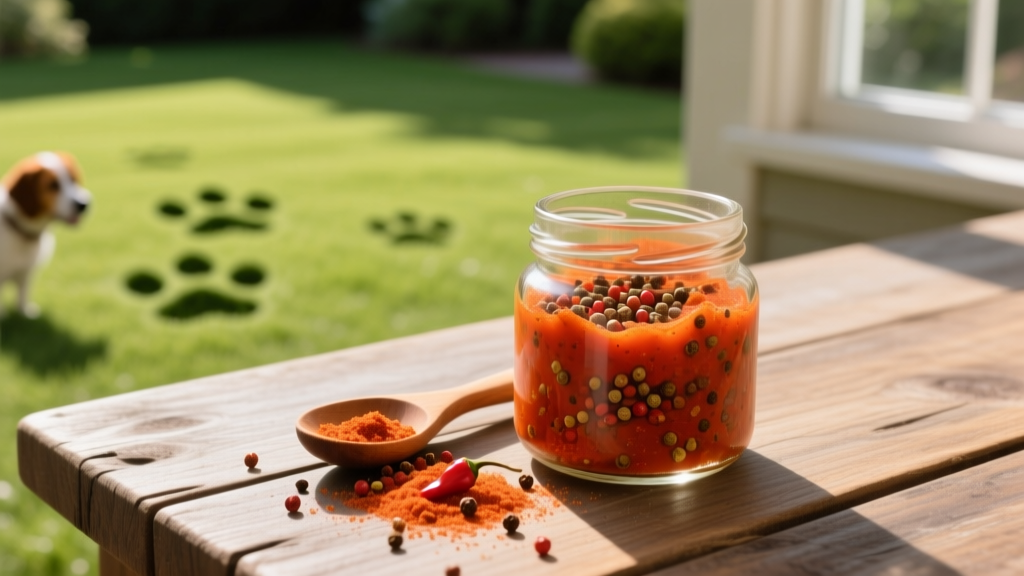
DIY Cayenne Pepper Dog Repellent: Lawn Defense Playbook
The Science of Capsaicin as a Canine Deterrent
Dogs rely heavily on their olfactory and trigeminal nerve systems to interact with their environment. When a dog sniffs a treated lawn, capsaicin—the active chemical compound in cayenne peppers—binds to the TRPV1 receptors in their nasal passages and mucous membranes. This triggers a mild, temporary burning sensation that conditions the animal to avoid the area. Standard cayenne pepper powder ranges from 30,000 to 50,000 Scoville Heat Units (SHU), providing enough sensory disruption to deter most breeds without causing permanent tissue damage. However, simply sprinkling dry pepper on the grass is ineffective; wind dispersal and soil absorption neutralize it within hours. To create a reliable cayenne pepper dog repellent, you must formulate a liquid suspension that adheres to grass blades and soil surfaces.
The Core Playbook: DIY Liquid Suspension Recipe
The most common failure point in homemade dog repellents is the lack of a surfactant. Capsaicin is hydrophobic (water-repelling), meaning it will not dissolve in plain water. Without a surfactant to break the liquid's surface tension, the pepper particles will clump and clog your sprayer nozzle while failing to coat the lawn evenly.
Required Materials and Measurements
- Base Agent: 2 tablespoons (approx. 14g) of finely ground cayenne pepper. Avoid coarse chili flakes, as they will clog standard pump sprayers.
- Secondary Irritant: 1 tablespoon of ground black pepper (contains piperine, which targets a different subset of sensory receptors).
- Solvent: 1 gallon of warm water (100°F–110°F). Warmth helps extract the capsaicinoids from the powder.
- Surfactant/Binder: 1 teaspoon of liquid dish soap (e.g., Dawn Ultra). This emulsifies the pepper oils and helps the mixture stick to waxy grass cuticles.
- Equipment: 2-gallon pump-action garden sprayer with an adjustable cone nozzle, nitrile gloves, and safety goggles.
Mixing Protocol
- Pour the warm water into the sprayer tank first to prevent the powder from sticking to the dry bottom.
- Add the cayenne and black pepper. Seal the tank and shake vigorously for 60 seconds to begin the extraction process.
- Add the dish soap last. Adding it earlier will cause excessive foaming that makes filling the tank difficult.
- Let the suspension steep for 24 hours in a shaded area. This steeping period is critical for maximizing capsaicin extraction into the water column.
- Strain the mixture through a fine mesh paint strainer before transferring it back to the sprayer to remove any remaining sediment that could clog the dip tube.
⚠️ Phytotoxicity Warning: While capsaicin itself will not burn turfgrass, high concentrations of dish soap can strip the protective waxy cuticle from delicate ornamental plants. Avoid spraying this mixture directly on the foliage of broadleaf ornamentals, hydrangeas, or newly seeded grass. Limit application to established turf and bare soil boundaries.
Application Strategy and Timing Matrix
According to the American Kennel Club (AKC), dogs dig for various reasons ranging from prey drive to temperature regulation. Your application strategy must match the specific behavioral issue you are addressing.
| Target Behavior | Application Zone | Spray Pattern | Reapplication Trigger |
|---|---|---|---|
| Perimeter Digging | 2-foot band along fence lines | Heavy saturation on soil | After 0.5 inches of rain |
| Urine Marking | Tree bases, garden bed edges | Fine mist on vertical surfaces | Every 7-10 days |
| Lawn Trampling | High-traffic turf shortcuts | Light broadcast spray | After mowing or heavy dew |
Edge Cases and Failure Modes
Even a perfectly formulated cayenne pepper dog repellent will fail if environmental variables are ignored. Understanding these failure modes allows you to troubleshoot before the dog returns to its destructive habits.
1. Rain Wash-Off and Soil Percolation
Capsaicin is highly susceptible to wash-off. A rainfall event exceeding 0.25 inches will strip the surfactant-bound pepper from grass blades. Furthermore, as noted by the University of Minnesota Extension, dog urine alters soil chemistry and nitrogen levels; if your repellent washes deep into the soil profile, it loses its surface-level olfactory barrier. Fix: Apply the repellent only when the 48-hour forecast shows zero precipitation. For areas prone to heavy dew, increase the surfactant ratio by 50% to improve adhesion.
2. Olfactory Fatigue (Habituation)
Dogs possess up to 300 million olfactory receptors. If a dog is repeatedly exposed to the exact same capsaicin concentration without a negative reinforcement event (like a physical barrier), they may develop olfactory fatigue and ignore the scent. Fix: Rotate the active ingredients every third application. Swap the black pepper for 10 drops of pure lemongrass or citronella essential oil to alter the scent profile while maintaining the trigeminal irritation.
3. UV Degradation
Prolonged exposure to direct ultraviolet light breaks down capsaicinoid molecules, reducing the SHU potency over time. Sprays applied to south-facing lawns in mid-summer will degrade 40% faster than those in shaded areas. Fix: Apply the spray in the late evening. This allows the liquid to dry and bind to the grass cuticle overnight without immediate UV bombardment.
Commercial vs. DIY Cost Analysis
Is formulating your own repellent worth the effort compared to commercial off-the-shelf products? Here is a breakdown of the 2026 market economics for a standard 1-gallon coverage area.
DIY Suspension
- Cost per Gallon: ~$1.85
- Active Ingredients: Pure Capsaicin & Piperine
- Shelf Life: 7 days (must be mixed fresh)
- Pros: High SHU potency, customizable concentration, zero synthetic fillers.
- Cons: Requires manual straining, high labor input, stains concrete.
Commercial Repellent (e.g., Liquid Fence)
- Cost per Gallon: ~$24.00
- Active Ingredients: Putrescent egg solids, garlic, mild capsaicin
- Shelf Life: 2+ years
- Pros: Ready-to-use, built-in UV stabilizers, rain-resistant polymers.
- Cons: Foul odor (rotten egg base), lower capsaicin concentration, expensive for large perimeters.
Safety Protocols and Environmental Impact
While capsaicin is biodegradable and non-toxic to soil microbiomes, it is a severe irritant to mammalian mucous membranes. When spraying, wind drift is your primary hazard. A sudden gust can blow the aerosolized capsaicin back into your eyes or respiratory tract. Always wear ANSI Z87.1 rated safety goggles and an N95 particulate mask during the mixing and spraying phases.
"The goal of a sensory repellent is deterrence, not harm. If a dog exhibits excessive sneezing, pawing at the eyes, or vocalization after encountering the treated zone, immediately wash the area with a mild soap and water solution to neutralize the capsaicin oils, and dilute your next batch by 50%."
By strictly adhering to the surfactant ratios, timing your applications around weather patterns, and rotating scent profiles to prevent habituation, this cayenne pepper dog repellent playbook provides a highly effective, low-cost barrier to protect your turf and garden beds from canine intrusion.

