
Pest Control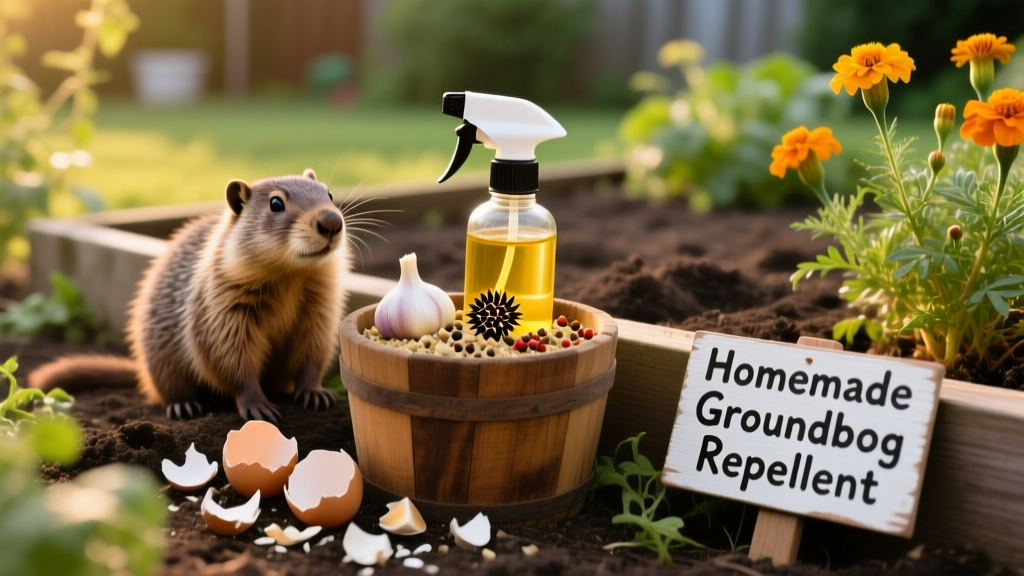
Effective Homemade Groundhog Repellent Recipes for Organic Yards
The Biological Basis for Organic Groundhog Deterrence
Groundhogs (Marmota monax), also known as woodchucks, are formidable foragers capable of consuming up to 1.5 pounds of vegetation daily. For organic gardeners, commercial repellents containing synthetic capsaicinoids or toxic chemical deterrents are off-limits. Fortunately, formulating a highly effective homemade groundhog repellent relies on exploiting the animal's highly developed olfactory and gustatory receptors.
According to the Penn State Extension, groundhogs rely heavily on scent and taste to evaluate forage safety and burrow security. By introducing specific organic compounds—namely ricinoleic acid (found in castor oil) and capsaicin (found in hot peppers)—we can trigger mild gastrointestinal aversion and trigeminal nerve pain receptors, respectively. This creates a hostile sensory environment that forces the groundhog to relocate without causing lethal harm or contaminating your organic soil food web.
Recipe 1: Castor Oil Soil Emulsion (The Gold Standard)
Castor oil is the most scientifically validated organic repellent for burrowing mammals. It alters the taste of the soil and plant roots while causing mild, non-lethal digestive upset if ingested during grooming. However, the most common failure point in DIY castor oil recipes is improper emulsification. Oil and water do not mix; applying raw castor oil to a sprayer will result in clogged nozzles and uneven application.
The Emulsification Process
- Create the Concentrate: In a glass bowl, combine 1 cup of pure, cold-pressed castor oil with 1/2 cup of unscented liquid dish soap (the surfactant).
- Blend: Whisk vigorously or use an immersion blender until the mixture forms a thick, opaque, mayonnaise-like paste. This step is non-negotiable; the soap molecules must fully encapsulate the oil droplets.
- Dilute: Add 2 tablespoons of this concentrate to 1 gallon of warm water in a pump sprayer. Shake well before every use.
⚠️ Emulsification Warning: If you see an oil slick floating on top of the water in your sprayer tank, the emulsion has broken. Do not spray. Add another tablespoon of liquid soap and shake aggressively until the liquid is uniformly milky.
Application Strategy
Apply this emulsion as a soil drench, not a foliar spray. Drench a 3-foot perimeter around active burrow entrances, garden beds, and known runways. The goal is to saturate the top 2 inches of soil. Cost per gallon of finished spray is approximately $0.35, making it highly economical for large properties.
Recipe 2: Capsaicin-Garlic Foliar Spray
While castor oil protects the soil and roots, a capsaicin-based spray protects the actual foliage of your crops. Groundhogs possess TRPV1 receptors that are highly sensitive to capsaicin, the active compound in hot peppers.
Ingredients and Preparation
- 3 whole heads of garlic (peeled)
- 4 tablespoons of crushed cayenne pepper (minimum 30,000 Scoville Heat Units)
- 1 quart of water
- 1 teaspoon of liquid Castile soap (acts as a surfactant and sticking agent)
Blend the garlic and water in a high-speed blender for 60 seconds to create a fine suspension. Transfer to a saucepan, add the cayenne pepper, and simmer on low heat for 20 minutes to extract the capsaicinoids. Let it steep for 24 hours. Critical step: Strain the mixture through a double layer of cheesecloth before adding it to your sprayer. Skipping this step will permanently clog the microscopic nozzle of your pump sprayer.
Add the strained liquid to a 1-gallon sprayer, top off with water, and mix in the Castile soap. Apply directly to the leaves of vulnerable crops (beans, peas, leafy greens) early in the morning.
Recipe 3: Blood Meal and Talcum Powder Dry Barrier
For a passive, dry deterrent, combine blood meal and unscented talcum powder. According to the Cornell University Wildlife Control Manual, groundhogs are highly averse to the scent of predator urine and blood derivatives. Blood meal provides a strong olfactory deterrent while simultaneously acting as a high-nitrogen organic fertilizer for your soil.
Mix 2 parts blood meal with 1 part talcum powder. The talcum powder serves a dual purpose: it helps the mixture adhere to damp soil and, when it sticks to the groundhog's fur, it creates a grooming annoyance that discourages repeated visits. Broadcast this dry mixture heavily along fence lines, garden borders, and directly over the excavated dirt mounds of active burrows. Reapply immediately after any rainfall exceeding 0.25 inches.
Homemade Repellent Comparison Matrix
| Repellent Type | Primary Active Agent | Best Application Zone | Rainfastness | Estimated Cost per Gallon/Acre |
|---|---|---|---|---|
| Castor Oil Emulsion | Ricinoleic Acid | Soil drench, burrow perimeters | High (binds to soil organics) | $0.35 / gallon |
| Capsaicin-Garlic Spray | Capsaicin & Allicin | Foliar spray on edible crops | Low (requires reapplication after rain) | $0.80 / gallon |
| Blood Meal/Talc Mix | Heme Iron & Scent | Dry broadcast on borders/mounds | None (washes away easily) | $12.00 / 500 sq ft |
Strategic Application and the Rotation Protocol
The single greatest mistake homeowners make with organic repellents is habituation. Groundhogs are intelligent foragers; if they encounter a capsaicin spray but realize it causes no actual physical harm, or if the spray degrades and they successfully eat a treated leaf, they will learn to ignore the deterrent.
The 14-Day Rotation Protocol
To prevent habituation, you must rotate the sensory modality of your repellents. Mammalian pest control experts recommend switching between olfactory (scent-based) and gustatory (taste-based) deterrents.
- Days 1–14: Apply the Castor Oil Soil Emulsion to alter the taste of the environment and disrupt burrow security.
- Days 15–28: Switch to the Capsaicin-Garlic Foliar Spray to trigger acute trigeminal nerve irritation on the crops themselves.
- Day 29+: Repeat the cycle, introducing the Blood Meal dry barrier during weeks where heavy rain is forecasted and liquid sprays would wash away.
Troubleshooting: When Repellents Fail
If a groundhog continues to forage despite strict adherence to the rotation protocol, you are likely dealing with a lactating female or a juvenile that has not yet developed strong foraging aversions. In these edge cases, repellents alone are insufficient.
Integrating Physical Exclusion
When homemade groundhog repellent reaches its limits, physical exclusion is the only guaranteed organic solution. Install a fence using 2-inch by 4-inch galvanized welded wire. The fence must be at least 3 feet high, with the top 12 inches left unattached and bent outward at a 45-degree angle to prevent climbing. Crucially, bury the bottom edge 12 inches deep into the soil, bending the lowest 6 inches outward into an 'L' shape away from the garden. This subterranean apron defeats their primary evasion tactic: digging under the barrier.
By combining the biological disruption of homemade castor oil and capsaicin emulsions with strategic physical exclusion, you can maintain a thriving, chemical-free organic garden without surrendering your harvest to Marmota monax.

