
Pest Control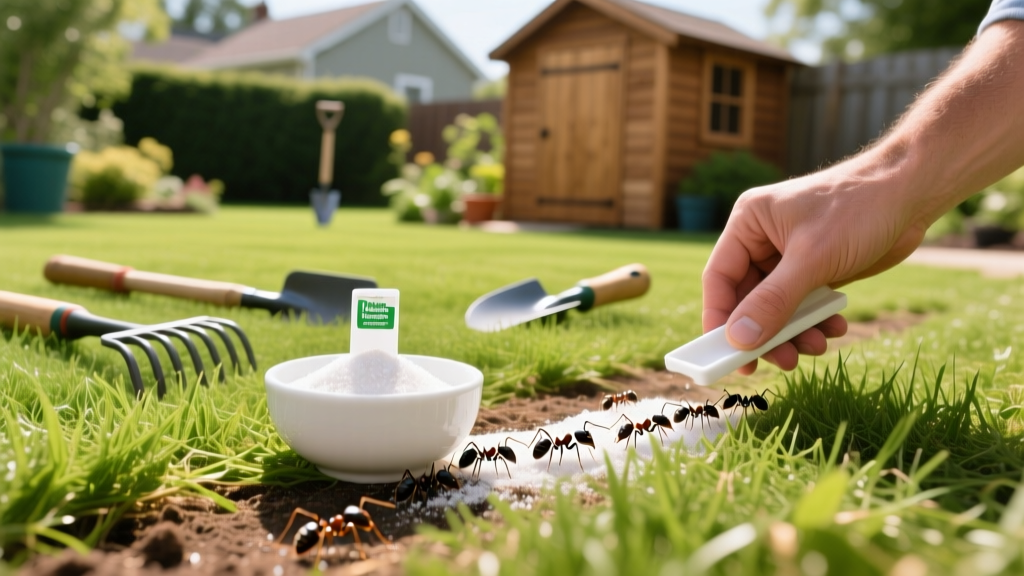
How to DIY Kill Ants in Yards With Organic Borax Baits
Learning how to diy kill ants using organic methods requires understanding colony biology rather than simply spraying visible foragers. Synthetic pyrethroid sprays (like bifenthrin or permethrin) kill on contact but trigger a survival mechanism called colony budding in species like Argentine and odorous house ants, where the colony splits into multiple satellite nests when threatened. Organic, slow-acting toxicants bypass this defense, allowing foragers to carry the lethal payload deep into the nest to eradicate the queen and the brood.
The Biology of Trophallaxis and Slow-Kill Mechanics
The success of any organic ant bait relies on trophallaxis—the social sharing of food among colony members. Forager ants consume liquid or solid bait and store it in their social stomach (crop). Upon returning to the nest, they regurgitate this food to feed larvae, workers, and the queen. According to the University of California Integrated Pest Management (UC IPM) program, baits must be slow-acting (taking 24 to 72 hours to kill) to ensure the forager survives long enough to share the toxicant throughout the colony network.
Borax (sodium tetraborate decahydrate) and boric acid are the premier organic active ingredients for this purpose. They disrupt the ant's digestive system and metabolic processes gradually. The Environmental Protection Agency (EPA) classifies boric acid as a low-toxicity pesticide for mammals, making it a cornerstone of chemical-free lawn care when deployed correctly in secured stations.
Formulating the Bait Matrix: Matching Diet to Species
Ant dietary preferences shift based on the colony's reproductive cycle and the specific species invading your lawn. A sugar-based bait will fail against a protein-foraging pavement ant colony. Use this matrix to select your base ingredients:
| Ant Species | Primary Diet Target | Optimal Bait Base | Recipe Modifier |
|---|---|---|---|
| Argentine & Odorous House | Carbohydrates (Sweets) | Sugar water / Honey | Add 1 drop vanilla extract |
| Pavement & Thief Ants | Lipids & Proteins (Grease) | Peanut butter / Vegetable oil | Mix with powdered borax |
| Carpenter Ants | Cycling (Sweets & Proteins) | Fruit preserves / Tuna | Deploy both bait types simultaneously |
| Fire Ants | Lipids & Proteins | Soybean oil / Cornmeal | Requires specific bait carriers |
Step-by-Step: Mixing and Deploying Borax Baits
The concentration of borax in your DIY mixture is critical. A concentration higher than 10% will kill foragers before they can return to the nest. A concentration below 2% will not deliver a lethal dose to the queen. Aim for a 5% to 8% active ingredient ratio.
Recipe 1: Liquid Sweet Bait (For Nectar-Foraging Ants)
- Heat 1 cup of distilled water to roughly 110°F (warm, not boiling).
- Dissolve 1/2 cup of granulated white sugar into the water completely.
- Stir in exactly 1.5 tablespoons of 20 Mule Team Borax (or pure food-grade boric acid powder) until fully dissolved.
- Soak organic cotton balls in the solution and place them inside slotted plastic bait stations.
⚠️ Pet & Plant Safety Warning: While borax is low-toxicity, ingestion of concentrated liquid bait by dogs or cats can cause gastrointestinal distress and lethargy. Always deploy liquid baits inside commercial, pet-proof plastic bait stations (which can be purchased empty and refilled) rather than leaving soaked cotton balls exposed on the grass. Avoid dumping concentrated borax solutions directly onto soil, as excess sodium borate induces boron toxicity in turfgrass, causing leaf tip burn and stunted root growth.
Recipe 2: Solid Protein Bait (For Grease-Foraging Ants)
- Mix 2 tablespoons of creamy peanut butter with 1 tablespoon of raw honey.
- Fold in 1 teaspoon of fine-grade borax powder.
- Roll the mixture into small pea-sized balls and place them on index cards inside bait stations.
The Moisture Retention Trick
Liquid baits dry out and crystallize within 48 hours in outdoor environments, rendering them unattractive to ants. To extend the functional lifespan of your DIY bait to 7–10 days, add 1/2 teaspoon of vegetable glycerin to your liquid recipe. Glycerin is a humectant that binds to water molecules, preventing evaporation and keeping the bait in a liquid state that ants prefer to ingest and transport.
Advanced Organic Tactics for Stubborn Lawn Mounds
When dealing with massive, deep-rooted mounds (particularly Red Imported Fire Ants in southern zones), baits alone may take weeks to show results. Integrate these mechanical and biological controls for rapid mound suppression.
Amorphous Diatomaceous Earth (DE)
DE consists of fossilized diatoms that mechanically destroy the waxy epicuticle of an ant's exoskeleton, leading to fatal desiccation. You must use Food-Grade Amorphous Silica, never pool-grade (crystalline silica), which is a severe inhalation hazard for humans and pets.
- Application: Use a bulb duster to inject DE directly into the mound's entrance holes and lightly dust the perimeter.
- The Humidity Failure Point: DE loses its mechanical efficacy when wet or when ambient relative humidity exceeds 85%. Apply only during dry weather forecasts and reapply immediately after irrigation or rainfall.
Beneficial Nematodes for Fire Ants
For severe fire ant infestations, biological control using the entomopathogenic nematode Steinernema carpocapsae is highly effective. According to research from the Texas A&M Fire Ant Project, these microscopic worms actively seek out ant pupae and release symbiotic bacteria that kill the host within 48 hours.
- Application Rate: Apply 1 to 2 million nematodes per 1,000 square feet of lawn.
- Timing: Apply at dusk or on overcast days. UV radiation kills nematodes on contact.
- Soil Requirements: Soil temperature must be between 60°F and 85°F. Water the lawn deeply 24 hours before application to ensure the soil is moist, allowing the nematodes to swim through the soil matrix to reach the mound.
Troubleshooting Common DIY Bait Failures
Even with perfect ratios, environmental variables can disrupt the eradication process. Use this troubleshooting framework to diagnose stalled progress:
- Symptom: Ants swarm the bait station aggressively for one day, then completely ignore it.
Diagnosis: The colony's crop is full. Foragers have gathered enough food to sustain the brood and are currently in a non-foraging phase.
Fix: Do not remove the bait or switch to a spray. Leave the stations in place for 5 to 7 days. The foragers will return once the colony digests the initial haul. - Symptom: Ants are walking over the bait but not consuming it.
Diagnosis: The bait concentration is too high, or the base ingredient does not match the colony's current nutritional deficit.
Fix: Dilute the mixture with 50% more water/sugar, or switch from the sweet bait to the protein/peanut butter recipe. - Symptom: The colony appears to split, with new, smaller mounds appearing 10 feet away from the original.
Diagnosis: You inadvertently used a fast-acting contact killer (like vinegar, essential oils, or soap sprays) near the main mound, triggering colony budding.
Fix: Cease all contact sprays immediately. Deploy a wide grid of slow-acting borax bait stations across the entire budding zone to intercept the satellite queens.
Expert FAQ: Organic Ant Management
Does pouring boiling water on an ant mound work organically?
Boiling water will kill roughly 60% of the workers and brood near the surface, but the thermal energy dissipates before reaching the deep queen chambers (often 2 to 4 feet underground in mature fire ant mounds). The surviving queen will simply rebuild. Furthermore, boiling water sterilizes the soil, killing beneficial microbes and severely damaging the roots of your surrounding turfgrass.
Can I use apple cider vinegar to kill the colony?
No. Apple cider vinegar acts as a contact killer and a pheromone trail disruptor. It is excellent for wiping down patio furniture or sealing entry points into your home, but it possesses zero residual transfer properties. It cannot be carried back to the nest and will not impact the queen or the brood.
How long does it take for borax baits to eliminate a mature lawn colony?
For a mature colony containing 50,000+ workers, expect a 14 to 21-day timeline for total collapse. You will notice a steady decline in surface foraging activity around day 7, followed by the cessation of all mound-building activity by day 14. Do not disturb the mound physically during this period, as physical disruption can cause the queen to relocate deeper into the soil profile, out of reach of the bait-fed workers.

