
Pest Control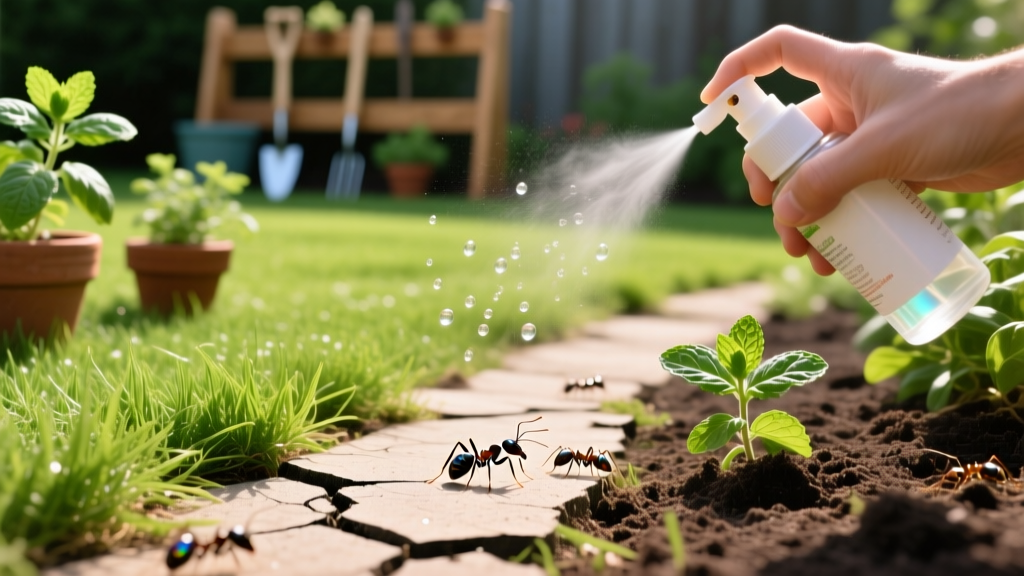
How to Mix a Natural Bug Spray for Ants That Actually Works
When pavement ants and odorous house ants invade your patio or kitchen, the immediate instinct is to reach for a commercial pyrethroid aerosol. However, as synthetic pesticide prices have surged and homeowners increasingly prioritize pet-safe lawn care, formulating a highly effective natural bug spray for ants has become a cornerstone of organic pest management. Commercial repellents often mask the problem, forcing colonies to split and create satellite nests—a phenomenon known as budding. By contrast, a properly formulated DIY spray disrupts pheromone trails and compromises the insect's exoskeleton without leaving toxic residue in your soil.
The Chemistry of a Natural Bug Spray for Ants
To build a spray that actually works, you must understand ant biology. Ants navigate using complex chemical trails (pheromones). If you merely kill the foraging workers with a contact spray, the queen simply accelerates egg production to replace them. An effective organic strategy requires a two-pronged chemical approach:
- Pheromone Disruption: Using acidic or astringent compounds to wipe the chemical slate clean, blinding the colony's foraging network.
- Cuticle Desiccation and Neurotoxicity: Using specific botanical terpenes and surfactants to dissolve the waxy outer layer of the ant's exoskeleton, leading to rapid dehydration and nervous system failure.
⚠️ Pet Safety Warning: While natural does not automatically mean non-toxic, certain essential oils are highly dangerous to cats and dogs. Peppermint, citrus (d-limonene), and tea tree oils can cause hepatic toxicity in felines if ingested or inhaled in high concentrations. Always use these sprays outdoors or in well-ventilated areas away from pets, and allow the spray to dry completely before allowing animals back into the treated zone.
3 Field-Tested DIY Recipes
Forget the vague internet advice suggesting you just 'mix water and vinegar.' The following three recipes utilize precise ratios to maximize efficacy against common household and lawn ant species, including Argentine ants, pavement ants, and thief ants.
Recipe 1: Peppermint & Surfactant Contact Killer
This is your primary weapon for active indoor trails and patio perimeters. Peppermint oil (Mentha piperita) contains high levels of menthol and pulegone, which act as potent neurotoxins to insects, while the surfactant breaks the water's surface tension, ensuring the mixture coats the ant rather than rolling off its waxy back.
- Ingredients: 16 oz distilled water, 15 drops of 100% pure Peppermint Essential Oil, 1 teaspoon of Dawn Ultra Dish Soap (or pure Castile soap).
- Cost: ~$0.18 per 16 oz batch (assuming a $10 bottle of high-grade oil).
- Mechanism: Immediate contact kill and short-term olfactory repellency.
Recipe 2: Citrus & Acetic Acid Trail Eraser
Best used for erasing established foraging highways. The acetic acid in vinegar destroys the pheromone trail, while d-limonene from citrus peels acts as a powerful solvent that melts the ant's protective cuticle wax.
- Ingredients: 8 oz white cleaning vinegar (6% acidity), 8 oz distilled water, 10 drops of cold-pressed Sweet Orange oil (Citrus sinensis).
- Cost: ~$0.08 per 16 oz batch.
- Mechanism: Pheromone eradication and delayed desiccation.
Recipe 3: Neem Oil Barrier Spray
Neem oil contains azadirachtin, a compound that mimics insect hormones, disrupting molting and reproduction. This is not a quick-kill spray; it is a long-term perimeter defense.
- Ingredients: 16 oz warm water, 1 teaspoon of 100% cold-pressed Neem Oil, 1/2 teaspoon of emulsifying liquid soap (required to mix oil and water).
- Cost: ~$0.25 per 16 oz batch.
- Mechanism: Hormonal disruption and long-lasting residual barrier.
| Recipe | Best Use Case | Kill Speed | Residual Effect |
|---|---|---|---|
| Peppermint & Soap | Active indoor trails, window sills | Immediate (Seconds) | 12-24 Hours |
| Citrus & Vinegar | Driveways, patios, erasing trails | Delayed (Minutes) | None (Evaporates) |
| Neem Barrier | Foundation perimeters, garden beds | Slow (Days) | 5-7 Days |
The 4-Step Application Protocol
Even the best University of California Integrated Pest Management guidelines emphasize that application technique dictates success. Follow this exact sequence to collapse the foraging network:
- Locate the Arteries: Do not spray randomly. Watch the ants for 10 minutes to identify their primary entry and exit points (cracks in foundations, gaps under doors, or weep holes in brickwork).
- Erase the Map: Spray the Citrus & Acetic Acid Trail Eraser generously along the entire visible trail. Wipe it up with a paper towel. This instantly blinds the colony.
- Deploy the Contact Killer: Spray the Peppermint & Surfactant mixture directly into the cracks and crevices where the ants are emerging. Saturate the soil or gap up to one inch deep.
- Establish the Perimeter: Once the immediate invasion is halted, apply the Neem Barrier in a continuous 2-foot band around the exterior foundation of your home and along the edges of your patio.
Troubleshooting Common Failure Modes
If your natural bug spray for ants isn't yielding results, you are likely falling victim to one of these three common mistakes:
1. Using Synthetic or 'Fragrance' Oils
Many cheap essential oils sold in big-box stores are diluted with synthetic fillers or carrier oils. These lack the active terpenes (like d-limonene or menthol) required to kill insects. The Fix: Only purchase oils that explicitly state '100% Pure' and ideally provide GC/MS (Gas Chromatography/Mass Spectrometry) testing reports on the manufacturer's website to verify chemical purity.
2. Ignoring the Moisture Factor
Natural sprays lack the synthetic binding agents found in commercial microencapsulated pesticides. If you spray a perimeter and it rains, or if morning dew is heavy, your Neem barrier will wash away. The Fix: Check your local weather forecast. Only apply Neem oil when you have a guaranteed 48-hour dry window. Reapply every 7 days during peak summer months.
3. Misidentifying the Species
While these sprays work exceptionally well for sugar ants, pavement ants, and odorous house ants, they will fail against Carpenter ants (Camponotus spp.) and fire ants. Carpenter ants nest deep inside structural wood, making surface sprays useless, while fire ants require specialized mound drenches. According to the Environmental Protection Agency (EPA), minimum-risk pesticides are highly effective for surface pests but are not registered or recommended for structural wood-destroying organisms.
Frequently Asked Questions
Will vinegar kill my lawn grass if I spray it on ant mounds?
Yes. Acetic acid is a non-selective contact herbicide. If you are treating mounds in the middle of your turfgrass, skip the vinegar recipe and use the Neem Oil or Peppermint recipes, which will not burn your grass blades when applied at the recommended dilutions.
Can I mix diatomaceous earth (DE) into the liquid spray?
No. DE works via mechanical abrasion when it is completely dry. If you mix it into a liquid spray, it will clump, clog your spray nozzle, and lose all insecticidal properties until it dries out completely. Instead, apply your liquid spray first, let it dry, and then dust food-grade DE over the entry points using a bulb duster.
How long does it take to see a reduction in ant activity?
When using the 4-step protocol, you should see an 80% reduction in indoor foraging activity within 24 hours. Complete elimination of the outdoor satellite colony typically takes 7 to 14 days of consistent perimeter maintenance with Neem oil.

