
Pest Control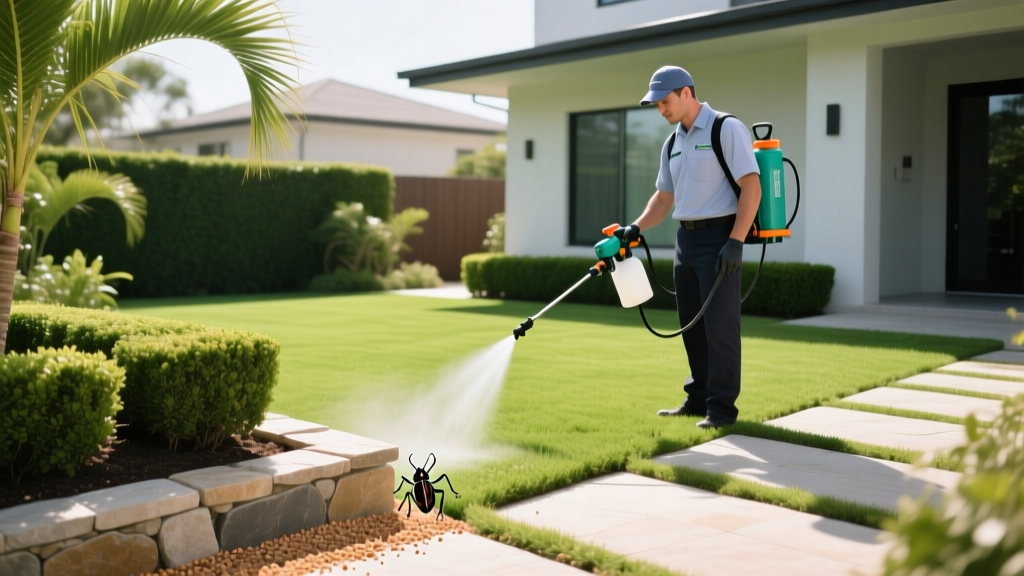
Palmetto Bug Extermination: Advanced Yard & Perimeter Defense
The Biology of the American Cockroach: Why Yard Defense is Mandatory
Palmetto bugs, scientifically known as the American cockroach (Periplaneta americana), are not primarily indoor pests. Unlike the German cockroach, which breeds inside cabinets and appliances, palmetto bugs thrive in outdoor environments—specifically in municipal sewers, damp mulch beds, palm fronds, and leaf litter. They only invade homes when outdoor populations explode or when environmental pressures (like heavy rainfall or extreme drought) force them to seek shelter.
According to Clemson University Extension, effective palmetto bug extermination requires shifting the focus from interior baseboards to the exterior perimeter. If you only treat the inside of your home, you are merely mopping up the scouts while the primary colony continues to breed in your yard. A comprehensive yard defense strategy relies on three pillars: habitat modification, non-repellent chemical barriers, and strategic outdoor baiting.
Step 1: Habitat Modification and the 18-Inch Perimeter Rule
Palmetto bugs require high moisture and organic harborage to survive. Modifying your landscape to eliminate these conditions is the most cost-effective long-term extermination tactic.
- The 18-Inch Bare Zone: Maintain an 18-inch gap between your foundation and any vegetation, mulch, or leaf litter. Fill this gap with bare dirt, gravel, or crushed stone. This removes the immediate harborage zone and forces insects to cross an exposed, treated barrier to reach your home.
- Mulch Depth Limitation: If you use pine straw or hardwood mulch, keep the depth under 2 inches. Deep mulch traps moisture and creates a microclimate ideal for roach nesting.
- Weep Hole Exclusion: Brick and stucco homes feature weep holes for moisture ventilation. Palmetto bugs use these as direct highways into your wall voids. Stuff these holes with Stuf-Fit copper mesh (approx. $15 for a 20-foot roll). Copper rusts slower than steel and deters rodents from chewing through it.
- Canopy Management: Trim tree branches so they are at least 4 feet away from your roofline. Palmetto bugs frequently drop from overhanging palm and oak fronds directly onto roofs, bypassing ground-level chemical barriers entirely.
Step 2: Chemical Barrier Application (Non-Repellents vs. Micro-Encapsulated)
The biggest mistake homeowners make during DIY palmetto bug extermination is using over-the-counter repellent sprays (like standard bifenthrin or permethrin concentrates). Repellents kill on contact but create an invisible chemical fence that surviving roaches simply walk around, often pushing them deeper into your yard or forcing them to find un-treated entry points like attic vents.
For perimeter defense, you must use either a non-repellent transfer insecticide or a micro-encapsulated residual.
| Product / Active Ingredient | Type | Mix Rate (Per Gallon) | Coverage | Approx. Cost |
|---|---|---|---|---|
| Alpine WSG (Dinotefuran 40%) | Non-Repellent (Transfer Effect) | 50 grams (one 50g packet) | 1,000 sq ft | $45 (box of 5) |
| Demand CS (Lambda-cyhalothrin 9.7%) | Micro-Encapsulated Repellent | 0.4 fl oz | 1,000 sq ft | $40 (8 oz bottle) |
| Termidor SC (Fipronil 9.1%) | Non-Repellent (Strict Outdoor Use) | 0.8 fl oz | 1,000 sq ft (Foundation only) | $75 (20 oz bottle) |
Pro Application Tip: When applying Alpine WSG or Demand CS, use a 1-gallon or 2-gallon pump sprayer. Spray a continuous band 3 feet up the foundation and 3 feet out onto the soil (the 3x3 rule). Pay special attention to door frames, utility penetrations, and hose bibbs. Allow the liquid to dry completely before allowing pets or children back into the yard.
Step 3: Strategic Gel Baiting for Outdoor Colony Collapse
Liquid sprays manage the perimeter, but gel baits destroy the nesting colonies hidden deep in mulch beds, retaining walls, and sewer cleanouts. NC State Extension notes that baits containing indoxacarb exploit the roaches' coprophagic (feces-eating) and emetic (vomit-eating) behaviors, creating a lethal domino effect throughout the colony.
Recommended Product: Advion Cockroach Gel Bait (Indoxacarb 0.6%).
- Placement Strategy: Do not smear bait directly onto soil or mulch, where it will mold or wash away. Instead, apply 3-to-4-inch bead lines inside weatherproof plastic bait stations (like the Avert Dry Flowable or standard reusable plastic stations) and anchor them near AC units, compost bins, and the edges of patios.
- The 'Dot, Don't Line' Rule: Inside hidden crevices of retaining walls or fence posts, apply the gel in small pea-sized dots spaced 6 inches apart. Palmetto bugs are more likely to investigate small, discrete food sources than long, unnatural lines of gel.
- Rotation: Outdoor heat degrades gel bait rapidly. Inspect and replace outdoor bait placements every 14 to 21 days during peak summer months (May through September).
Sewer and Drain Defense: The Hidden Highway
In many Southern municipalities, the sanitary sewer system is the primary breeding ground for palmetto bugs. They travel through lateral lines and emerge into your yard via dry P-traps or deteriorated sewer cleanout caps.
- Flush Unused Drains: Run water in guest bathrooms, outdoor sinks, and basement floor drains at least once a week to maintain the P-trap water seal, which blocks sewer gases and insects.
- Inspect Cleanout Caps: Locate your exterior sewer cleanout pipe. If the PVC cap is cracked, missing, or has a degraded rubber O-ring, replace it immediately with a new threaded cap and Teflon tape ($8 at any hardware store).
- Toilet Wax Rings: If you notice palmetto bugs exclusively in a specific bathroom, the wax ring sealing the toilet to the flange may have failed, providing a direct gap from the sewer line to your bathroom floor. Replacing a wax ring costs under $10 and requires only a wrench and 30 minutes of labor.
Warning: The 'Balloon Effect' of Aerosol Sprays
Never use OTC aerosol foggers or contact sprays (like Raid or Ortho Home Defense) around your exterior doors and windows while simultaneously treating the yard. The repellent nature of these aerosols will act as a shield, bouncing foraging palmetto bugs back into your yard or causing them to reroute through un-treated weep holes and attic vents, effectively inflating the indoor population like a balloon.
Never use OTC aerosol foggers or contact sprays (like Raid or Ortho Home Defense) around your exterior doors and windows while simultaneously treating the yard. The repellent nature of these aerosols will act as a shield, bouncing foraging palmetto bugs back into your yard or causing them to reroute through un-treated weep holes and attic vents, effectively inflating the indoor population like a balloon.
Cost Analysis: DIY vs. Professional Palmetto Bug Extermination
Deciding between a DIY approach and hiring a licensed pest control operator depends on your budget, the severity of the infestation, and your comfort level handling concentrated chemicals.
| Treatment Approach | Materials / Service Included | Estimated Cost (Year 1) | Efficacy & Longevity |
|---|---|---|---|
| Comprehensive DIY Kit | Alpine WSG, Advion Gel, Pump Sprayer, Copper Mesh | $90 - $130 | High (if applied correctly); requires reapplication every 60-90 days. |
| Professional Perimeter Service | Quarterly visits, commercial-grade micro-encapsulates, granular baits | $350 - $550 / year | Very High; includes warranty and interior follow-ups if pests breach the barrier. |
| One-Time Pro 'Cleanout' | Heavy exterior power-spray and interior crack/crevice treatment | $250 - $350 (Single visit) | Moderate; knocks down current population but lacks long-term residual protection without a recurring contract. |
"The most successful palmetto bug extermination programs don't just rely on chemistry; they rely on architecture. Sealing weep holes, fixing grading issues that pool water against the foundation, and capping sewer cleanouts will do more to reduce your pest pressure than any insecticide on the market."
Frequently Asked Questions
Will flooding my yard drown palmetto bugs?
No. While they prefer moisture, American cockroaches can hold their breath for up to 40 minutes and will simply climb trees, fences, or your home's exterior to escape rising water. Heavy rainfall often triggers mass invasions into homes for this exact reason.
Do ultrasonic pest repellents work on palmetto bugs?
No. Independent university studies have repeatedly shown that ultrasonic and electromagnetic plug-in devices have zero statistically significant impact on cockroach behavior or harborage. Save your money and invest in high-quality gel baits and exclusion materials instead.
How long does it take for Alpine WSG to kill a roach?
Alpine WSG is a delayed-action insecticide. It typically takes 24 to 48 hours for a roach to die after crossing a treated surface. This delay is intentional and highly beneficial, as it allows the roach to return to the nest and transfer the lethal dose to other colony members through grooming and feces.

