
Pest Control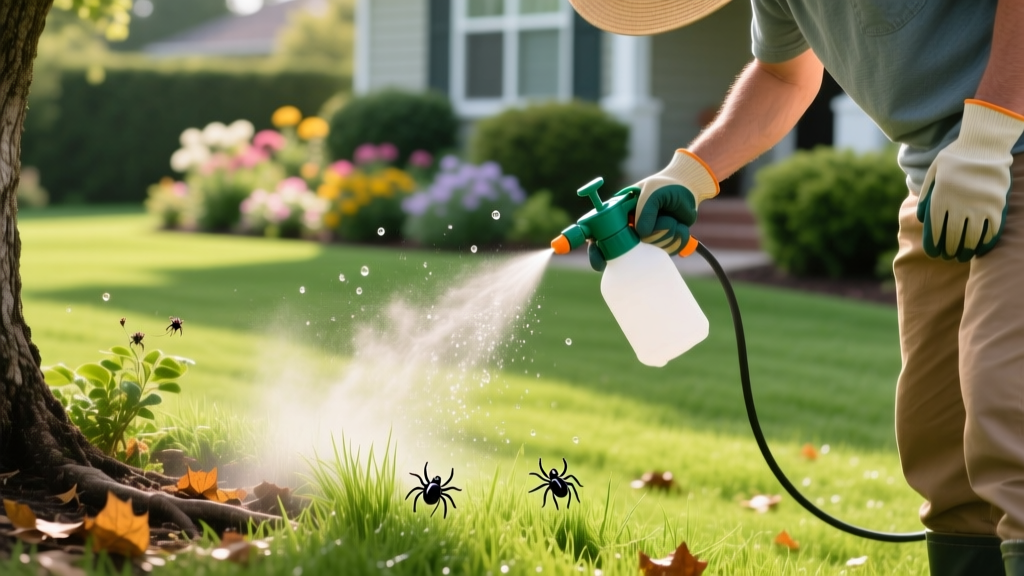
When and How to Spray Yard for Ticks: Beginner's Guide
The Tick Threat: Why Timing and Placement Matter
Ticks do not drop from trees, nor do they typically roam across the center of a sunny, well-maintained lawn. According to research from the University of Rhode Island TickEncounter Resource Center, up to 90% of tick populations in a residential yard are concentrated in the 'transition zone'—the shaded, humid border where your manicured grass meets woods, stone walls, leaf litter, or tall brush. Understanding this micro-habitat is the single most important factor in learning how to spray yard for ticks effectively without wasting chemicals or money.
Timing is equally critical. Ticks require high humidity to survive desiccation. The optimal windows for treatment are mid-to-late spring (when nymphs emerge and temperatures consistently exceed 50°F) and early autumn (when adult ticks are actively questing). Spraying during the peak heat of mid-summer or immediately before a heavy rainstorm will degrade the active ingredients and wash them away before they can bind to the foliage.
Choosing Your Active Ingredient: Bifenthrin vs. Permethrin
For DIY homeowners, synthetic pyrethroids are the gold standard for tick control. They offer rapid knockdown and a residual effect that lasts for weeks. Here is how the two most accessible options compare for residential use.
| Active Ingredient | Brand Example | Cost per 1,000 sq ft | Residual Life | Pet/Kid Re-Entry |
|---|---|---|---|---|
| Bifenthrin (7.9%) | Talstar P | $1.20 - $1.50 | 30 - 45 Days | Once completely dry (1-2 hrs) |
| Permethrin (10%) | Martin's Permethrin 10 | $0.80 - $1.10 | 14 - 21 Days | Once completely dry (1-2 hrs) |
| Cedar Oil (Natural) | Cedarcide Outdoor | $3.50 - $5.00 | 3 - 7 Days | Immediate (Wet or Dry) |
Expert Verdict: Bifenthrin (Talstar P) is the superior choice for most homeowners. It binds exceptionally well to soil and leaf surfaces, resists wash-off from light rain once cured, and provides a full month of protection. Permethrin is a close second but breaks down faster under direct UV exposure. Natural cedar oils work as contact repellents but lack the residual power needed to break a tick breeding cycle, requiring weekly reapplication.
The 'Transition Zone' Strategy
Do not spray your entire lawn. Ticks avoid direct sunlight and short grass because they will quickly dry out and die. Instead, focus your application on a 5-to-10-foot perimeter band around the edges of your property. Target the following high-risk micro-habitats:
- The edge of the lawn where it meets wooded areas or dense shrubbery.
- Underneath decks, porches, and crawl space vents.
- Around the base of stone walls, woodpiles, and compost bins.
- Along fence lines, especially if the other side features tall grass or brush.
- Shaded play areas or garden beds that border natural habitats.
Step-by-Step Application Guide
Step 1: Yard Prep (The Mow and Blow)
Before mixing any chemicals, prep the environment. Mow your lawn to a height of 2.5 to 3 inches. More importantly, use a leaf blower to clear all leaf litter, grass clippings, and debris from the transition zones. Ticks rely on the moisture trapped under leaf litter to survive. Removing this debris exposes them to the elements and allows your spray to reach the soil surface and the base of the grass blades where they hide.
Step 2: Mixing the Tank (Exact Ratios)
For a standard 2-gallon pump sprayer, use the following recipe to treat approximately 2,000 square feet of perimeter:
- Fill the sprayer tank halfway with clean water.
- Add 2 fluid ounces of Talstar P (Bifenthrin 7.9%). This provides the lethal adulticide knockdown.
- Add 0.25 fluid ounces (approx. 1.5 teaspoons) of NyGuard IGR (Insect Growth Regulator). Note: Skipping the IGR is the most common beginner mistake. The IGR sterilizes the ticks and prevents nymphs from molting, breaking the reproductive cycle.
- Add a non-ionic surfactant (like Alligare 90) at a rate of 1 teaspoon per gallon. This breaks the surface tension of the water, allowing the chemical to coat waxy leaves evenly rather than beading up and rolling off.
- Top off the tank with water, seal the lid tightly, and shake vigorously for 30 seconds.
⚠️ Pollinator Warning: Bifenthrin is highly toxic to bees. Never spray blooming weeds, clover, or flowering ornamental shrubs. Apply treatments in the late evening or early morning when pollinators are inactive, and avoid spraying on windy days to prevent drift.
Step 3: The Perimeter Spray Technique
Adjust your pump sprayer nozzle to a medium fan pattern. You want a coarse mist, not a fine fog (which drifts) or a heavy stream (which runs off). Spray the transition zone using a slow, sweeping motion. Ensure you coat the grass blades, the soil surface, and the lower 12 inches of any bordering shrubs or tree trunks. The surface should be visibly damp, but not pooling or dripping.
Equipment: Pump Sprayer vs. Hose-End Sprayer
Choosing the right delivery system dictates your coverage accuracy.
1. Manual Pump Sprayer (e.g., Chapin 2-Gallon Poly Sprayer - ~$25): This is the preferred tool for precision. It allows you to control the exact output and target specific crevices under decks or deep into brush without wasting chemical on the driveway or patio. It requires manual pumping to maintain 40-60 PSI.
2. Hose-End Sprayer (e.g., Ortho Dial N Spray - ~$15): Best for large, expansive properties with massive perimeter borders. You pour the concentrate into the reservoir, dial in the mixing ratio (e.g., 1 oz per gallon), and let the water pressure do the work. However, it lacks precision and can easily lead to over-application or chemical runoff into storm drains if you are not careful.
Post-Spray Safety and Re-Entry Timelines
According to the Environmental Protection Agency (EPA), synthetic pyrethroids like bifenthrin are generally safe for humans and mammals once the application has completely dried. The liquid carrier (usually water and solvents) is what poses the highest risk of dermal absorption or inhalation.
Re-Entry Rules:
- Adults: Wait until the treated surfaces are completely dry to the touch (typically 1 to 2 hours depending on humidity and sunlight).
- Children and Dogs: Enforce a strict 2-hour minimum exclusion period. Dogs are particularly vulnerable because they walk barefoot and groom their paws. If a dog walks on wet bifenthrin and licks its paws, it can experience mild neurological symptoms like tremors or hypersalivation.
- Aquatic Life: Bifenthrin is extremely toxic to fish and aquatic invertebrates. Never spray near koi ponds, streams, or storm drains. Leave a minimum 10-foot untreated buffer zone around any water features.
Common Beginner Mistakes to Avoid
Mistake 1: Spraying at High Noon. UV radiation and high heat cause the chemical to break down rapidly and the water carrier to evaporate before the active ingredient can bind to the plant tissue. Always spray between 6:00 AM and 9:00 AM, or after 6:00 PM.
Mistake 2: Ignoring the Weather Forecast. Bifenthrin becomes rainfast (resistant to washing away) after about 4 to 6 hours of drying time. If it rains within that window, you will need to reapply. Check the forecast and ensure a 24-hour dry window for optimal curing.
Mistake 3: Treating Only Once. A single spring spray will not protect you through the summer. Tick life cycles are staggered. You must commit to a schedule: one application in May (targeting nymphs) and a second application in late August or early September (targeting adults).
Frequently Asked Questions
Will spraying for ticks kill my beneficial insects?
Yes, broad-spectrum insecticides like bifenthrin will kill beneficial insects like ladybugs and spiders if sprayed directly on them. This is why targeting only the shaded transition zones and avoiding blooming plants is critical to preserving the broader ecosystem of your yard.
Can I spray my yard for ticks if I have a vegetable garden?
You should never use bifenthrin or permethrin directly on edible crops unless the product label explicitly lists that specific vegetable. Keep a 10-foot buffer between your tick treatment zone and your raised beds or garden plots.
How long does a tick treatment last?
Under normal conditions, a high-quality bifenthrin treatment will remain active for 30 to 45 days. Heavy, prolonged rainfall or frequent overhead irrigation can shorten this lifespan by washing the chemical past the root zone.

