
Pest Control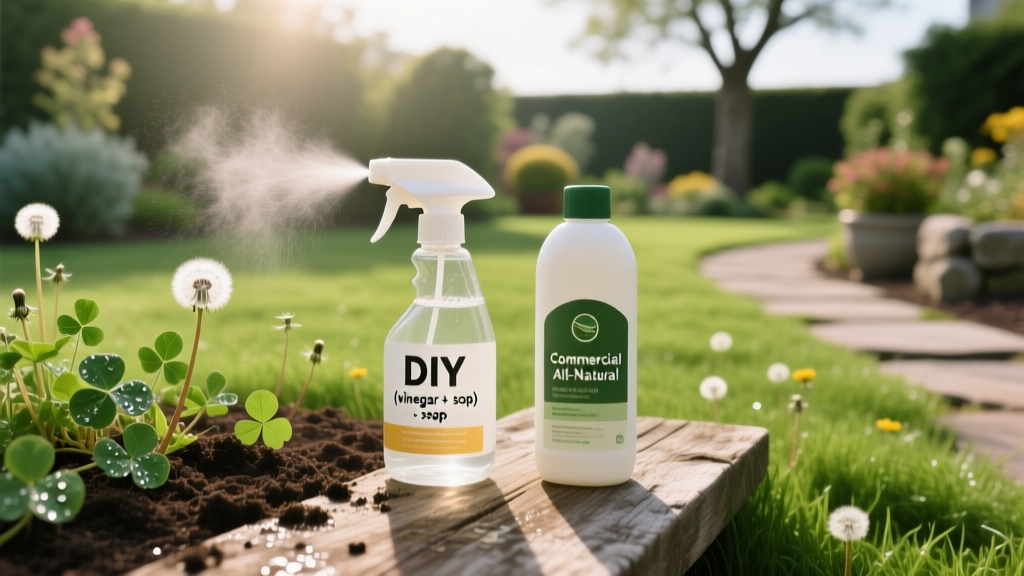
DIY vs Commercial All Natural Weed Killer: What Actually Works
The Reality of All Natural Weed Killers: Contact vs. Systemic
When homeowners search for an all natural weed killer, they are typically looking for a silver bullet that mimics the systemic root-killing power of glyphosate without the synthetic chemicals. From a turfgrass science perspective, this expectation requires immediate recalibration. Every EPA-exempt (25b) and OMRI-listed natural herbicide on the market is a contact desiccant, not a systemic poison. They destroy cell membranes on contact, causing rapid tissue burn-down, but they do not translocate to the roots.
According to the Environmental Protection Agency's guidelines on minimum risk pesticides, natural active ingredients like acetic acid, d-limonene, and eugenol are highly effective at burning down top growth. However, because they lack systemic action, perennial weeds with deep taproots (like dandelions, bindweed, and Canada thistle) will often resprout within two to three weeks. Understanding this biological limitation is the first step to successfully integrating organic weed control into your lawn care regimen.
DIY All Natural Weed Killer Recipes That Actually Work
The internet is saturated with DIY weed killer recipes using standard 5% household white vinegar. These recipes fail because 5% acetic acid is too weak to penetrate the waxy cuticle of mature weed leaves. To achieve commercial-grade burn-down, you must use horticultural vinegar (20% to 30% acetic acid) combined with a surfactant to break surface tension.
⚠️ Safety Warning: 30% horticultural vinegar is highly corrosive. It can cause severe eye damage and skin burns. You must wear ANSI Z87.1 rated splash goggles, chemical-resistant nitrile gloves, and long sleeves when mixing and applying. It is significantly more dangerous to handle than standard synthetic herbicides.
Recipe 1: High-Acidity Desiccant (For Driveways and Patios)
- 1 Gallon 30% Horticultural Vinegar
- 1 oz Non-ionic surfactant (e.g., Hi-Yield Spreader Sticker)
- 1 tbsp Dish soap (acts as a secondary emulsifier)
Best for: Hardscapes, fence lines, and gravel driveways where soil pH alteration is not a concern.
Recipe 2: Citrus Oil Defoliant (For Garden Beds)
- 1 Gallon Water
- 4 oz d-limonene (pure cold-pressed orange oil extract)
- 2 oz Castile soap
Best for: Spot-treating young annual weeds in vegetable gardens. d-limonene strips the waxy cuticle rapidly without drastically altering soil pH.
Commercial vs. DIY: Cost and Efficacy Matrix
While DIY mixes seem cheaper upfront, commercial all natural weed killers often include proprietary emulsifiers and synergists that improve rainfastness and leaf penetration. Below is a 2026 market comparison of top-tier natural herbicides versus DIY alternatives.
| Product / Recipe | Active Ingredient | Cost per Ready Gallon | Rainfastness | Efficacy on Mature Weeds |
|---|---|---|---|---|
| DIY 30% Vinegar Mix | Acetic Acid (30%) | $6.50 | Poor (1-2 hours) | High (Annuals), Medium (Perennials) |
| Avenger Weed Killer | d-limonene (70%) | $11.00 | Excellent (1 hour) | Very High |
| BurnOut RTU | Clove Oil / Citric Acid | $14.50 | Good (2 hours) | Medium |
| DIY Citrus Oil Mix | d-limonene (Extract) | $8.20 | Fair (3-4 hours) | Low-Medium (Requires repeat) |
As highlighted by researchers at the University of Minnesota Extension, commercial formulations containing high concentrations of d-limonene (like Avenger) consistently outperform acetic acid on broadleaf weeds with thick, waxy leaves, such as plantain and mallow, because the citrus oil acts as both the active ingredient and a powerful solvent.
The Application Protocol: Maximizing Desiccation
The efficacy of an all natural weed killer is 80% dependent on application technique and environmental conditions. Because these products rely on rapid moisture extraction from plant cells, applying them under the wrong conditions will result in total failure.
- Temperature Thresholds: Apply only when ambient temperatures are between 75°F and 85°F. Desiccants rely on heat to accelerate cell rupture. Spraying at 60°F will yield less than 30% burn-down.
- Time of Day: Spray between 10:00 AM and 2:00 PM when the sun is at its peak. UV radiation and high temperatures work synergistically with contact acids to fry the foliage.
- Equipment Calibration: Use a pump sprayer equipped with a flat fan nozzle (e.g., TeeJet 8002VS). Calibrate the pressure to exactly 20-25 PSI. Higher pressures create fine aerosol droplets that will drift onto your desirable turfgrass, causing severe collateral damage.
- The Surfactant Rule: Never spray a natural herbicide without a surfactant. Weed leaves are coated in a hydrophobic cuticle. A non-ionic surfactant reduces the surface tension of water from 72 dynes/cm to under 30 dynes/cm, allowing the acid to spread evenly and penetrate the leaf stomata.
Edge Cases: Soil Health and Turfgrass Safety
A frequently overlooked consequence of relying heavily on acetic acid-based all natural weed killers is soil acidification. Repeated applications of 20% or 30% vinegar in the same area will drastically lower the soil pH. If you are treating weeds in the cracks of a paver patio that borders a lawn, the runoff will accumulate in the adjacent soil, locking up essential nutrients like phosphorus and calcium, and stunting future grass growth.
Expert Insight: 'Organic weed management is not just about what you spray; it is about what you grow. A dense, aggressively fertilized turfgrass canopy shades the soil surface, preventing weed seeds from receiving the photosynthetically active radiation (PAR) required for germination. The best all natural weed killer is a thick, 3-inch tall lawn.' — Turfgrass Management Principles
What to Do About Perennial Taproots
If you are battling field bindweed, wild violet, or mature dandelions, natural contact sprays will only burn the top growth. The root crown will generate new leaves within 14 days. For an entirely chemical-free approach to perennials, you must combine contact spraying with mechanical extraction. Use a specialized weeding tool like the Fiskars Stand-Up Weeder or a traditional dandelion digger to physically sever the taproot at least 4 inches below the soil surface after the natural herbicide has weakened the upper foliage.
Frequently Asked Questions
Will an all natural weed killer kill my grass?
Yes. All natural weed killers are strictly non-selective. They cannot distinguish between a dandelion and a Kentucky Bluegrass blade. If you spray them on your lawn, they will burn the grass down to the crown. They are designed for spot treatment, hardscapes, and garden bed edges. For broadleaf weeds in lawns, you must use selective organic methods like iron-based herbicides (FeHEDTA), which target broadleaves while sparing grasses.
How long does it take to see results?
When applied correctly in direct sunlight and temperatures above 75°F, you will see visible wilting and browning within 45 to 90 minutes. Complete desiccation of annual weeds usually occurs within 24 hours.
Are natural herbicides safe for pets immediately after application?
While the active ingredients (vinegar, citrus oil, clove oil) are non-toxic once dry, the wet spray can cause gastrointestinal upset or topical irritation. Keep pets and children out of the treated area until the liquid has completely evaporated and the foliage is dry to the touch, typically 1 to 2 hours post-application.

