
Pest Control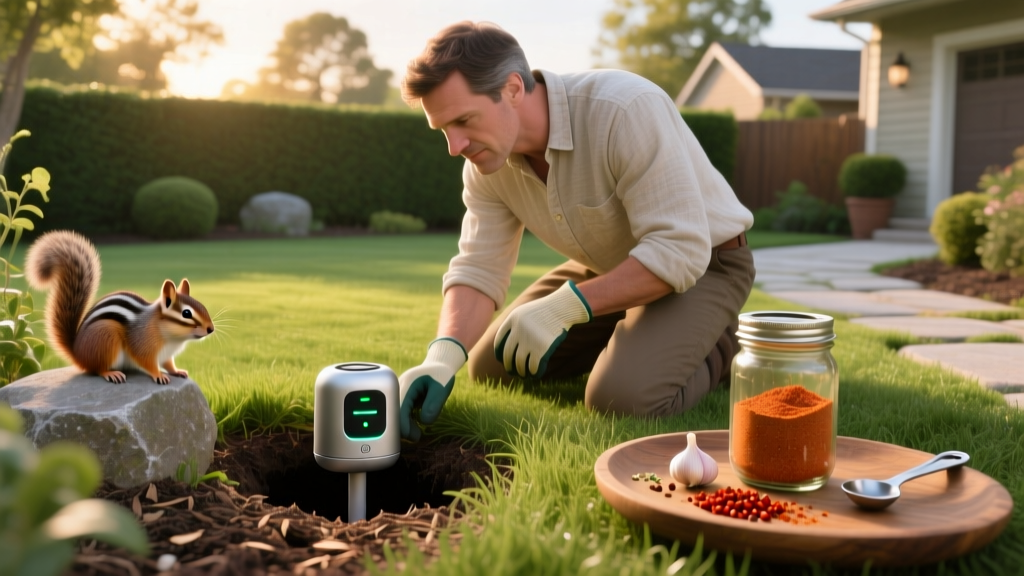
DIY vs Commercial Chipmunk Repellent: A Complete Removal Playbook
The Chipmunk Dilemma: Cute but Structurally Destructive
While chipmunks are a natural part of the suburban ecosystem, their burrowing habits pose severe threats to hardscaping. A single chipmunk burrow system can extend up to 30 feet in length and 3 feet deep, undermining retaining walls, patio pavers, and foundation perimeters. When you are dealing with an active infestation, generic advice like 'keep your yard clean' is insufficient. This playbook breaks down the exact commercial formulations, DIY chemical ratios, and physical exclusion metrics required to evict chipmunks and protect your landscape infrastructure in 2026.
The Repellent Decision Matrix: Commercial vs. DIY
Choosing the right chipmunk repellent depends on the severity of the infestation, your budget, and the specific area you are treating. Below is a comparative framework to help you decide which route to take for your initial application.
| Repellent Type | Active Ingredients | Avg. Cost (2026) | Coverage / Efficacy | Reapplication Trigger |
|---|---|---|---|---|
| Commercial Liquid Scent/Taste | Putrescent whole egg solids, Capsaicin | $22 - $28 (32 oz) | High (500 sq ft per 32oz) | Every 3-4 weeks or 1 inch of rain |
| Commercial Granular | Predator urine, Essential oils | $15 - $20 (5 lbs) | Moderate (Perimeter barriers) | Every 2-3 weeks, heavy dew/rain |
| DIY Castor Oil Blend | Castor oil, Dish soap, Water | $8 - $12 (Bulk ingredients) | Moderate (Soil drench for burrows) | Every 2 weeks or after watering |
| DIY Capsaicin/Garlic Spray | Habanero extract, Garlic oil, Water | $5 - $10 (Bulk ingredients) | High (Direct plant/bulb coating) | Weekly, highly volatile outdoors |
Playbook Phase 1: Chemical & Botanical Deterrents
The first line of defense relies on exploiting the chipmunk's highly sensitive olfactory and gustatory systems. The goal is not to harm the animal, but to make your yard biologically inhospitable.
Commercial Liquid Repellents: The Heavy Hitters
For immediate relief around high-value targets like bulb beds and retaining walls, commercial liquid repellents utilizing putrescent whole egg solids (such as Liquid Fence or Bonide Repels-All) are the industry standard. These products mimic the scent of decaying protein, triggering an innate predator-avoidance response in chipmunks.
- Application Rate: Spray until the foliage and surrounding soil are visibly wet but not dripping. A standard 32-ounce ready-to-spray bottle covers approximately 500 square feet.
- Pro-Tip for Efficacy: Apply putrescent egg-based repellents on dry days when temperatures are above 50°F. The formula requires 12 hours of dry time to bind to plant cuticles and soil particles. If it rains within this window, the application is entirely wasted.
- The Habituation Problem: Chipmunks are intelligent foragers. If you use the same active ingredient all season, they will eventually realize the 'predator' never materializes. Implement a Rotational Repellent Strategy: alternate between putrescent egg (scent) and capsaicin-based (taste) sprays every 4 weeks.
⚠️ Pet Safety Warning: If you are using high-concentration capsaicin (hot pepper) sprays, keep dogs and cats indoors during application and until the spray dries. Capsaicin can cause severe ocular and respiratory irritation in domestic pets. Always wear a particulate mask when mixing DIY pepper sprays to avoid inhaling aerosolized capsaicin.
DIY Castor Oil Soil Drench (For Active Burrows)
When chipmunks have already established a tunnel network under your patio, surface sprays won't reach them. Castor oil acts as a mild gastrointestinal irritant to burrowing rodents, prompting them to abandon the tunnel without killing them.
- Mix the Emulsion: Combine 2 cups of 100% cold-pressed castor oil with 1 tablespoon of grease-cutting dish soap (like Dawn). Shake vigorously until it forms a thick, white paste. (The soap is mandatory; without it, the oil will just float on top of your water).
- Dilute: Mix 2 tablespoons of this paste into 1 gallon of warm water.
- Apply: Using a watering can, drench the soil directly over the burrow entrances and along the perimeter of your hardscaping. The oil coats the roots and soil particles, making the environment highly unappealing for digging.
Playbook Phase 2: Physical Exclusion & Tech Deterrents
Repellents require constant maintenance. For a permanent, zero-maintenance solution, you must integrate physical barriers. Ultrasonic devices, while popular, have strict limitations that homeowners must understand before purchasing.
The Truth About Ultrasonic Stakes
Ultrasonic repellents emit high-frequency sound waves (typically between 13.5 kHz and 45.5 kHz) designed to irritate rodents. However, high-frequency sound waves do not penetrate solid objects and are rapidly absorbed by dense foliage.
- When they work: Open, flat lawns with clear sightlines, placed every 15 to 20 feet.
- When they fail: Dense garden beds, areas with retaining walls, or yards with heavy shrubbery. If the ultrasonic stake is blocked by a hosta plant or a rock wall, the chipmunk simply burrows on the other side of the obstacle in the 'sound shadow.'
- Verdict: Use ultrasonic stakes only as a supplementary measure in open turf areas, never as a primary defense for structural perimeters.
The 'L-Footer' Hardware Cloth Trench
To permanently protect a deck, shed, or retaining wall, you must install an L-footer trench. This is the gold standard for wildlife exclusion.
- Material: Purchase 19-gauge, 1/4-inch galvanized hardware cloth. Do not use chicken wire (hexagonal netting); chipmunks can easily squeeze through 1/2-inch gaps and will chew through thin, ungalvanized wire.
- The Trench: Dig a trench 12 inches deep and 6 inches wide along the vulnerable structure.
- The L-Bend: Cut your hardware cloth so it is tall enough to attach to the structure and wide enough to bend at a 90-degree angle at the bottom. The bottom flange should extend 12 inches outward (away from the structure) into the soil.
- Burial: When a chipmunk digs down along the wall, it hits the wire, goes deeper, hits the outward-facing L-flange, and gives up. Chipmunks lack the instinct to back up two feet and dig under the barrier.
Playbook Phase 3: Habitat Modification & Starvation Tactics
According to the National Wildlife Federation, chipmunks are primarily driven by the availability of high-calorie food sources and protective ground cover. Modifying these two variables drastically reduces repellent requirements.
Bird Feeder Management
Bird feeders are the primary catalyst for suburban chipmunk explosions. Chipmunks gorge on spilled sunflower seeds and cache them in their cheek pouches, carrying up to two ounces of seed per trip to their burrows.
- Switch Seed Types: Replace black oil sunflower seeds with safflower seeds or nyjer (thistle). Chipmunks find the bitter taste of safflower unpalatable, while cardinals and finches still prefer it.
- Capsaicin Coating: Birds lack the trigeminal nerve receptors that detect capsaicin. Purchasing birdseed pre-treated with chili oil (or mixing your own using a mild pepper suet) will feed your birds while violently repelling chipmunks and squirrels.
- Spill Trays: Install mesh catch-trays beneath your feeders to prevent seed from reaching the soil.
Protecting Spring Bulbs
Chipmunks love to dig up and eat tulip and crocus bulbs. If you are planting in the fall, never rely solely on bone meal, which actually attracts rodents via its scent.
- The Gravel Cage Method: Instead of planting bulbs directly in loose topsoil, line the planting hole with a cage made of 1/2-inch hardware cloth. Alternatively, backfill the hole with a mixture of 50% soil and 50% sharp, crushed gravel. The sharp edges deter digging.
- Daffodil & Allium Buffer Zones: Chipmunks inherently avoid the toxic alkaloids in daffodils and the sulfur compounds in ornamental alliums. Plant these as a biological buffer ring around your vulnerable tulip beds.
Troubleshooting: Why Your Repellent Failed
If you have applied repellents and still see active burrowing, review these common failure modes:
Failure Mode 1: Rain Wash-Off. Most DIY and liquid organic repellents degrade rapidly under UV light and water. If you experienced a heavy thunderstorm 48 hours after application, your barrier is gone. Always check the 10-day forecast before applying expensive commercial liquids.
Failure Mode 2: Incorrect Target Zone. Spraying the leaves of your hostas won't stop a chipmunk from digging a hole three feet away to access the roots. Repellents must be applied to the soil surface and the burrow entrances, not just the plant foliage.
Failure Mode 3: Winter Caching. In late autumn, chipmunks enter a hyperphagic (extreme eating) state to prepare for winter torpor. During this window (typically October to November), their drive to forage overrides their fear of mild repellents. During fall, physical exclusion (hardware cloth) is the only 100% effective method.
Failure Mode 2: Incorrect Target Zone. Spraying the leaves of your hostas won't stop a chipmunk from digging a hole three feet away to access the roots. Repellents must be applied to the soil surface and the burrow entrances, not just the plant foliage.
Failure Mode 3: Winter Caching. In late autumn, chipmunks enter a hyperphagic (extreme eating) state to prepare for winter torpor. During this window (typically October to November), their drive to forage overrides their fear of mild repellents. During fall, physical exclusion (hardware cloth) is the only 100% effective method.
Expert Sources & Further Reading
Effective wildlife management requires an understanding of local ecology and animal behavior. For deeper insights into rodent biology and humane exclusion techniques, consult the following resources:
- National Wildlife Federation: Chipmunk Ecology and Habitat Guide
- The Humane Society of the United States: Humane Chipmunk Deterrence
By combining targeted chemical deterrents with strategic physical barriers and habitat modification, you can reclaim your yard from chipmunk damage without resorting to lethal traps or toxic rodenticides that harm local raptors and domestic pets.

