
Pest Control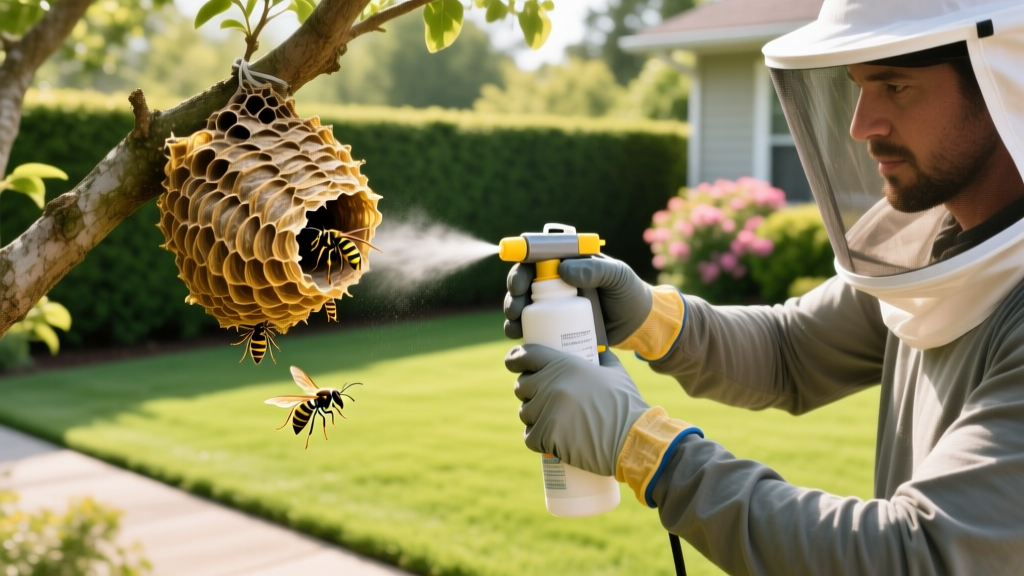
Safe Wasp Nest Disposal: DIY Removal & Yard Defense Tactics
Assessing the Threat: Paper Wasps vs. Yellowjackets vs. Hornets
Effective wasp nest disposal begins with accurate species identification. The behavioral patterns and nest architectures of stinging insects dictate your removal strategy. According to Penn State Extension, misidentifying a highly aggressive ground-dwelling yellowjacket as a docile paper wasp is the leading cause of DIY removal failures and subsequent emergency room visits.
- Paper Wasps (Polistes spp.): Build open, umbrella-shaped nests under eaves and deck railings. They are generally non-aggressive unless the nest is directly touched. DIY disposal is highly feasible.
- Yellowjackets (Vespula spp.): Often build concealed nests in underground rodent burrows, wall voids, or dense shrubs. They are hyper-aggressive, defend their colony in swarms, and require specialized dust treatments rather than surface sprays.
- Bald-Faced Hornets (Dolichovespula maculata): Actually a type of yellowjacket, these build large, enclosed, football-shaped aerial nests. They are fiercely protective and require heavy protective gear for safe removal.
The Decision Matrix: DIY Wasp Nest Disposal vs. Professional Extermination
Before purchasing chemicals, evaluate your specific scenario against this risk matrix. Not all nests are safe for homeowner intervention.
| Risk Factor | DIY Threshold (Safe to Proceed) | Call a Professional (Exterminator) |
|---|---|---|
| Nest Height | Under 12 feet (reachable via step ladder) | Over 12 feet, or requiring extension ladders |
| Nest Location | Exposed eaves, freestanding fences, open shrubs | Inside wall voids, attics, HVAC units, underground |
| Species | Paper wasps, small mud daubers | Bald-faced hornets, large yellowjacket colonies |
| Colony Size | Smaller than a basketball | Larger than a basketball (indicates 1,000+ workers) |
| Allergy Status | No known allergies in the household | Anyone in the home has a history of anaphylaxis |
Essential Gear and Chemical Loadout
The Environmental Protection Agency (EPA) mandates strict adherence to pesticide labels, but practical yard defense requires going beyond the bare minimum. Standard summer clothing offers zero protection against a 1/4-inch stinger.
Protective Equipment
Invest in a lightweight beekeeping jacket with a mesh veil ($40–$60). Pair this with thick, elbow-length leather gauntlet gloves and tuck heavy denim jeans into rubber boots. Wasps will target dark, moving silhouettes, so wear light-colored clothing underneath your gear.
Chemical Selection by Nest Type
Modern micro-encapsulated formulations have vastly improved residual longevity. Select your active ingredient based on the nest architecture:
- Aerosol Knockdown Sprays: Products like Spectracide Wasp Stop3 (Model HG-96235, ~$8.99) contain Tetramethrin and Prallethrin. These shoot a concentrated stream up to 20 feet and paralyze the insect's nervous system on contact. Best for exposed paper wasp nests.
- Insecticidal Dusts: Delta Dust Insecticide (Bayer, active ingredient Deltamethrin, ~$22.00) is entirely waterproof. When foraging yellowjackets walk through the dust at the entrance of an underground burrow or wall void, they carry the lethal powder deep into the colony, wiping it out within 48 hours.
- Residual Liquid Concentrates: Syngenta Demand CS (Lambda-cyhalothrin 9.7%, ~$45.00 per 8oz bottle) is mixed with water and sprayed on eaves and fence lines as a long-term perimeter barrier to prevent future nesting.
⚠️ CRITICAL WARNING: Never use fire, gasoline, boiling water, or blunt objects (like baseball bats) to destroy an active wasp nest. These methods fail to kill the colony instantly, resulting in the release of attack pheromones that will trigger a relentless, multi-day swarm defense of your yard.
Step-by-Step Nighttime Disposal Protocol
Wasps and hornets rely heavily on visual cues and daylight for navigation. Their reaction times drop significantly when temperatures fall below 65°F and light levels diminish. Execute your removal during this window.
- Timing the Approach: Wait until exactly two hours after sunset, or begin 30 minutes before dawn. Ensure the ambient temperature is ideally below 70°F.
- Lighting Strategy: Do not shine a standard white LED flashlight directly at the nest; this will wake the colony and draw them toward the light source. Use a headlamp fitted with a red cellophane filter. Wasps cannot perceive the red light spectrum, allowing you to see the nest while remaining invisible to them.
- Positioning and Escape: Clear your retreat path of tripping hazards beforehand. Approach from the side or slightly below, never standing directly underneath an aerial nest.
- The Application: Using your 20-foot aerosol jet, aim for the bottom opening of the nest first to trap the insects inside, then saturate the exterior envelope. Spray continuously for 10 to 15 seconds.
- Immediate Retreat: Back away slowly along your cleared path. Do not turn your back or run unless actively pursued, as rapid movement triggers their predatory chase instinct.
Edge Case: Eradicating Underground Yellowjacket Colonies
Ground nests present a unique challenge because you cannot see the colony size. A single hole in your lawn may house 5,000 aggressive yellowjackets. Liquid sprays will merely seal the mud entrance and force the insects to chew a secondary exit hole into your yard.
The Dusting Technique: Use a hand duster (like the JT Eaton Bulb Duster, ~$12.00) filled with Delta Dust. Locate the entrance hole during the day, but do not treat it until nightfall. Puff three or four light clouds of dust directly into the hole. Do not plug the hole with dirt or rocks; the returning foragers must walk through the dust to carry it to the queen. Mark the area with a caution flag and avoid mowing within 10 feet of the entrance for three days.
The Physical Wasp Nest Disposal Phase
Chemical treatment is only half the process. Proper physical disposal prevents secondary pest issues and structural damage.
"Leaving a dead, chemically treated nest attached to your soffit invites carpet beetles and dermestid beetles, which feed on the dead insect remains and can eventually migrate into your home's attic insulation." — Urban Entomology Research Guidelines
- The 48-Hour Rule: Never knock down a nest immediately after spraying. Stragglers returning from foraging trips will arrive over the next two days. Wait a full 48 hours to ensure total colony collapse.
- Scraping and Bagging: Wearing your gloves, use a plastic paint scraper to detach the nest. Dropping it directly into a heavy-duty, 3-mil contractor trash bag.
- Final Disposal: Seal the bag tightly. If you have a deep freezer, placing the bag inside for 24 hours guarantees any surviving pupae are destroyed. Otherwise, dispose of it in your primary exterior waste bin on collection day.
Long-Term Yard Defense and Exclusion Tactics
Once the nest is gone, your yard remains vulnerable to new queens scouting for territory in the spring. Implement these exclusion tactics to break the nesting cycle:
- Architectural Sealing: Inspect your soffits, ridge vents, and fascia boards. Seal any gaps larger than 1/4 inch with copper mesh and polyurethane sealant. Wasps cannot chew through copper mesh.
- Decoy Deployment: Hang realistic, weather-resistant faux wasp nests (like the RESLURE Fake Hornet Nest, ~$14.99 for a 2-pack) in early April. Wasps are highly territorial and will typically avoid building within 200 feet of what they perceive to be an established rival colony.
- Attractant Management: In late summer and early fall, yellowjackets shift their diet from protein to sugars. Harvest fallen orchard fruit immediately, ensure compost bins have tight-fitting lids, and switch your outdoor trash cans to models with locking latch mechanisms.
- Perimeter Residual Spraying: In early spring, mix Syngenta Demand CS at a rate of 0.4 oz per gallon of water and spray the upper eaves, window frames, and deck railings. This micro-encapsulated barrier remains lethal to scouting queens for up to 90 days, even under UV exposure and rain.
By combining precise chemical selection, nighttime tactical execution, and structural exclusion, you can safely manage wasp nest disposal and maintain a secure, sting-free outdoor environment for your family.

