
Pest Control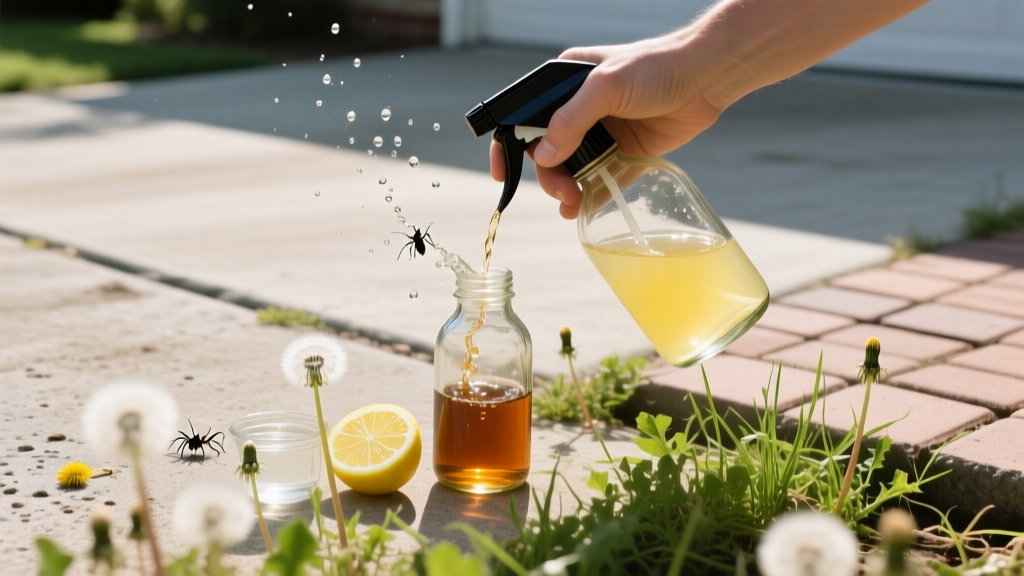
Effective DIY Weed Killer Recipes for Driveways and Patios
The Reality of DIY Herbicides: Contact vs. Systemic Action
Before mixing any homemade herbicide, you must understand the fundamental limitation of DIY weed killers: they are strictly contact desiccants. Unlike synthetic glyphosate or organic Iron HEDTA, which translocate through the plant's phloem to destroy the root system, DIY mixtures only destroy the cellular tissue they physically touch. When you spray a mature dandelion with a vinegar solution, the leaves will crisp and die within hours, but the taproot remains entirely unaffected.
This does not mean DIY solutions are useless. For managing weeds in hardscapes—such as driveway cracks, patio paver joints, and gravel paths where soil health is irrelevant—these mixtures are highly effective, cost-efficient, and eliminate the need for synthetic chemicals. According to the EPA's guidelines on organic pesticides, botanical and naturally derived acids can be excellent tools for targeted spot treatments when used correctly.
3 High-Efficacy DIY Weed Killer Recipes
Forget the weak 5% household vinegar solutions found on basic gardening blogs. To achieve rapid desiccation on established weeds, you need higher acidity, proper surfactants, and osmotic disruptors. Here are three professional-grade DIY formulations, updated with current 2026 material costs.
Recipe 1: The 20% Acetic Acid Driveway Destroyer
This is the heavy-duty standard for gravel driveways and concrete cracks. It relies on horticultural vinegar to burn through the waxy leaf cuticle, while salt dehydrates the plant at the cellular level.
- 1 Gallon Horticultural Vinegar (20% to 30% acetic acid) — Cost: ~$25
- 1 Cup Fine non-iodized salt (Sodium Chloride) — Cost: ~$1
- 1 Tablespoon Non-ionic surfactant (or liquid dish soap like Dawn) — Cost: ~$0.15
Mixing Protocol: Dissolve the salt in a small amount of warm water first, then add it to the vinegar. Stir in the surfactant last to prevent excessive foaming. The surfactant is non-negotiable; it breaks the surface tension of the liquid, preventing it from beading up and rolling off waxy leaves like plantain or purslane.
⚠️ Critical Safety Warning: 20% and 30% acetic acid is highly corrosive. It can cause severe corneal damage and chemical burns on skin. You must wear ANSI-rated splash goggles, nitrile gloves, and long sleeves when mixing and spraying. Never spray this mixture on windy days to avoid drift into your eyes or onto desirable plants.
Recipe 2: The d-Limonene Citrus Oil Emulsion
If you are treating weeds near the edges of garden beds where soil health matters, skip the salt and use d-limonene (citrus oil). d-limonene strips the protective waxy coating off weed leaves, causing them to rapidly lose moisture and die.
- 1 Gallon 10% White Vinegar or 20% Horticultural Vinegar
- 4 oz Pure d-Limonene (Orange Oil extract) — Cost: ~$12
- 2 Tablespoons Surfactant
Mixing Protocol: Citrus oil and water/vinegar do not mix naturally. You must add the surfactant to the vinegar first, agitate vigorously, and then slowly stream in the d-limonene while continuously stirring to create a temporary emulsion. Shake the sprayer tank every 5 minutes during application to prevent the oil from separating and floating to the top.
Recipe 3: Baking Soda Crevice Paste
For isolated weeds growing deep in paver joints or retaining wall cracks where liquid spray might run off, a desiccant paste works best.
- 2 Cups Baking Soda (Sodium Bicarbonate)
- 1/4 Cup Boiling Water
- 1 Teaspoon Dish Soap
Mixing Protocol: Mix into a thick, spreadable paste. Apply directly over the crown of the weed using a putty knife or gloved hands. The high alkalinity (pH 9+) disrupts the plant's cellular integrity, while the physical paste blocks sunlight and traps heat.
Application Strategy: Timing and Equipment
The efficacy of a DIY weed killer is entirely dependent on environmental conditions and application technique. Because these are contact killers, maximizing the speed of desiccation is your primary goal.
Optimal Weather Windows
Do not spray on cool, overcast days. Acetic acid and citrus oil require heat to accelerate the chemical burn. Apply your mixture between 10:00 AM and 2:00 PM when ambient temperatures are above 75°F (24°C) and the sun is directly hitting the weeds. Under these conditions, you will see visible wilting and browning within 45 minutes. Ensure no rain is forecast for at least 4 hours post-application to allow the mixture to fully penetrate the leaf tissue.
Equipment Selection and Maintenance
Never use your standard garden hose-end sprayer or a cheap, multi-purpose pump sprayer for 20% vinegar or citrus oil. High-concentration acetic acid will rapidly degrade the rubber O-rings and seals in inexpensive sprayers, leading to leaks. Furthermore, if you later use that same sprayer for liquid fertilizers, residual acid and salt can contaminate your lawn.
Recommendation: Purchase a dedicated, chemical-resistant poly tank sprayer (such as the Chapin 1-Gallon Poly Sprayer, approx. $18). After every use, flush the tank, wand, and nozzle with clean water and pump it through the system to clear the seals of acidic residue.
Cost and Efficacy Matrix: DIY vs. Commercial Organic
How do homemade mixtures stack up against commercially formulated organic herbicides? The table below breaks down the real-world performance and cost per gallon for 2026.
| Product Type | Active Ingredient | Cost Per Gallon | Best Use Case | Rainfast Time |
|---|---|---|---|---|
| DIY Vinegar + Salt | 20% Acetic Acid, NaCl | $26.00 | Driveways, gravel, concrete cracks | 2 Hours |
| DIY Citrus Emulsion | d-Limonene, 10% Acetic | $18.00 | Garden bed edges, sensitive soil | 3 Hours |
| Avenger Weed Killer | 70% d-Limonene | $45.00 | Large-scale organic farm edges | 1 Hour |
| Fiesta Turf Weeder | Iron HEDTA (Chelated Iron) | $65.00 | Broadleaf weeds in active lawns | 3 Hours |
As noted by researchers at the University of Minnesota Extension, while contact herbicides provide rapid visual results, they require multiple applications to exhaust the carbohydrate reserves of perennial weeds. Iron HEDTA remains the only viable organic option for spraying directly over turfgrass, as grasses naturally tolerate high iron levels while broadleaf weeds suffer fatal oxidative stress.
Managing Soil Fallout and Salt Toxicity
The most common mistake homeowners make with DIY weed killers is overusing salt. Sodium chloride is highly effective at killing plants, but it causes severe, long-term soil degradation. Sodium ions displace calcium and magnesium in the soil matrix, causing clay particles to bind tightly together. This destroys soil structure, eliminating pore space and making the ground completely impermeable to water and oxygen.
The Gypsum Remediation Protocol
If you have previously used salt-heavy DIY mixtures in areas where you now want to plant grass or ornamentals, you must remediate the soil. Do not simply flush it with water; the sodium will not leach out on its own.
- Apply Pelletized Gypsum (Calcium Sulfate Dihydrate): Broadcast at a rate of 10 to 15 lbs per 1,000 square feet. The calcium in the gypsum will aggressively displace the sodium ions from the soil exchange complex.
- Deep Irrigation: Once the calcium has displaced the sodium, water the area heavily (at least 1 inch of water) to leach the now-free sodium salts deep below the root zone.
- Incorporate Organic Matter: Top-dress with 1/2 inch of screened compost to reintroduce microbial life and rebuild the soil structure destroyed by the sodium.
Troubleshooting Common Failure Modes
Even with perfect mixing and application, DIY weed killers can fail if you misjudge the weed biology. Here is how to troubleshoot the most common issues:
- Failure Mode: The weed turned brown and died, but a new rosette of green leaves emerged from the center 10 days later.
Diagnosis: Taproot survival. The initial spray only defoliated the plant. The root used stored carbohydrates to push new growth.
Fix: Do not pull the weed. Spray the new, tender growth immediately. The second application will force the root to expend its remaining energy reserves. A third application usually starves the root entirely. - Failure Mode: The spray beaded up and rolled off the leaves, leaving the weed completely green.
Diagnosis: Insufficient surfactant or spraying a weed with a highly pubescent (hairy) or waxy leaf surface, such as mallow or mature plantain.
Fix: Increase the surfactant ratio by 50% in your next batch, or switch to the d-limonene emulsion, which is far more effective at dissolving heavy leaf waxes than acetic acid alone. - Failure Mode: The mixture stripped the paint off my wooden fence or stained my concrete.
Diagnosis: High-concentration acetic acid is a mild solvent and will etch unsealed concrete, strip paint, and corrode aluminum.
Fix: Always use a shield (like a piece of cardboard) when spraying near structures. Avoid spraying near aluminum edging or untreated metal fixtures.
By respecting the chemical limitations of contact desiccants and applying them with precision timing and proper safety gear, DIY weed killers become a highly reliable, chemical-free tool for maintaining pristine hardscapes and garden borders.

