
Pest Control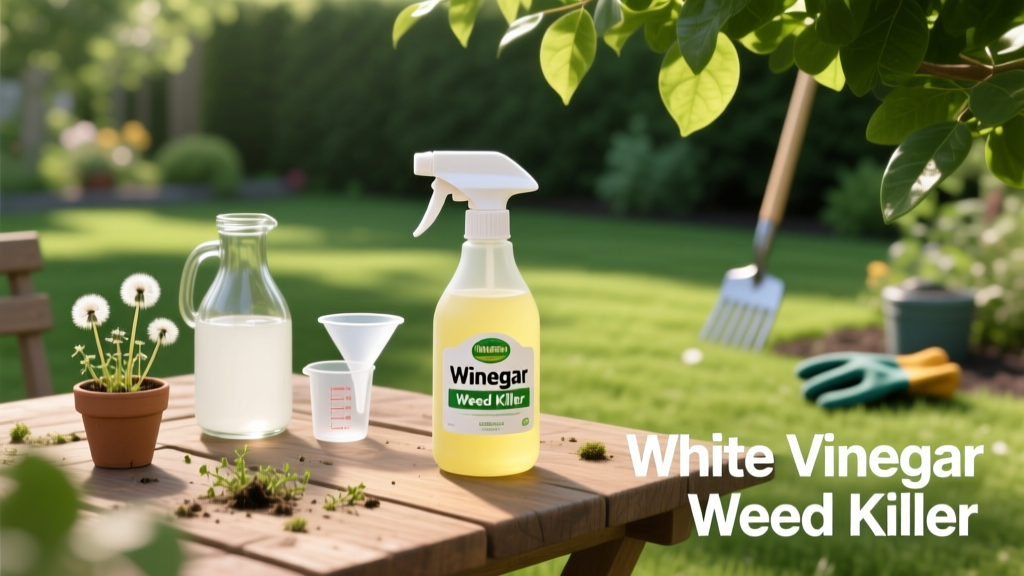
DIY Weed Killer with White Vinegar: Recipes, Ratios, and Results
The Chemistry of Acetic Acid Herbicides
White vinegar functions as a contact herbicide through rapid desiccation. The active ingredient, acetic acid, dissolves the waxy cuticle on a weed's foliage, causing the plant to lose moisture and collapse within hours. However, understanding the concentration of your vinegar is critical for predicting results. Standard grocery store white vinegar contains 5% acetic acid. This concentration is effective on young, tender annual weeds but will rarely kill established perennials with deep taproots. Horticultural vinegar, which contains 20% to 30% acetic acid, provides a much more aggressive burn but is classified as a restricted-use pesticide in several jurisdictions due to its corrosive nature. According to the EPA's guidelines on organic pest control, acetic acid solutions are generally recognized as minimum-risk when used at household concentrations, but higher concentrations require strict adherence to safety protocols.
The Proven White Vinegar Weed Killer Recipe
Water and acetic acid alone will bead up and roll off the waxy leaves of mature weeds like plantain and chickweed. To force the solution into the plant tissue, you must add a surfactant. While many online guides suggest adding table salt or Epsom salt, doing so is a critical error that will permanently damage your soil structure.
Warning: The Salt Myth
Never add sodium chloride (table salt) or magnesium sulfate (Epsom salt) to your vinegar mix. Salt causes long-term soil salinization, creating osmotic stress that prevents future grass seedlings or desirable plants from absorbing water. A single application of salt-laden vinegar can render a patch of soil barren for years. Rely strictly on acetic acid and a surfactant.
Exact Mixing Ratios for 5% Household Vinegar
- 1 Gallon standard 5% white distilled vinegar (do not use apple cider or wine vinegar; the sugars attract pests and leave sticky residues).
- 1 Ounce (2 tablespoons) liquid dish soap (standard blue Dawn works excellently as a low-cost non-ionic surfactant) OR a commercial agricultural non-ionic surfactant.
- Optional: 1 tablespoon of citrus oil (d-limonene) to accelerate cuticle breakdown on thick-leafed weeds.
Mix the ingredients gently in a pump sprayer to avoid creating excessive suds. Agitate the tank before every few sprays, as the surfactant can separate from the acidic base over time.
Application Variables: Temperature, Timing, and Nozzle Selection
The efficacy of a weed killer with white vinegar is entirely dependent on environmental conditions. Acetic acid requires heat and UV radiation to maximize the desiccation process. Spraying on a cloudy, cool morning will yield disappointing results, as the plant's stomata may be closed and the evaporation rate too slow.
| Variable | Optimal Condition | Impact on Efficacy |
|---|---|---|
| Temperature | Above 70°F (21°C) | Heat accelerates cellular fluid evaporation once the cuticle is breached. |
| Sunlight | Full, direct sun | UV rays compound the stress on the compromised leaf tissue. |
| Rainfall | Zero rain for 24 hours | Vinegar has no systemic soil residual; rain washes it off foliage instantly. |
| Nozzle Type | Flat fan or pin-point | Flat fan for broad patches; pin-point stream to avoid drifting onto desirable turf. |
Weed Efficacy Matrix: What It Kills vs. What Survives
Because acetic acid is strictly a contact herbicide, it only destroys the tissue it physically touches. It does not translocate down into the root system. Understanding the root architecture of your target weeds will dictate whether a vinegar solution is a viable long-term strategy or a temporary cosmetic fix.
| Weed Category | Examples | 5% Vinegar Success Rate | Notes |
|---|---|---|---|
| Young Annuals | Crabgrass seedlings, Annual bluegrass, Chickweed | 90% - 100% | Shallow root systems; one application usually achieves total kill. |
| Established Broadleaf | Dandelion, Plantain, Thistle | 40% (Foliage only) | Burns top growth, but deep taproots will resprout within 10-14 days. Requires 3+ repeat applications to exhaust root energy. |
| Perennial Vines | Field bindweed, Wild morning glory, Poison ivy | 10% - 20% | Waxy cuticles resist 5% acid; massive rhizome networks make contact sprays virtually useless. |
Safety Protocols and Plant Protection
While 5% household vinegar is safe for skin contact, upgrading to 20% or 30% horticultural acetic acid changes the hazard profile entirely. The CDC NIOSH guidelines on acetic acid note that concentrations above 20% can cause severe corneal damage and chemical burns to the skin. If you use horticultural vinegar for stubborn driveway weeds, you must wear splash-proof goggles, nitrile gloves, and long sleeves.
Furthermore, acetic acid is non-selective. It will burn the foliage of your Kentucky Bluegrass or Bermudagrass just as easily as it burns a dandelion. When treating weeds embedded in a lawn, use a cardboard shield or a specialized bell-nozzle attachment on your sprayer to confine the mist strictly to the target weed. For weeds growing in pavement cracks or gravel driveways, drift is less of a concern, though you should still avoid spraying on windy days to protect adjacent garden beds.
Mitigating Soil pH Drop and Collateral Damage
A common concern among organic gardeners is that repeated applications of vinegar will permanently lower soil pH, making the environment too acidic for turfgrass. In reality, the buffering capacity of most soils neutralizes dilute acetic acid rapidly. A 5% vinegar solution breaks down into water and carbon dioxide within 48 to 72 hours in active, biologically rich soil. However, in heavy clay soils or areas with poor drainage, frequent, heavy drenching can cause temporary pH drops. To mitigate this, limit applications to spot-treatments rather than broadcast spraying, and ensure the treated area receives deep, infrequent watering to flush residual acid through the soil profile.
Pro-Tip: The Boiling Water Synergy
For weeds growing in concrete or asphalt cracks where soil health is irrelevant, mix your vinegar solution using boiling water instead of room-temperature water. The thermal shock instantly ruptures plant cell walls, allowing the acetic acid to penetrate the crown and upper taproot much faster than cold mixtures.
Frequently Asked Questions
Can I use cleaning vinegar instead of standard white vinegar?
Yes. Cleaning vinegar typically contains 6% acetic acid (compared to 5% in standard culinary vinegar). This 1% increase actually yields a 20% boost in overall acidity, making it slightly more effective on tough broadleaf weeds while remaining safe to handle without heavy PPE.
How long does it take for the vinegar weed killer to work?
Under optimal conditions (full sun, temperatures above 70°F), you will notice the leaves wilting and turning brown within 2 to 4 hours. Complete desiccation of the top growth occurs within 24 hours. If the weed is a perennial, expect green shoots to re-emerge from the root system in about two weeks, necessitating a follow-up application.
Is this mixture safe for pets and wildlife?
Once the 5% vinegar solution has dried on the foliage (usually within an hour), it is entirely safe for dogs, cats, and local wildlife. The acetic acid breaks down rapidly and leaves no toxic residual in the soil, making it vastly superior to synthetic glyphosate or 2,4-D products in areas where pets roam freely.

