
Pest Control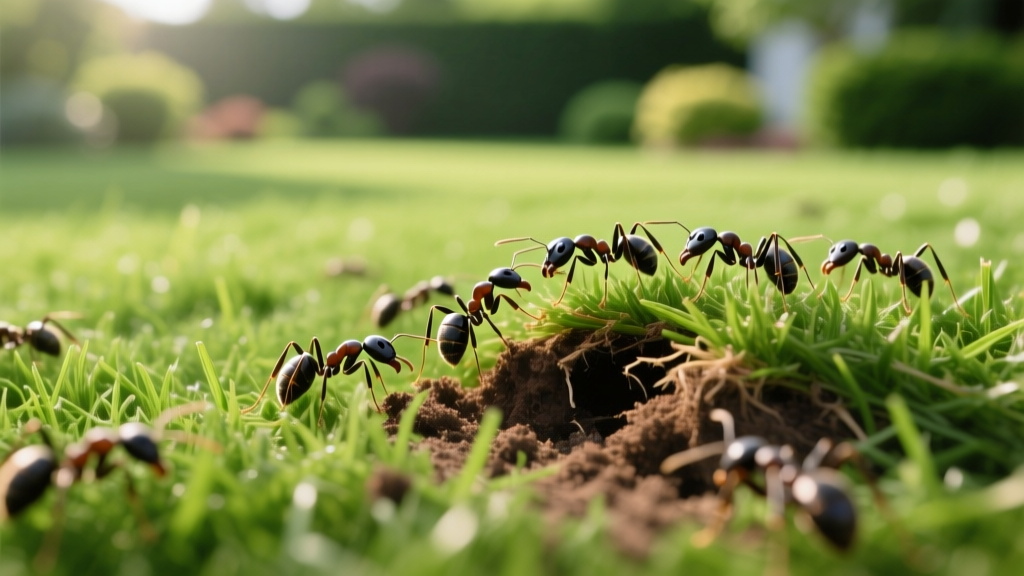
Do Ants Eat Grass? The Truth About Lawn Damage and Mounds
The Direct Answer: Do Ants Eat Grass Blades?
The short answer is no. Ants do not possess the mouthparts required to chew or digest living turfgrass blades. If you are noticing dead or yellowing grass around an ant mound, the insects are not consuming the foliage. Instead, the damage is a secondary effect of their subterranean engineering and agricultural habits. While they are not eating your lawn, their presence can still be highly destructive to the root zone, soil structure, and overall turf density.
Understanding the distinction between direct consumption and indirect environmental damage is the first step in effective pest management. Treating an ant infestation requires targeting their actual food sources and nesting behaviors, rather than assuming they are acting like foliar-feeding pests such as armyworms or Japanese beetles.
The Hidden Damage: How Ants Actually Harm Turfgrass
While they ignore the grass blades, ants alter the physical and biological environment of your lawn in three primary ways. According to turfgrass entomologists at the University of Kentucky Extension, these subterranean modifications often cause more long-term harm than surface-level feeding insects.
1. Root Desiccation and Soil Hydrophobicity
Ant colonies excavate extensive tunnel networks, creating macro-pores in the soil. While aeration is generally good, excessive tunneling beneath a single mound causes the soil to dry out rapidly. Water poured onto these mounds often bypasses the root zone entirely—a phenomenon known as preferential flow. The soil becomes hydrophobic, and the grass roots suspended in these dry air pockets desiccate and die, leaving a ring of dead turf around the mound.
2. The Aphid Farming Symbiosis
This is the most misunderstood aspect of ant-related lawn damage. Many ant species, particularly turfgrass ants (Lasius neoniger), act as ranchers for root-feeding aphids and mealybugs. These sap-sucking insects do damage grass roots. The ants protect these pests from natural predators (like ladybugs) and harvest the sugary honeydew they excrete. By eliminating the ants, you inadvertently starve the root aphids of their protectors.
3. Mound Smothering and Mower Damage
Red imported fire ants and Allegheny mound ants push massive volumes of subsoil to the surface. This heavy clay or sand smothers the surrounding turf, blocking sunlight. Furthermore, hardened mounds dull mower blades, tear grass tissue, and create uneven scalping when the mower deck dips over the nest.
Species Identification Matrix: Know Your Enemy
Not all lawn ants require the same treatment protocol. Misidentifying the species often leads to wasted chemicals and colony fragmentation. Use this matrix to identify the primary culprits in your yard.
| Species | Mound Characteristics | Aggression Level | Primary Turf Threat | Best Treatment Window |
|---|---|---|---|---|
| Turfgrass Ant (Lasius neoniger) | Small, loose soil mounds (1-3 inches); often near sidewalks | Low; rarely bites | Root aphid farming; minor root desiccation | Spring/Fall (Soil 60-75°F) |
| Red Imported Fire Ant (Solenopsis invicta) | Large, dome-shaped, hardened clay mounds (up to 18 inches) | Extreme; painful stings | Mound smothering; severe scalping; human hazard | Mid-Spring/Fall (Soil 70-85°F) |
| Pavement Ant (Tetramorium caespitum) | Crater-like mounds in driveway cracks or thin lawn edges | Moderate; will bite if crushed | Seed harvesting; minor soil disruption | Summer evenings |
| Allegheny Mound Ant (Formica exsectoides) | Massive mounds (up to 3 feet high and 6 feet wide) | High; sprays formic acid | Complete turf burial; injects acid into grass stems | Late Summer |
⚠ The "Budding" Trap: Why Contact Sprays Fail
A common homeowner mistake is spraying a visible mound with a fast-acting contact insecticide (like standard Ortho Home Defense or Sevin dust). This kills the outer foragers but alarms the queen, triggering a survival mechanism called budding. The colony splits into three or four satellite mounds, effectively multiplying your problem. According to the Texas A&M AgriLife Extension Fire Ant Project, baiting is always the superior first line of defense for mound-building species to ensure the queen is eliminated before the colony can fragment.
Professional-Grade Eradication Protocol
To permanently resolve ant damage without triggering budding, implement this two-step broadcast and baiting strategy. This protocol utilizes delayed-action chemistry, allowing foragers to carry the toxin deep into the brood chambers.
Step 1: Targeted Gel Baiting (Days 1-7)
- Product: Syngenta Advion Ant Bait Gel (Active ingredient: Indoxacarb 0.05%).
- Cost: Approximately $25–$30 for a 4-tube pack (2026 retail pricing).
- Application: Apply 3 to 5 dime-sized spots directly adjacent to the mound entrances and along visible foraging trails. Do not plug the holes or spray the mound.
- Timing: Apply in the late evening when foraging activity peaks and UV degradation is minimal. Ensure no rain is forecast for 12 hours.
- Mechanism: Indoxacarb is a pro-insecticide. It remains inert until ingested and metabolized by the ant's enzymes, ensuring it reaches the queen before activating.
Step 2: Granular Barrier Treatment (Day 10)
Once the bait has cycled through the colony (usually 5 to 7 days), apply a granular barrier to prevent re-invasion from neighboring yards.
- Product: Bifen LP Granules (Active ingredient: Bifenthrin 0.2%).
- Cost: Approximately $35 for a 25 lb bag, covering up to 10,000 sq ft.
- Rate: Apply exactly 2.3 lbs per 1,000 square feet using a rotary spreader.
- Watering In: Immediately apply 1/4 inch of irrigation. Bifenthrin binds tightly to organic matter; watering forces the chemical off the grass blades and into the top 1-inch of the thatch/soil interface where ants forage.
Lawn Recovery: Fixing the Mounds
Eradicating the colony is only half the battle. The remaining soil mounds must be reintegrated into the lawn profile to prevent weed encroachment and restore turf density.
- Scatter the Mound: Once the colony is confirmed dead (no activity for 48 hours), use a stiff push broom or the back of a steel garden rake to aggressively break apart the dried soil mound. Disperse the soil evenly over the surrounding turf.
- Core Aeration (If Compacted): If the soil beneath the mound was heavy clay and is now compacted from foot traffic during treatment, run a manual core aerator over the area to restore oxygen flow to the surviving roots.
- Topdress and Overseed: Apply a 1/4-inch layer of screened compost over the damaged ring. Sow a matching turfgrass seed (e.g., Kentucky Bluegrass or Bermudagrass) at a rate of 3 lbs per 1,000 sq ft. Keep the area consistently moist for 14 days until germination is complete.
Expert FAQ: Busting Lawn Ant Myths
Does pouring boiling water on an ant mound work?
Thermal shock will kill the ants it touches, but boiling water rarely penetrates deep enough to reach the queen, who often resides 18 to 24 inches below the surface in mature fire ant colonies. Furthermore, boiling water instantly destroys the turfgrass roots and boils the organic matter in the soil, leaving a dead, sterile patch that will require complete renovation. It is not a recommended practice.
Will white vinegar deter ants from my lawn?
While acetic acid disrupts ant pheromone trails on hard surfaces like concrete, spraying vinegar on soil is ineffective and harmful. Vinegar lowers the soil pH drastically, which can lock up essential macronutrients (like nitrogen and phosphorus) and cause severe acid-burn to your turfgrass. Stick to EPA-registered baits for lawn applications.
Are lawn ants ever beneficial?
In small, unmanaged meadows, ants provide minor soil aeration and prey on pest larvae. However, in a managed, high-traffic residential turf environment, the risks of root desiccation, aphid farming, and painful stings (in the case of fire ants) far outweigh their ecological benefits. If you maintain a dense, irrigated lawn, ant populations should be actively managed.

