
Pest Control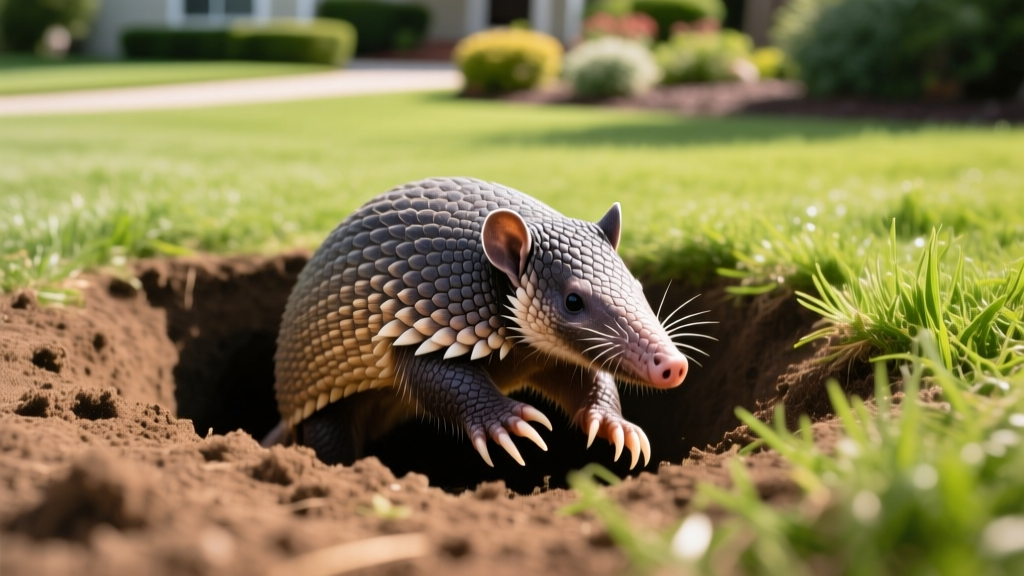
Do Armadillos Dig Holes in Lawns? Identification & Control Guide
The short answer is yes: armadillos dig holes in lawns. Specifically, the nine-banded armadillo (Dasypus novemcinctus) is a prolific excavator that frequently invades residential turf in the southern and southeastern United States. However, they are not digging to maliciously destroy your grass. They are foraging. Understanding the biological drivers behind this behavior is the first step toward effective, long-term pest management.
The Anatomy of an Armadillo Hole: Identification Guide
Before implementing a control strategy, you must confirm that an armadillo is the culprit. Armadillos possess poor eyesight but an exceptional sense of smell, which they use to hunt subterranean insects. When they detect prey, they use their powerful front claws to rip into the soil, creating highly distinct foraging pits.
A typical armadillo foraging hole is conical, measuring 7 to 8 inches in diameter at the surface and plunging up to 15 inches deep into the soil. You will often find loose, excavated dirt piled in a fan shape around the rim. In a single night, one armadillo can dig 50 to 60 of these shallow pits across a 5,000-square-foot lawn.
Damage Comparison Matrix: Armadillos vs. Other Turf Pests
| Pest | Hole/Tunnel Characteristics | Soil Displacement | Primary Target |
|---|---|---|---|
| Armadillo | Conical pits, 7-8 inches wide, up to 15 inches deep | Fan-shaped dirt piles around the rim | White grubs, earthworms, ants |
| Mole | Raised surface ridges (tunnels), rarely open holes | Volcano-shaped mounds at tunnel intersections | Earthworms, soil insects |
| Skunk | Shallow, funnel-shaped divots, 3-4 inches wide | Minimal loose dirt, turf often rolled back | Grubs, larvae |
| Vole | Small, round openings (1.5 inches), surface runways | No dirt piles, clipped grass in runways | Plant roots, bulbs, bark |
Why Armadillos Target Your Turf
Armadillos are opportunistic insectivores. Your lawn provides an ideal foraging ground for two primary reasons: soil composition and food density.
- Soil Texture: Armadillos prefer sandy, loamy, and moist soils. These substrates are easy to excavate and retain the moisture necessary to support high populations of earthworms and insect larvae. Compacted clay soils naturally deter them.
- Food Density: Lawns suffering from white grub infestations (such as Japanese beetle or June bug larvae) act as a magnet. According to the Internet Center for Wildlife Damage Management, an armadillo can consume up to 500 grams of insects and invertebrates in a single foraging session.
Assessing the Damage: Surface vs. Structural Risks
While foraging pits are primarily a cosmetic nuisance and a tripping hazard, the true danger of armadillo activity lies in their burrowing behavior. Armadillos construct extensive burrow systems for sleeping and rearing young.
⚠️ Structural Warning: A primary armadillo burrow can extend up to 15 feet in length and plunge 3 to 4 feet deep. When these burrows are excavated near retaining walls, concrete patios, HVAC foundations, or shallow home footings, they can cause severe soil subsidence and structural undermining.
Proven Deterrent and Exclusion Strategies
Eradicating armadillos requires a multi-tiered approach focusing on habitat modification and physical exclusion. Repellents alone yield a less than 15% success rate and are not recommended as a standalone solution.
1. Eradicate the Food Source (Targeted Grub Control)
If you remove the food, the armadillos will move on. Apply a preventive grub control treatment containing Chlorantraniliprole (e.g., Scotts GrubEx or Acelepryn) in late spring to early summer (May–June). This active ingredient targets scarab beetle larvae without severely depleting earthworm populations, maintaining soil health.
Estimated Cost: $25 to $40 per 5,000 square feet.
2. Install Physical Exclusion Fencing
Fencing is the most reliable long-term deterrent, but standard privacy fences will not work. Armadillos will simply dig underneath. You must install an L-footer barrier:
- Purchase 1/2-inch galvanized hardware cloth (minimum 36 inches wide).
- Dig a trench 12 inches deep and 6 inches wide along the perimeter of the vulnerable area.
- Bury the bottom 12 inches of the hardware cloth in the trench, ensuring it bends outward at a 90-degree angle away from the yard to form an underground apron.
- Attach the remaining 24 inches to wooden stakes or existing fencing above ground.
3. Strategic Live Trapping
When exclusion is impossible, live trapping is necessary. Use a heavy-duty, single-door trap like the Havahart 1089 (10" x 12" x 32"). Armadillos follow physical barriers blindly, so you must guide them into the trap.
- Placement: Set the trap directly over an active trail or burrow entrance.
- Funneling: Place wooden boards or wire fencing in a V-shape leading into the trap mouth to funnel the animal inside.
- Bait: Use overripe bananas, sardines, or wet cat food placed deep inside the trap, behind the trigger pan.
Legal Notice: According to the USDA APHIS Wildlife Services, many states strictly regulate the relocation of wildlife due to disease transmission risks and ecological disruption. Always consult your local Department of Natural Resources or Fish and Game commission regarding relocation permits before moving a trapped armadillo off your property.
Troubleshooting Common Armadillo Control Failures
Even with professional-grade products, homeowners frequently encounter setbacks. Here is how to diagnose and fix the most common failure modes.
Failure Mode: Traps Are Consistently Ignored
Cause: Human scent on the trap or improper alignment with natural travel corridors.
Fix: Wash the trap with a mild bleach solution and wear heavy leather gloves when setting it. Ensure the trap is perfectly level; armadillos will bypass a trap that feels unstable under their claws.
Failure Mode: Grub Control Applied, But Digging Continues
Cause: Timing mismatch or targeting the wrong invertebrate. Armadillos also eat earthworms, ants, and spiders. If the soil is highly moist, earthworm activity near the surface will sustain them even if grubs are eradicated.
Fix: Adjust your irrigation schedule. Reduce watering frequency to allow the top 2 inches of soil to dry out between sessions. This forces earthworms deeper into the soil profile, out of the armadillo's immediate foraging reach.
Failure Mode: Fencing Bypassed
Cause: The hardware cloth was buried vertically without an outward-facing underground apron.
Fix: Armadillos dig straight down when they hit an obstacle. An L-footer that extends 12 inches outward underground is mandatory to stop them from tunneling beneath the barrier.
DIY vs. Professional Wildlife Control: Cost Matrix
Deciding whether to handle an armadillo infestation yourself or hire a licensed wildlife control operator depends on the severity of the damage and the size of your property.
| Intervention Level | Methods Included | Estimated Cost (2026) | Best For |
|---|---|---|---|
| DIY Chemical | Grub control application, irrigation adjustment | $50 - $120 | Minor surface foraging, small lawns |
| DIY Exclusion/Trapping | Hardware cloth fencing, Havahart traps, bait | $150 - $350 | Localized garden beds, single-animal issues |
| Professional Wildlife Control | Site inspection, commercial trapping, burrow fumigation, exclusion installation | $250 - $600+ per visit | Severe structural burrowing, recurring infestations, large estates |
As noted by University of Georgia Extension wildlife specialists, professional operators have access to commercial-grade exclusion materials and the legal permitting required to safely relocate nuisance wildlife, making them the superior choice when foundation damage is imminent.
By accurately identifying the conical foraging pits, eliminating subterranean food sources, and deploying properly engineered L-footer fencing, you can effectively stop armadillos from turning your lawn into a lunar landscape.

