
Pest Control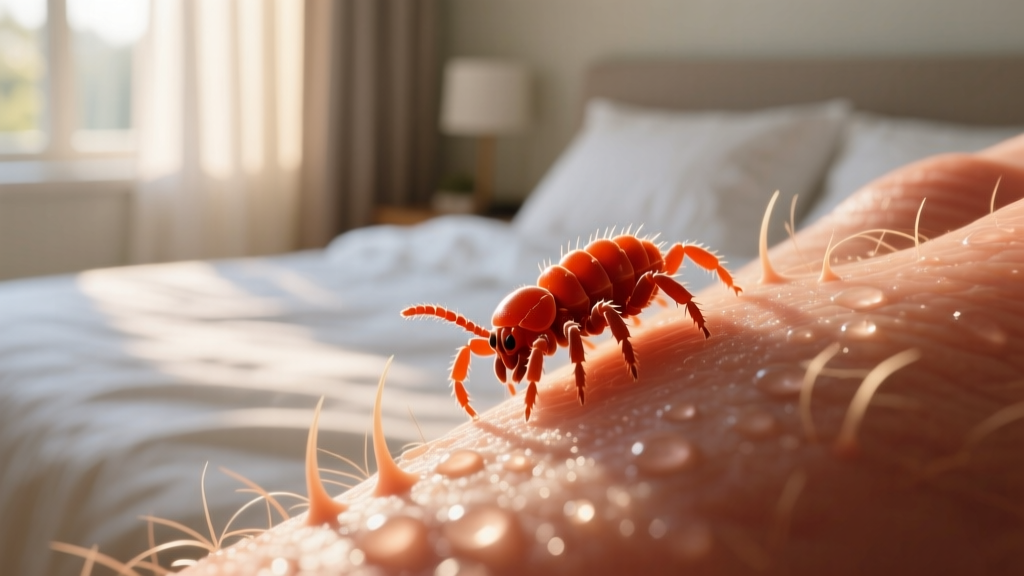
Do Chiggers Live in Your Bed? Identifying Bites & Indoor Risks
The Short Answer: Do Chiggers Actually Live in Your Bed?
No, chiggers do not live in your bed, nor can they establish an infestation inside your home. If you are waking up with intensely itchy, red welts and suspect you brought chiggers back from your yard, you are likely dealing with a different indoor pest, or you are experiencing the delayed reaction to chigger bites acquired outdoors hours earlier.
Chiggers (the larval stage of trombiculid mites) are strictly outdoor pests that require specific environmental conditions to survive. While it is theoretically possible for a chigger to hitch a ride on your clothing and end up on your mattress, it cannot feed, reproduce, or survive long-term in an indoor environment. When homeowners mistakenly believe they have a 'chigger infestation' in their bedroom, entomological testing almost always reveals the true culprits: bed bugs, fleas, or bird/rodent mites.
Diagnostic Warning: Misidentifying bed bug bites as chigger bites is a common and costly mistake. Delaying professional bed bug treatment allows the population to multiply exponentially. If you are finding bugs in your bed or waking up with new bites every morning, assume it is an indoor pest until proven otherwise by a licensed exterminator.
Why Chiggers Cannot Survive Indoors
To understand why your bed is safe from chiggers, you must understand their biological limitations. The North American chigger (Trombicula alfreddugesi) is highly sensitive to desiccation (drying out).
The Humidity Barrier
Chiggers require a relative humidity level between 70% and 90% to survive. They thrive in the damp microclimates found at the soil surface, beneath leaf litter, and in dense, shaded turfgrass. The average indoor relative humidity in a climate-controlled home ranges from 30% to 50%. When exposed to this dry indoor air, an unattached chigger will desiccate and die within a few hours.
The Feeding Mechanism
Unlike bed bugs or mosquitoes that pierce the skin and drink blood, chiggers do not burrow into your skin or suck blood. They inject digestive enzymes into the skin that break down tissue, forming a feeding tube called a stylostome. This process takes 2 to 4 days. Once the chigger is fully engorged, or if it is scratched off, it drops to the ground. A chigger that drops onto your mattress has no soil to retreat to, no moisture to sustain it, and no biological drive to feed a second time. According to Texas A&M AgriLife Extension, chiggers only feed once during their larval stage before molting into nymphs, which do not bite humans at all.
Chiggers vs. Bed Bugs vs. Dust Mites: A Diagnostic Matrix
Because chiggers, bed bugs, and dust mites are all associated with beds or biting, homeowners frequently confuse them. Use the matrix below to accurately identify the threat.
| Feature | Chiggers | Bed Bugs | Dust Mites |
|---|---|---|---|
| Primary Habitat | Outdoor tall grass, brush, soil | Mattress seams, headboards, furniture | Inside pillows, mattresses, carpets |
| Bite Appearance | Intensely itchy red welts, often with a central blister | Red, raised bumps in linear or zigzag patterns | Do not bite; cause allergic respiratory/skin reactions |
| Bite Location | Around tight clothing (waistbands, sock lines, knees) | Exposed skin (arms, neck, face, shoulders) | N/A (Allergic dermatitis or asthma) |
| Indoor Lifespan | Hours (dies from desiccation) | Months to over a year | Months (thrives in human dander) |
| Visible Signs in Bed | None | Rust-colored fecal spots, cast skins, live bugs | Microscopic (requires lab testing to see) |
How to Identify Chigger Bites vs. Indoor Pest Bites
If you are trying to determine the source of your skin irritation, analyze the timeline and location of the bites.
The Timeline Test
Chigger bites are notorious for their delayed reaction. You may walk through a brushy area at 2:00 PM, but the intense itching and red welts will not appear until 12 to 24 hours later. If you wake up with new bites, but you spent time in overgrown vegetation or unmanicured lawn areas the previous afternoon, you are likely reacting to outdoor chigger exposure. Conversely, if you are waking up with new bites every single morning despite not going outdoors, you are likely dealing with bed bugs or fleas. The Environmental Protection Agency (EPA) notes that bed bugs typically feed at night, leaving fresh welts by morning.
The Clothing Barrier Test
Chiggers are incredibly small (about 0.3 millimeters) and lack the mouthparts to bite through fabric. Instead, they wander upward from the ground until they hit a physical barrier. This is why chigger bites cluster aggressively around the ankles, the tops of socks, the waistline where underwear sits tight, and behind the knees. Bed bugs, however, will simply crawl onto exposed skin while you sleep, targeting the face, neck, and arms.
The 3-Step Decontamination Protocol
If you have just returned from a high-risk outdoor environment (such as a wooded trail, a field of tall fescue, or an overgrown garden) and want to ensure no chiggers make it into your bed, follow this exact protocol:
- Immediate Heat Wash: Strip off your outdoor clothing and place it directly into the washing machine. Do not leave it in a laundry hamper where mites could theoretically crawl onto other fabrics. Wash the garments in water heated to at least 130°F (54.4°C) for a minimum of 20 minutes. This temperature is lethal to all stages of trombiculid mites.
- High-Heat Drying: Transfer the clothes to a dryer and run it on the highest heat setting for 30 minutes. The combination of heat and low humidity will instantly desiccate any surviving larvae.
- Friction Shower: Chiggers do not burrow into the skin; they attach to the surface. A standard rinse will not remove them. You must take a warm shower using a standard bar soap or body wash and vigorously scrub your skin with a washcloth or loofah. The physical friction dislodges unattached or loosely attached mites before they can form a stylostome.
When to Call an Exterminator: Signs of a Real Indoor Infestation
If you have ruled out chiggers based on the diagnostic matrix above, you must investigate for true indoor pests. Do not attempt to treat a suspected bed bug infestation with over-the-counter 'bug bombs' or outdoor chigger sprays; these products will only cause the pests to scatter deeper into your walls and furniture.
Look for these definitive signs of a bed bug infestation:
- Fecal Spotting: Tiny, rust-colored or black dots on your mattress seams, sheets, or the wall behind the headboard. These spots will smear red if wiped with a damp cloth.
- Cast Skins: Translucent, hollow shells left behind as nymphs grow. You will often find these clustered in the tufts and buttons of the mattress.
- Live Insects: Adult bed bugs are roughly the size and color of an apple seed (about 5mm long, reddish-brown, and flat).
2026 Pest Control Cost Expectations: If you confirm a bed bug infestation, professional remediation is required. As of 2026, chemical treatments typically range from $300 to $800 per room, while whole-home thermal heat treatments (raising the ambient room temperature to 135°F for several hours to kill all life stages) cost between $1,200 and $2,500 depending on your home's square footage.
By understanding the strict biological limits of chiggers, you can stop treating your bedroom for outdoor pests and focus your pest control efforts on the actual threats to your indoor environment. For more information on identifying and managing specific turfgrass and outdoor mites, consult your local university cooperative extension office.

