
Pest Control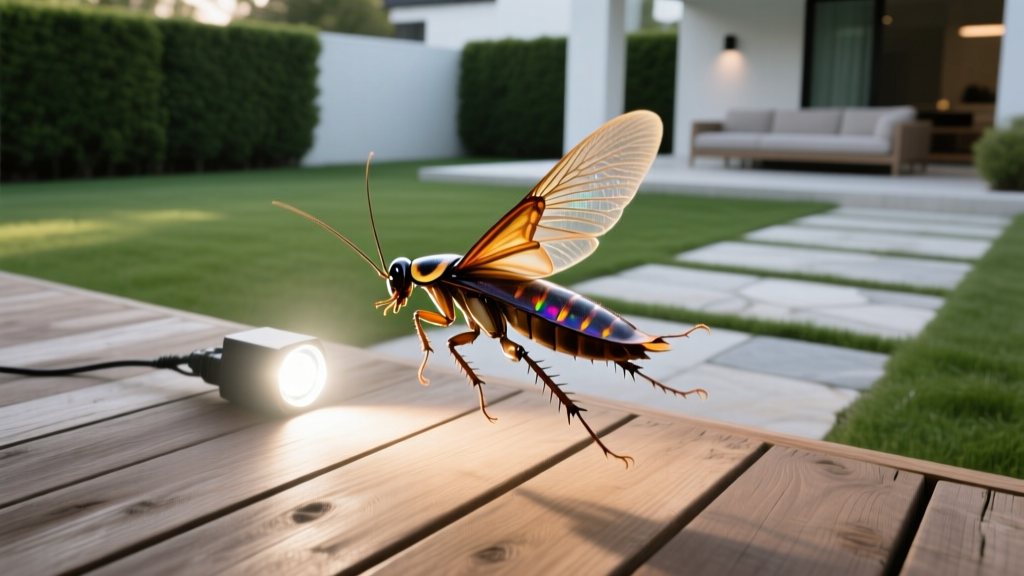
Do Cockroaches Like Light? Why Roaches Flee From Illumination
The Short Answer: Negative Phototaxis
When you walk into a dark kitchen and flip the switch, the sudden scattering of cockroaches is a universal homeowner experience. But do cockroaches like light? The definitive answer is no. The vast majority of domestic cockroach species exhibit negative phototaxis—a hardwired biological reflex that drives them away from light sources and toward dark, enclosed spaces. Light does not attract them; it triggers an immediate survival response to flee from what their nervous system interprets as an exposed, high-risk environment.
However, understanding roach phototaxis is not as simple as "roaches hate light." Certain species are actually drawn to illumination, and misunderstanding this behavior can lead to ineffective pest control strategies. This guide breaks down the biology of roach vision, the exceptions to the rule, and how to manipulate lighting to fortify your home's perimeter.
The Biology of Roach Vision: Why Light Triggers Flight
Cockroaches do not see the world the way humans do. Their visual system is optimized for detecting sudden changes in light intensity and rapid movement, rather than forming high-resolution images. This is managed through two distinct anatomical features:
- Compound Eyes: Made up of thousands of individual lenses (ommatidia), these eyes provide nearly 180-degree peripheral vision. They are highly sensitive to motion, allowing roaches to detect the shadow of a predator (or a human hand) milliseconds before physical contact.
- Ocelli (Simple Eyes): Located between the compound eyes, ocelli do not form images. Instead, they act as highly calibrated light meters. They detect shifts in ambient light intensity and regulate the insect's circadian rhythms.
When a room is suddenly flooded with photons from a 60-watt LED bulb, the ocelli register a massive, instantaneous spike in light intensity. This overloads their sensory input, triggering an escape reflex mediated by the giant interneurons in their nervous system. They aren't just "avoiding" the light; they are fleeing an overwhelming sensory stimulus that signals extreme vulnerability.
⚠️ Warning: The UV Trap Misconception
Many homeowners purchase ultraviolet (UV) bug zappers hoping to eliminate indoor roaches. This is a waste of money. While UV light strongly attracts flying insects like moths and mosquitoes, common indoor roaches (German and American) lack the specific photoreceptors that draw them to UV wavelengths. UV traps will not solve a kitchen roach infestation.
Exceptions to the Rule: Roaches That Actually Like Light
While the infamous German cockroach (Blattella germanica) despises light, a few specific species exhibit positive phototaxis (attraction to light). Misidentifying these species can lead to the wrong treatment plan. According to entomologists at the University of Florida IFAS, the Asian cockroach is a primary culprit for light-seeking behavior in residential areas.
| Species | Scientific Name | Reaction to Light | Primary Habitat |
|---|---|---|---|
| German Cockroach | Blattella germanica | Strong Avoidance | Indoor kitchens, bathrooms |
| American Cockroach | Periplaneta americana | Strong Avoidance | Sewers, basements, mulch |
| Asian Cockroach | Blattella asahinai | Attracted | Outdoor leaf litter, flies to porch lights |
| Wood Cockroach | Parcoblatta pennsylvanica | Males Attracted | Woodpiles, attics, window sills |
If you notice roaches flying directly at your exterior porch lights or gathering on window screens at night, you are likely dealing with Asian or male Pennsylvania wood cockroaches, not a German infestation. The Penn State Extension notes that male wood roaches are specifically drawn to light during their mating season in late spring and early summer.
The "Leave the Light On" Myth
"If I leave the kitchen light on all night, the roaches won't come out to eat."
This is one of the most persistent and ineffective myths in DIY pest control. Leaving a light on 24/7 will not starve a roach colony or force them to vacate the premises. Cockroaches are highly adaptable. If a light is left on continuously, their circadian rhythms will simply adjust. They will either forage in the darker, hidden voids inside your walls and cabinetry, or they will wait for the brief moments when human activity ceases to venture out. Furthermore, continuous illumination increases your electricity bill and degrades your bulbs without providing any measurable pest control benefit.
Actionable Lighting Strategies for Pest Control
While you cannot use light to eliminate an indoor German cockroach infestation (which requires EPA-recommended baits and insect growth regulators), you can manipulate exterior and interior lighting to deter light-attracted species and disrupt foraging patterns.
1. Exterior Perimeter Defense (Targeting Asian & Wood Roaches)
Standard white LED porch lights emit a broad spectrum that includes blue and UV wavelengths (typically 4000K to 5000K color temperature). These wavelengths are highly visible to insects. To stop roaches and flying pests from congregating near your doors:
- Switch to Amber LEDs: Replace exterior bulbs with specific "bug lights" that emit light in the yellow/amber spectrum (wavelengths above 550nm). Insects lack the photoreceptors to easily see these longer wavelengths.
- Use Sodium Vapor Lamps: If amber LEDs aren't bright enough for your security needs, low-pressure sodium vapor lights emit a monochromatic yellow light that is virtually invisible to most pests.
- Redirect Floodlights: Point security floodlights away from the house and toward the yard. Illuminate the perimeter without turning your actual doorways into a beacon for wood roaches.
2. Interior Disruption Tactics (Targeting German & American Roaches)
Inside the home, the goal is not to attract, but to startle and expose.
- Motion-Activated Cabinet Lighting: Install battery-operated, motion-sensor LED strips (4000K cool white) under your kitchen cabinets and inside deep pantries. When a roach crosses the threshold to forage, the sudden burst of light triggers its negative phototaxis, forcing it to retreat before it can contaminate food surfaces.
- Eliminate Harborages: Since roaches flee to darkness, use lighting to your advantage during inspections. Shine a high-lumen tactical flashlight (1000+ lumens) into the back corners of drawers, behind the refrigerator, and under the stove. The stark contrast will force hidden nymphs to scatter, revealing the true size of the infestation.
Frequently Asked Questions
Do cockroaches come out when the lights are off?
Yes. Cockroaches are primarily nocturnal. Their peak foraging activity occurs roughly four hours after lights-out in a household. This timing aligns with their natural circadian rhythms and the absence of human predators.
Can bright light kill cockroaches?
No. Light itself, regardless of intensity, is not lethal to cockroaches. While extreme heat from older incandescent or halogen bulbs can desiccate or burn an insect if it makes direct contact, the light photons alone cause no physical harm. They only trigger a behavioral flight response.
Why do I see roaches during the day?
Seeing light-fearing roaches during the day or in well-lit rooms is a critical warning sign. It usually indicates that the hidden harborage areas (wall voids, cracks) are severely overcrowded, forcing lower-ranking nymphs and weaker adults into the open to compete for food and water. It can also indicate a heavy presence of insecticide repellents in their nesting zones, driving them out into the light to escape the chemicals.
Do roaches like the light from TV screens or phones?
No. The localized, low-intensity glow from electronics does not provide enough ambient lumens to trigger a strong phototactic response, nor does it mimic the environmental cues they use for navigation. They will ignore screens unless the heat from the device's internal components provides a warm harborage spot.

