
Pest Control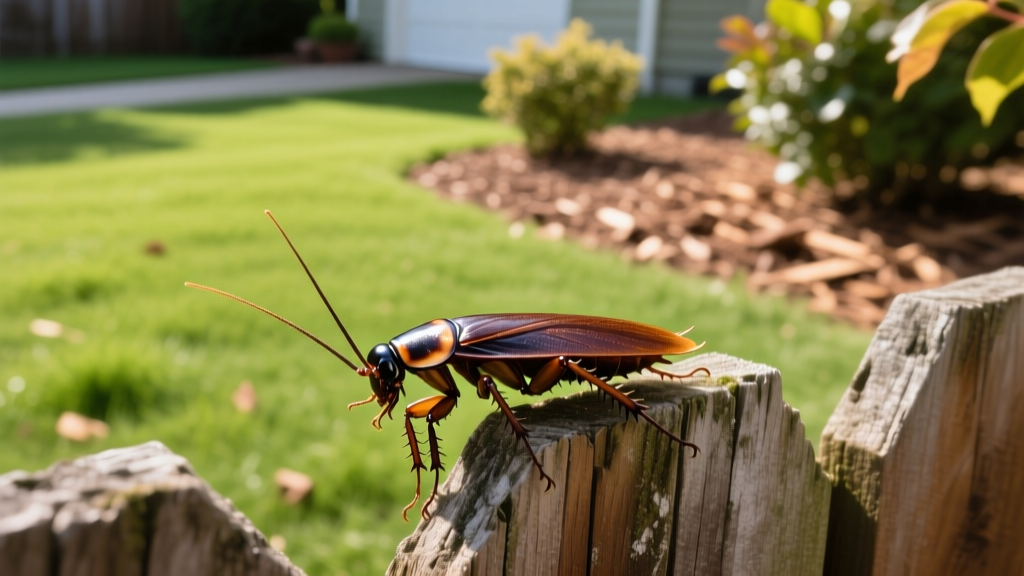
Do Cockroaches Live Outside? Yard Identification & Perimeter Control
The Short Answer: Yes, Many Cockroaches Thrive Outdoors
While most homeowners associate cockroaches with indoor kitchen cabinets and bathroom drains, the vast majority of cockroach species are actually outdoor insects. These 'peridomestic' roaches breed, forage, and shelter in yards, mulch beds, and sewer systems. They only invade homes when environmental conditions force them inside or when they are accidentally brought in via firewood and potted plants.
Key Takeaway: Finding a large cockroach in your living room does not necessarily mean you have an indoor breeding infestation. It usually indicates a massive outdoor population near your foundation that has found a structural entry point.
Identifying the 4 Major Outdoor Cockroach Species
To manage outdoor roaches, you must first identify which species is occupying your yard. The following four species account for over 90% of outdoor-to-indoor cockroach encounters in North America.
| Species | Size & Color | Primary Outdoor Habitat | Flight Capability |
|---|---|---|---|
| American Cockroach (Periplaneta americana) |
1.5 - 2 inches Reddish-brown with a pale yellow figure-8 on the head. |
Sewer grates, storm drains, damp mulch beds, and basement crawlspaces. | Strong fliers, especially in warm, humid weather. |
| Smokybrown Cockroach (Periplaneta fuliginosa) |
1.25 - 1.5 inches Uniform dark mahogany to black. |
Tree canopies, gutters, woodpiles, and dense ivy groundcover. | Excellent fliers; strongly attracted to porch lights at night. |
| Oriental Cockroach (Blatta orientalis) |
1 - 1.25 inches Glossy black to dark brown. |
Soil, leaf litter, crawl spaces, and beneath porches or decks. | Cannot fly; wings are undeveloped in both sexes. |
| Wood Cockroach (Parcoblatta spp.) |
0.75 - 1.25 inches Light brown to chestnut. |
Wooded lots, loose tree bark, and stacked firewood. | Males are strong fliers; females are flightless. |
According to North Carolina State Extension, distinguishing between the German cockroach (an indoor pest) and these outdoor species is critical. German roaches are rarely found outside, whereas the species listed above will die quickly indoors due to the lack of ambient moisture and decaying organic matter they require to survive.
Where Do Outdoor Cockroaches Hide in Your Yard?
Peridomestic cockroaches seek three things: moisture, shelter from extreme temperatures, and decaying organic food. Your yard likely contains several micro-habitats that support thousands of roaches.
- Deep Mulch Beds: Mulch layered deeper than 3 inches retains excessive moisture and creates a thermal blanket. American and Oriental roaches will tunnel through deep pine straw and hardwood mulch to reach the damp soil below.
- Leaf Litter and Ivy: Smokybrown roaches thrive in thick English ivy or undisturbed leaf piles. The dense root systems of groundcover plants hold moisture long after the topsoil dries out.
- Sewer Grates and Utility Boxes: American cockroaches frequently nest in municipal sewer lines and migrate up through yard drain grates or cracked PVC plumbing cleanouts.
- Woodpiles and Tree Hollows: Wood roaches and Smokybowns utilize loose bark on dead trees and stacked firewood as primary daytime shelters.
Why Outdoor Roaches Invade Your Home (The Trigger Points)
Outdoor roaches do not enter homes randomly. Invasions are triggered by specific environmental stressors that force them to seek refuge inside your climate-controlled structure.
- Temperature Drops: When nighttime temperatures fall below 50°F (10°C), Oriental and American roaches will follow thermal gradients toward the warm foundation of your home, slipping under doors or through weep holes.
- Heavy Rainfall and Flooding: Intense downpours flood soil burrows and sewer lines. Roaches will surge upward and outward to avoid drowning, often entering homes through garage door sweeps and basement windows.
- Severe Drought: During extended dry spells, roaches migrate toward the only available water sources: leaking outdoor spigots, AC condensation lines, and the interior of your plumbing.
- Light Attraction: Male Smokybrown and Wood roaches are highly phototactic. Bright exterior security lights will draw them from neighboring tree lines directly onto your siding and into attic vents.
Perimeter Defense: Exact Treatments to Keep Outside Roaches Outside
To stop outdoor roaches from crossing your threshold, you must establish a chemical and physical barrier around the perimeter of your home. Do not rely on indoor sprays; the battle must be fought in the yard.
Decision Framework: Liquid Barrier vs. Granular Bait
Use Liquid Residuals for immediate knockdown and creating a repellent/non-repellent invisible wall on vertical surfaces (foundation, siding). Use Granular Baits for horizontal applications deep into mulch beds and leaf litter where sprays cannot penetrate.
Use Liquid Residuals for immediate knockdown and creating a repellent/non-repellent invisible wall on vertical surfaces (foundation, siding). Use Granular Baits for horizontal applications deep into mulch beds and leaf litter where sprays cannot penetrate.
1. Liquid Foundation Trenching (Taurus SC)
Product: Taurus SC (9.1% Fipronil)
Cost: $90 - $110 per 20 oz bottle (yields up to 100 gallons of finished solution).
Application Rate: 0.8 fl oz per gallon of water.
Method: Dig a trench 6 inches deep and 6 inches wide directly against the foundation. Apply 4 gallons of finished solution per 10 linear feet of trench. Backfill the soil and spray the top of the soil. Fipronil is a non-repellent; roaches will not detect it, will walk through it, and will transfer the lethal dose to the colony via grooming and coprophagy.
2. Mulch and Groundcover Baiting (Maxforce Complete)
Product: Maxforce Complete Granular Insect Bait
Cost: $45 - $55 per 4 lb bag.
Application Rate: 1.5 to 3 lbs per 1,000 square feet.
Method: Broadcast the granules evenly over mulch beds, pine straw, and ivy patches. The granules contain a blend of attractants (proteins, fats, and carbohydrates) that appeal to the varied diets of American and Smokybrown roaches. Reapply every 60 days or after heavy rainfall.
3. Insect Growth Regulators (IGR)
To break the breeding cycle outdoors, mix Gentrol IGR (Hydroprene) with your liquid perimeter spray. Priced at roughly $35-$45 for a 10-pack of point-source discs or $120 for a liquid concentrate, Gentrol acts as a juvenile hormone analog, causing nymphs to mature into deformed, sterile adults that cannot reproduce. According to University of Minnesota Extension, combining an IGR with a lethal adulticide is the gold standard for long-term peridomestic pest suppression.
Landscaping Adjustments to Eliminate Roach Habitats
Chemical treatments will fail if the underlying habitat remains untouched. Implement these structural landscaping modifications to make your yard inhospitable to cockroaches.
- The 18-Inch Rule: Maintain an 18-inch vegetation-free and mulch-free zone directly against your home's foundation. Use inorganic materials like crushed stone or pea gravel in this border to ensure rapid water drainage and eliminate hiding spots.
- Cap Mulch Depth: Never apply mulch deeper than 2 inches. Thin layers allow the soil to dry out between waterings, depriving Oriental and American roaches of the constant moisture they require.
- Manage Tree Canopies: Trim tree branches so they do not touch your roof or siding. This eliminates the 'highway' Smokybrown roaches use to bypass ground-level chemical barriers and access your attic vents.
- Relocate Firewood: Store firewood at least 20 feet away from the house and elevate it on metal racks. Never apply liquid insecticides directly to wood you intend to burn, as this releases toxic fumes.
- Switch Exterior Lighting: Replace bright white LED or mercury vapor security lights with yellow sodium vapor bulbs or LEDs in the 2700K-3000K warm spectrum. These wavelengths are significantly less attractive to flying male Wood and Smokybrown roaches.
Frequently Asked Questions
Do outdoor cockroaches carry diseases?
Yes. American and Oriental cockroaches frequently forage in sewer lines, garbage receptacles, and animal feces. They carry pathogens like Salmonella, E. coli, and Shigella on their bodies. When they track across outdoor dining surfaces or invade kitchens, they can contaminate food preparation areas.
How long do outdoor cockroaches live?
In optimal outdoor conditions, American cockroaches can live up to 12 to 15 months from egg to adult death. Wood roaches have a slightly shorter lifespan, typically living 6 to 9 months. However, a single female American roach can produce up to 80 egg capsules (oothecae) in her lifetime, each containing 14-16 eggs, allowing populations to explode rapidly in untreated yards.
Can I use indoor roach bait stations outside?
No. Standard indoor gel baits (like Advion Roach Gel) will dry out, mold, or wash away within 48 hours when exposed to outdoor UV light and rain. Always use weather-resistant granular baits or bait stations specifically rated for outdoor, damp environments, such as Avert Dry Flowable Cockroach Bait, which resists moisture degradation.

