
Pest Control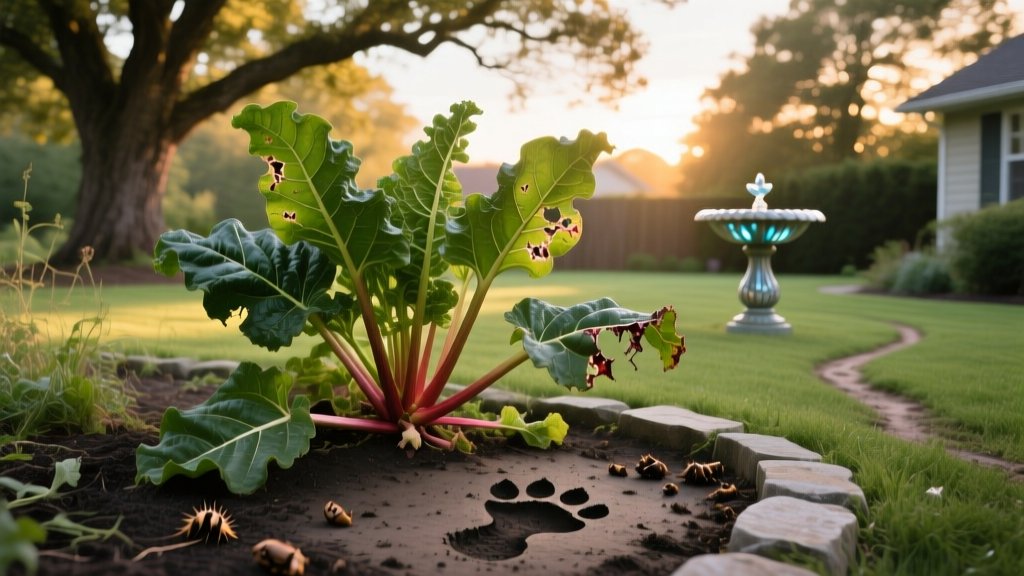
Do Deer Eat Rhubarb Plants? The Truth & Protection Guide
The Short Answer: Do Deer Eat Rhubarb Plants?
If you are asking whether deer eat rhubarb plants (Rheum rhabarbarum), the short answer is that rhubarb is highly deer-resistant, but it is not 100% deer-proof. Deer generally avoid mature rhubarb due to the high concentration of oxalic acid and anthraquinones in the large, fan-shaped leaves, which give the plant a bitter taste and can cause digestive distress. However, in early spring when alternative forage is scarce, or in areas with severe overpopulation, deer will readily snap off tender, newly emerging stalks before the plant's chemical defenses fully develop.
Understanding the biological mechanisms behind this resistance—and the specific environmental edge cases that trigger deer browsing—is critical for homeowners looking to protect their perennial vegetable patches without wasting money on ineffective deterrents.
The Science of Rhubarb Toxicity and Deer Foraging
Rhubarb leaves contain oxalic acid concentrations ranging from 0.5% to 1.0% by weight, alongside soluble oxalates and anthraquinone glycosides. When a deer bites into a mature leaf, these compounds bind to calcium in the animal's digestive tract, potentially leading to hypocalcemia and renal distress if consumed in large quantities. According to the ASPCA Animal Poison Control Center, the toxic principles in rhubarb are primarily concentrated in the leaf blades, making the foliage a natural deterrent to most mammalian herbivores.
However, the thick, fleshy petioles (the edible stalks) contain significantly lower levels of oxalic acid. While humans safely consume these stalks after cooking, deer lack the culinary preparation step. Even so, the residual tartness and fibrous texture of mature stalks make them unpalatable compared to sweeter, more tender garden targets like hostas, daylilies, or young fruit tree shoots.
⚠️ Toxicity Warning: While deer usually self-regulate and avoid toxic doses, rhubarb leaves remain highly toxic to domestic pets (dogs and cats) and livestock. Never leave pruned rhubarb leaves in areas where domestic animals forage, even if you are using them as a mulch to deter deer.
Rutgers University Deer Resistance Ratings
In the horticultural industry, the gold standard for evaluating plant vulnerability is the Rutgers University New Jersey Agricultural Experiment Station (NJAES) rating system. When evaluating landscape plants, Rutgers categorizes rhubarb as "C" (Seldom Severely Damaged). This means that while deer do not prefer it and will usually bypass it for more desirable plants, they may sample it when local food sources are depleted.
"No plant is completely deer-proof. Deer resistance ratings reflect the feeding habits of deer in a specific region and can change based on population density, weather conditions, and the availability of alternative forage." — Rutgers NJAES Deer-Resistant Plants Database
Rhubarb Vulnerability Matrix by Growth Stage
| Growth Stage | Plant Part | Deer Vulnerability | Oxalic Acid Level |
|---|---|---|---|
| Early Spring (Emergence) | Tender red shoots | High | Low |
| Mid-Spring | Unfurling leaves & stalks | Moderate | Moderate |
| Late Spring / Summer | Mature leaves & thick stalks | Very Low | High (Leaves) |
| Post-Harvest | Regrowth stalks | Moderate | Low to Moderate |
When Will Deer Actually Eat Rhubarb?
According to wildlife management data from Penn State Extension, deer browsing on resistant plants spikes under three specific conditions:
- Early Spring Starvation Gap: In March and early April, winter forage is exhausted, and spring grasses have not yet emerged. Deer are in a caloric deficit and will sample almost any emerging green matter, including rhubarb shoots.
- High Population Density: In suburban areas where deer populations exceed 30-40 per square mile, the "browse line" is stripped bare. Overpopulated herds are forced to expand their diet to include resistant perennials.
- Drought Stress: During late-summer droughts, rhubarb stalks retain moisture while surrounding brush dries out. Deer may bite into the fleshy stalks purely for hydration, spitting out the fibrous material but still causing structural damage to the plant crown.
Proven Strategies to Protect Rhubarb from Deer
If you live in a high-pressure deer zone, relying solely on the plant's natural oxalic acid defenses is a gamble. Implementing physical and chemical barriers during the vulnerable early-spring window is the most reliable approach.
1. Physical Barriers: Fencing Specifications
Fencing is the only 100% effective deterrent. For a dedicated rhubarb patch, you do not necessarily need to fence the entire property. A localized perimeter fence is highly effective if built to exact specifications.
- Vertical Woven Wire: Requires a minimum height of 7.5 to 8 feet. Deer can clear 6-foot fences from a standstill. As of 2026, 14-gauge galvanized welded wire costs approximately $2.50 to $3.50 per linear foot.
- Slanted Fence (The 5-Foot Alternative): If local HOA rules restrict fence height, build a 5-foot fence slanted outward at a 45-degree angle. Deer have poor depth perception and will not jump a fence that looks wider than it is tall. Use 2x4 wooden frames and attach poultry wire or deer netting.
- Temporary Spring Netting: For a budget-friendly approach, drape 3/4-inch UV-stabilized polypropylene deer netting over the rhubarb crowns from March through May, securing the edges with 10-inch landscape staples. Remove once the leaves fully expand and toughen.
2. Chemical Repellents: Active Ingredients and Protocols
Repellents work by either emitting a predator/decay odor (fear-based) or by tasting foul (taste-based). For rhubarb, you must use odor-based repellents on the emerging shoots, as taste-based repellents require the deer to bite the plant first, which still causes damage.
| Active Ingredient | Brand Example | Mechanism | Rainfastness | Reapplication |
|---|---|---|---|---|
| Putrescent Egg Solids (2.0%) | Liquid Fence | Odor (Predator/Decay) | 24 Hours | Every 3-4 weeks |
| Capsaicin & Peppermint Oil | Deer Out | Odor & Taste (Irritant) | 12-24 Hours | Every 30 days |
| Thiram (Fungicide) | Spotrete-F | Taste (Bitter/Sulfur) | 48 Hours | After heavy rain |
Application Rule: Never apply taste-based repellents (like capsaicin) to the stalks you intend to harvest and eat. Restrict chemical applications to the soil perimeter and the non-edible outer leaves, or switch entirely to odor-based granular repellents scattered around the base of the plant.
Companion Planting for Perimeter Defense
You can create a biological buffer zone by surrounding your rhubarb patch with plants that deer actively despise. Deer rely heavily on their olfactory senses to locate food; masking the scent of your garden with highly aromatic, deer-resistant perennials disrupts their foraging patterns.
- Alliums (Ornamental Onions): Plant Allium giganteum or garlic borders around the rhubarb. The sulfur compounds are highly offensive to deer.
- Peppermint and Spearmint: Mint spreads aggressively, making it an excellent groundcover barrier around the base of rhubarb crowns. Keep it contained with 12-inch deep metal edging.
- Russian Sage (Perovskia atriplicifolia): The fuzzy, highly aromatic leaves of Russian sage provide a structural and olfactory shield that deer will not push through.
Frequently Asked Questions
Will deer eat rhubarb in the winter?
No. Rhubarb is an herbaceous perennial that dies back to the ground in late autumn. The crown remains dormant underground during winter, making it completely inaccessible to foraging deer until spring emergence.
Can I use human hair or soap shavings to deter deer from rhubarb?
While frequently recommended in gardening folklore, university extension studies consistently show that human hair and bar soap shavings lose their effectiveness within days as deer habituate to the scent. Putrescent egg or capsaicin-based commercial repellents yield vastly superior, measurable results.
My deer ate the leaves off my rhubarb. Is the plant dead?
Not necessarily. If the central crown and root system remain intact, the plant will likely push out new growth, though your harvest for that season will be significantly reduced. Apply a balanced 10-10-10 granular fertilizer at a rate of 1/2 cup per plant to help it recover energy reserves, and ensure consistent watering of 1 inch per week.

