
Pest Control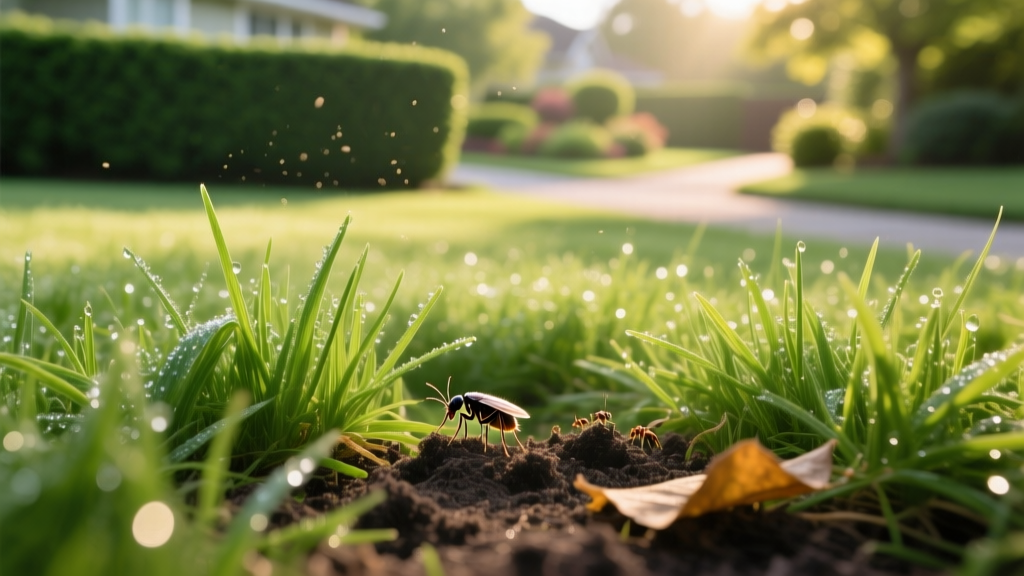
Do Fleas Live in Grass? Identifying True Yard Habitats
The Short Answer: Fleas Avoid Open Grass
The short answer is no: fleas do not live in open, sunlit grass. While it is a common misconception that a sprawling green lawn is a breeding ground for fleas, the biology of the most common yard invader—the cat flea (Ctenocephalides felis)—dictates otherwise. Flea larvae are highly susceptible to desiccation. Direct sunlight and temperatures above 95°F (35°C) will kill them rapidly. Furthermore, they require a relative humidity of at least 50% to survive their developmental stages.
Therefore, fleas do not inhabit the center of a well-maintained, sun-drenched lawn. Instead, they thrive in the microclimates at the periphery of your yard. When a host animal (a dog, cat, raccoon, or opossum) walks through your yard, adult fleas drop off and lay eggs. Those eggs roll off the host and settle into shaded, moist, organic debris where the larvae can safely feed and pupate.
The 'White Sock Test': Confirming Yard Presence
Before purchasing any treatments, you must confirm where the fleas are actually located. Broadcasting insecticides across an entire lawn is a waste of money and harms beneficial soil organisms. Use the White Sock Test to map the infestation.
- Preparation: Pull a pair of white, calf-high cotton socks over your pants. Fleas are visually attracted to the contrast of white against dark soil and grass.
- Execution: Walk slowly through your yard, focusing on the edges, under decks, near shrubbery, and around pet resting areas. Pause for 10 seconds every few steps.
- Observation: Look for tiny, dark, jumping insects latching onto the socks. If you see them, mark that specific zone with a landscaping flag.
- Mapping: You will almost certainly find that the flags are clustered in shaded, damp areas, while the open lawn remains completely clear.
Where Fleas Actually Hide: The Microclimate Map
Understanding the specific environmental parameters of flea habitats allows for precision targeting. According to UC Davis Integrated Pest Management, outdoor flea populations are almost entirely restricted to areas where pets or wildlife frequently rest and where organic matter accumulates.
| Yard Location | Shade Level | Moisture / Debris | Flea Risk Level | Treatment Priority |
|---|---|---|---|---|
| Open, mowed lawn | 0% - 20% | Low / Minimal | Negligible | Do Not Treat |
| Under wooden decks/porches | 90% - 100% | High / Dust & Soil | Critical | Primary Target |
| Dog runs & kennel edges | 40% - 80% | High / Organic Waste | Critical | Primary Target |
| Shrub borders & fence lines | 60% - 100% | Moderate / Leaf Litter | High | Secondary Target |
| Compost piles / Mulch beds | 70% - 100% | Very High / Decaying | High | Secondary Target |
The 5% Rule and the Pupal Roadblock
The 5% Rule: At any given time, adult fleas make up only about 5% of the total flea population in your yard. The other 95% consists of eggs (50%), larvae (35%), and pupae (10%). If your treatment only kills adults, the infestation will rebound within 14 to 21 days.
The most difficult stage to manage outdoors is the pupal stage. The flea pupa is encased in a sticky, debris-covered cocoon that is highly resistant to environmental stress and most chemical insecticides. According to the Centers for Disease Control and Prevention (CDC), pupae can remain dormant in the soil for up to 100 days, waiting for the vibrations and carbon dioxide of a passing host before emerging. This is why 'one-and-done' chemical sprays invariably fail.
Targeted Treatment Strategy: A 3-Step Protocol
To break the life cycle in your yard, you must combine environmental modification, biological controls, and Insect Growth Regulators (IGRs). Avoid broad-spectrum neurotoxins like permethrin for yard-wide use, as they are highly toxic to bees and aquatic life, and they fail to penetrate the pupal cocoon.
Step 1: Environmental Modification (Day 1)
Fleas cannot survive without their microclimate. Alter the environment to make it hostile to larvae.
- Clear Debris: Rake out all leaf litter, pine needles, and organic buildup from under shrubs and along fence lines. Bag and remove it; do not compost it.
- Trim Canopy: Prune lower branches of trees and shrubs to allow at least 30% more direct sunlight to hit the soil in previously shaded border areas.
- Block Wildlife: Seal off crawl spaces and use hardware cloth to block access under decks and porches where feral cats and opossums sleep.
Step 2: Biological Control with Nematodes (Day 3)
Beneficial nematodes are microscopic, soil-dwelling worms that actively hunt and destroy flea larvae and pupae. They are completely safe for pets, humans, and earthworms.
- Species Selection: You must purchase Steinernema carpocapsae. Other species (like S. feltiae) are less effective against fleas.
- Application Rate: Apply at a rate of 1 to 2 million nematodes per 1,000 square feet of targeted shaded areas. (Cost: approximately $35 to $50 per million).
- Execution: Apply using a hose-end sprayer in the early morning or late evening. The soil must be moist before application and kept lightly watered for the next 7 days to prevent the nematodes from drying out.
Step 3: Chemical Intervention via IGRs (Day 7)
To stop the remaining eggs from hatching and larvae from molting, apply an Insect Growth Regulator. IGRs mimic juvenile hormones, trapping the flea in its immature stage until it dies.
- Active Ingredient: Look for Pyriproxyfen (commonly sold as Archer IGR or Martin's IGR) or Pyriproxyfen combined with an adulticide if adult pressure is severe.
- Cost & Coverage: A standard 16 oz bottle of Pyriproxyfen costs between $25 and $40 and yields enough diluted solution to treat up to 15,000 square feet of targeted zones.
- Longevity: Pyriproxyfen is photostable and can remain active in shaded outdoor environments for up to 7 months, providing long-term suppression of the egg and larval stages.
Common Mistakes to Avoid
'Watering your lawn heavily to drown fleas is a myth. Flea larvae can survive temporary flooding by clinging to organic debris, and excessive moisture actually creates the high-humidity environment they need to thrive.'
- Mistake: Spraying the entire lawn with harsh chemicals. Fix: Treat only the mapped microclimates to save money and protect pollinators.
- Mistake: Using diatomaceous earth (DE) outdoors. Fix: DE becomes completely inert the moment it gets wet from dew or rain. It is strictly an indoor treatment.
- Mistake: Ignoring the pet. Fix: Yard treatment will fail if your dog or cat is not simultaneously treated with a veterinarian-prescribed systemic isoxazoline (e.g., Bravecto, NexGard) to stop the reintroduction of eggs into the yard.
Frequently Asked Questions
Can fleas jump from the grass onto my legs?
Yes, but only if you are walking through the specific shaded, unmaintained edges where they pupate. Adult fleas can jump vertically up to 8 inches and horizontally up to 16 inches. They will not jump from the middle of a sunlit, mowed lawn because they are not there.
Does cedar mulch repel fleas?
Cedar and cypress mulches contain natural oils (like thujone) that are mildly repellent to adult fleas and can deter them from settling in mulch beds. However, cedar mulch will not kill an existing infestation and should be used as a preventative barrier, not a curative treatment.
How long does it take to clear a yard of fleas?
With a combined approach of environmental cleanup, nematodes, and IGRs, you will see a 90%+ reduction in adult flea emergence within 21 to 28 days. Complete eradication of the pupal reservoir may take up to 60 days as the remaining dormant pupae hatch and are subsequently killed or fail to reproduce.

