
Pest Control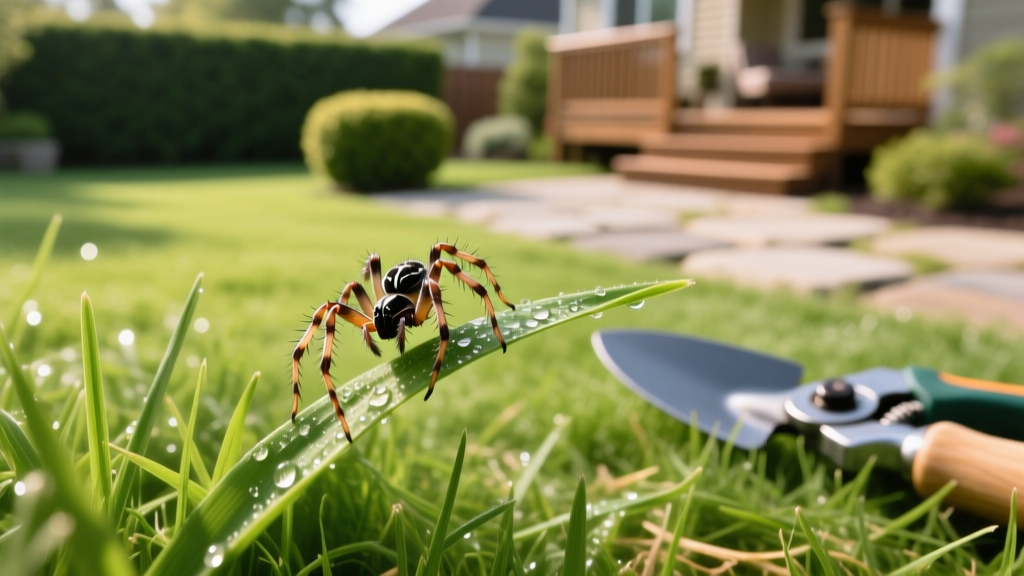
Do Grass Spiders Bite? Identification and Lawn Safety Guide
The Short Answer: Do Grass Spiders Bite Humans?
The direct answer to whether grass spiders (genus Agelenopsis) bite humans is that they possess the anatomical ability to bite, but they rarely do, and their venom is not medically significant to people. Grass spiders are equipped with chelicerae (fangs) designed to pierce the exoskeletons of small insects, not the thick epidermis of human skin. In the exceptionally rare event that a grass spider is crushed or aggressively handled and manages to pierce the skin, the sensation is comparable to a mild bee sting, resulting in localized, temporary redness.
Entomologist Insight: Spiders do not feed on blood and have no biological incentive to bite mammals. Bites almost exclusively occur as a defensive reflex when a spider is trapped against the skin, such as inside a shoe or garden glove.
According to the University of California Statewide Integrated Pest Management Program, spiders found in turfgrass and landscaping are overwhelmingly beneficial predators that pose virtually zero threat to homeowners, children, or pets. Understanding their behavior is the first step in transitioning from fear to effective lawn management.
Identifying Common Lawn and Grass Spiders
Homeowners frequently misidentify any ground-dwelling arachnid as a "grass spider." Accurate identification dictates whether intervention is necessary. Below is a breakdown of the most common spiders encountered in residential turf and garden beds.
| Species Type | Size (Body Length) | Web Structure | Human Bite Risk |
|---|---|---|---|
| Grass Spider (Agelenopsis) | 10–20 mm | Flat sheet web with a distinct funnel retreat | Extremely Low (fangs rarely pierce skin) |
| Wolf Spider (Lycosidae) | 10–35 mm | No web; active ground hunter | Low (can pierce skin, mild localized pain) |
| Orb Weaver (Araneidae) | 5–25 mm | Classic circular, spiral web in tall grass/shrubs | Negligible (fangs too small to pierce skin) |
| Cellar Spider (Pholcidae) | 2–10 mm (long legs) | Messy, irregular web in shaded corners | None (mouthparts cannot pierce human skin) |
The Funnel Web Signature
The most reliable way to identify a true grass spider is by its web. Unlike the intricate, suspended webs of orb weavers, the grass spider constructs a dense, flat sheet of silk across the top of the turf or low-lying foliage. At one edge of this sheet, the web narrows into a tube or "funnel." The spider waits inside this funnel, feeling for vibrations. When an insect walks across the non-sticky sheet web, the spider rushes out to subdue it. If you see dew-covered sheet webs spanning across your lawn in the early morning, you are looking at grass spider territory.
Wolf Spiders vs. Grass Spiders: Know the Difference
Because both frequent turfgrass, wolf spiders and grass spiders are frequently confused. However, their ecological roles and behaviors differ significantly.
- Hunting Style: Grass spiders are ambush predators that rely on their funnel webs. Wolf spiders are active hunters that roam the lawn at night, relying on excellent eyesight and speed to chase down prey like grubs and beetles.
- Egg Carrying: Female wolf spiders carry their spherical egg sacs attached to their spinnerets (the back of their abdomen). Female grass spiders leave their egg sacs hidden within their funnel webs or tucked into leaf litter.
- Bite Capability: Because wolf spiders are larger and more robust, their chelicerae can occasionally pierce human skin if stepped on barefoot. Grass spiders lack the bite force to do so.
Why Spiders Are Actually Beneficial for Your Lawn
Before reaching for an insecticide, consider the economic and ecological value of arachnids in your yard. According to research highlighted by Penn State Extension, spiders are apex invertebrate predators in the suburban landscape.
By the Numbers: A single acre of healthy, untreated lawn can harbor upwards of 50,000 to 100,000 spiders. Collectively, this population can consume over 200 pounds of insects annually, drastically reducing populations of turf-destroying pests like chinch bugs, sod webworms, and aphids.
Eliminating spiders via broad-spectrum pesticides often triggers a "pest resurgence" effect. When you kill the spider population, you remove the natural biological control, allowing plant-sucking and root-chewing insects to multiply exponentially, ultimately causing more damage to your grass than the spiders ever could.
When to Take Action: Managing Spider Populations
While grass spiders are harmless, an overabundance of funnel webs can make a lawn look unsightly, and heavy populations may indicate a massive underlying insect infestation (their food source). If spider densities cross your aesthetic threshold, use targeted, low-impact management strategies.
Step 1: Cultural and Mechanical Controls
Spiders thrive in environments that offer moisture, shelter, and prey. Altering the microenvironment is the most effective long-term deterrent.
- Adjust Mowing Height: Maintain your turf at the higher end of its recommended range (e.g., 2.5 to 3.5 inches for Tall Fescue). Taller grass harbors more insects, which in turn attracts more spiders. Conversely, cutting it too short stresses the grass and exposes the soil, forcing spiders to build webs higher up where they are more visible.
- Dethatch the Lawn: A thatch layer exceeding 0.5 inches provides an ideal, humid microhabitat for spiders and their prey. Use a power rake or core aerator in early fall to break up this layer.
- Reduce Nighttime Lighting: Porch and landscape lights attract moths and flies, which draw hunting spiders. Switch exterior bulbs to warm-LED (under 3000K) or yellow "bug lights" to reduce the insect food supply.
Step 2: Targeted Botanical and Chemical Controls
If cultural methods fail and barrier treatment is necessary around the home's foundation and high-traffic lawn edges, opt for products that degrade quickly and spare beneficial pollinators.
- Essentria IC3 Insecticide Concentrate: A botanical formula utilizing rosemary oil, geraniol, and peppermint oil. It acts as a contact killer and strong repellent. Application Rate: Mix 2 to 4 oz per gallon of water and apply as a perimeter band 3 feet out onto the lawn and 2 feet up the foundation. Cost: ~$38 per pint.
- Harris Diatomaceous Earth (Food Grade): A mechanical dust that destroys the waxy outer cuticle of arthropods, causing dehydration. Apply a light, visible dusting in dry areas where spiders traverse (like retaining walls or fence lines). It becomes ineffective when wet and must be reapplied after rain. Cost: ~$15 for 4 lbs.
- Cyonara 9.7 (Lambda-Cyhalothrin): For severe, unmanageable infestations, this synthetic pyrethroid provides up to 90 days of residual control. Warning: Highly toxic to aquatic life and bees. Apply only to targeted perimeter zones, never broadcast across the entire lawn. Cost: ~$25 per pint.
FAQ: Grass Spiders and Yard Safety
Are "Daddy Longlegs" poisonous grass spiders?
No. The term "Daddy Longlegs" refers to three entirely different creatures: harvestmen (which are arachnids but not spiders and have no venom glands), crane flies (which are harmless flying insects), and cellar spiders (true spiders with very weak venom). None of these pose any toxic threat to humans, and the urban legend that they possess deadly venom but small fangs is a complete myth.
Will grass spiders come inside my house?
Grass spiders are outdoor specialists that prefer the humidity and insect density of turfgrass. While a stray male may wander into a garage or ground-level doorway while searching for a mate in late summer, they do not establish indoor infestations like the Brown Recluse or Cellar Spider.
How can I protect my dog or cat from lawn spiders?
Pets are at virtually no risk from grass spiders or common wolf spiders. The thick fur and hide of dogs and cats make it nearly impossible for these spiders to deliver a bite. If your pet exhibits sudden localized swelling or pain in the yard, it is far more likely the result of a wasp sting, an ant bite, or contact with a toxic plant than a spider bite.

