
Pest Control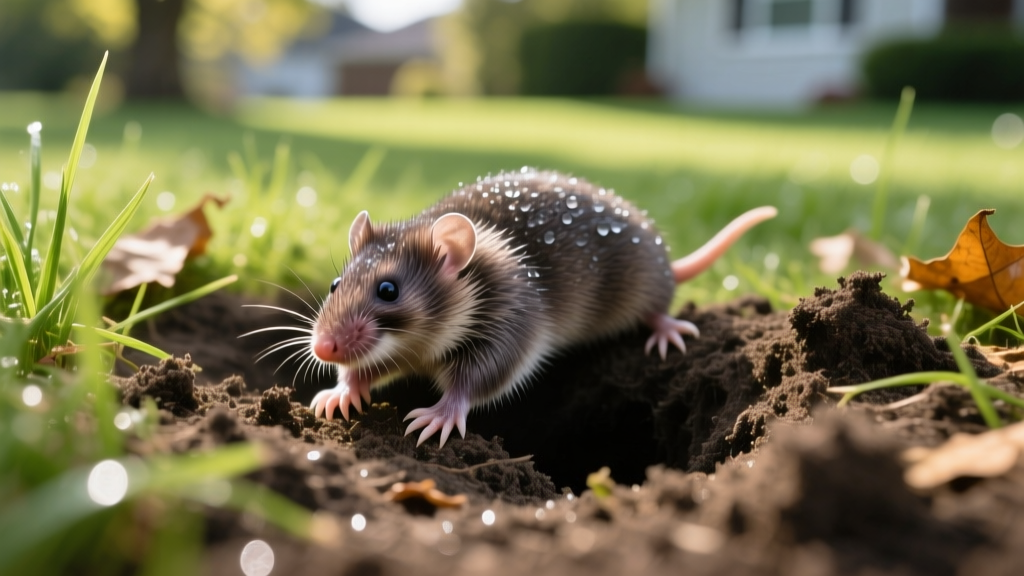
Do Moles Have Tails? A Visual Guide to Lawn Pest ID
The Short Answer: Do Moles Have Tails?
Yes, moles have tails, but they are remarkably short, thick, and sparsely covered in sensory hairs. Depending on the species, a mole's tail typically measures between 0.8 and 1.75 inches in length. Unlike rodents, which use long tails for balance and thermoregulation, a mole's tail is a highly specialized, vestigial-appearing appendage adapted for subterranean navigation. When homeowners spot a fleeting shadow near a dirt mound or examine a trapped specimen, tail length and morphology are the most reliable visual indicators for differentiating moles from voles, shrews, and mice.
Accurate identification is not merely an academic exercise; it dictates your entire pest control strategy. Moles are insectivores that require specialized scissor traps or bromethalin-based worm baits. Voles are herbivores that require zinc phosphide grain baits or snap traps. Misidentifying the pest based on a misunderstood anatomical feature leads to wasted money and continued lawn destruction.
Mole vs. Vole vs. Shrew: The Tail Comparison Matrix
Before purchasing any pest control products, cross-reference the physical characteristics of the suspect animal. The Internet Center for Wildlife Damage Management (ICWDM) emphasizes that tail proportion relative to body size is a primary diagnostic tool for small mammal identification.
| Pest Species | Tail Length | Tail Appearance | Diet | Primary Lawn Damage |
|---|---|---|---|---|
| Eastern Mole (Scalopus aquaticus) | 0.8 - 1.2 inches | Thick, hairless, pale, blunt tip | Earthworms, grubs | Volcano-shaped mounds, raised surface ridges |
| Star-Nosed Mole (Condylura cristata) | 1.2 - 1.75 inches | Thick, sparsely haired, slightly longer | Insects, worms, aquatic invertebrates | Deep push-ups, wet soil mounds near water |
| Meadow Vole (Microtus pennsylvanicus) | 1.5 - 2.5 inches | Furry, distinct, often hidden in grass | Grass roots, bulbs, bark | Surface runways, clipped grass, no soil mounds |
| Pine Vole (Microtus pinetorum) | 0.5 - 1.0 inches | Very short, furry, almost indistinguishable | Roots, tubers, fungi | Subsurface root girdling, sudden plant death |
| Short-Tailed Shrew (Blarina brevicauda) | 0.5 - 1.2 inches | Thick, furry, velvety appearance | Insects, snails, small vertebrates | Shallow, erratic surface tunnels (often uses mole runs) |
| House Mouse (Mus musculus) | 2.5 - 4.0 inches | Long, thin, scaly, sparsely haired | Seeds, grains, human food | Rarely tunnels; nests in structural voids or debris |
The Biology of the Mole's Tail: Why It Matters for Tunneling
To understand how to trap a mole, you must understand how it interacts with its environment. The mole's tail is not a useless stub; it is a critical tactile sensor. According to research published in mammalian biology journals, the tail contains specialized vibrissae (tactile hairs) that act as a rear-facing radar system. When a mole is backing up in a tight, 2-inch diameter tunnel—a common occurrence when they encounter a dead-end or need to reverse direction to clear excavated soil—the tail brushes against the tunnel walls, providing spatial awareness in total darkness.
⚠ Pest Control Warning: Never attempt to use standard rodent snap traps or grain-based baits for moles. Because moles rely on tactile sensors (their snout's Eimer's organs and tail vibrissae) to navigate and find live prey, they will instinctively avoid foreign objects like wooden snap traps and will not consume plant-based grain baits. Using the wrong product guarantees failure.
Eastern vs. Star-Nosed: Subtle Tail Differences
The Eastern mole, the most common lawn pest in the United States, has a nearly hairless tail that aids in moving through dry, compacted clay and loam soils. The Star-nosed mole, prevalent in the Northeast and near wetlands, possesses a slightly longer, thicker tail with more hair. This adaptation helps them maintain sensory input in wet, muddy environments where soil friction is lower. Identifying which species is in your yard dictates trap placement depth: Eastern moles prefer deep main runways (6-12 inches down), while Star-nosed moles often utilize shallower, water-logged surface runs.
Surface Tunnels vs. Deep Runways: Reading the Lawn Damage
Because you will rarely see the animal's tail in the wild, you must identify the pest by the "tail" it leaves behind: its tunnel architecture. The Clemson University Home & Garden Information Center outlines a definitive framework for distinguishing mole damage from vole damage based on surface disruption.
- The Volcano Mound (Mole): Moles dig vertically to push excess soil to the surface, creating symmetrical, volcano-shaped mounds. The tail and hind legs act as a brace while the spade-like front paws push dirt upward.
- The Surface Ridge (Mole): Foraging tunnels appear as raised, meandering ridges of soil just beneath the grass surface. These are temporary hunting grounds for earthworms.
- The Clean Runway (Vole): Voles do not push dirt to the surface. They create 1.5-inch wide, flattened runways through the grass that look like miniature hiking trails, often ending at a clean, golf-ball-sized hole with no dirt mound.
Actionable Control Methods Based on Species ID
Once you have confirmed the presence of a mole (short, hairless tail / volcano mounds), implement a targeted eradication strategy. Abandon home remedies like castor oil, mothballs, or ultrasonic spikes, which university extension studies consistently rate as ineffective.
1. Mechanical Trapping (Highest Success Rate)
Trapping is the most reliable method for mole control. You must target the main runway, not the surface foraging ridges. Locate the main runway by probing between fresh mounds with a metal rod; main runways are straight, deeply buried, and frequently reused.
- Victor Out O'Sight Mole Trap (Model 0645): Retailing for $18-$22, this scissor-style trap is placed directly inside the excavated tunnel. Its sensitive trigger pan responds to the mole's forward momentum.
- WireTek EasySet Mole Eliminator (Model WMEL-2): Priced around $35 for a two-pack, this choker-loop trap is ideal for deeper, narrower tunnels where scissor traps might bind against the soil walls.
- Pro-Tip: Always wear nitrile gloves when handling traps to mask human scent, and use a trowel to carve out a precise cavity so the trap sits flush with the tunnel floor, ensuring the mole's snout and chest trigger the mechanism.
2. Toxicant Baits (Secondary Option)
If trapping fails, use an insectivore-specific toxicant. Talpirid Mole Bait (active ingredient: 0.025% bromethalin) mimics the shape, texture, and scent of an earthworm. Priced at approximately $25 for a 10-worm box, it is inserted directly into the main runway using a specialized probe. Because moles have a high metabolic rate, a single worm typically delivers a lethal dose within 24 to 48 hours. Penn State Extension notes that bromethalin is highly effective but must be kept away from areas where pets might dig up the carcasses or unused bait.
"Successful mole management relies entirely on correct identification and precise placement of control devices in the main runway. Treating a foraging tunnel guarantees the mole will simply dig a new path around your trap."
Troubleshooting Trap Failures: Edge Cases and Gotchas
If your traps remain un-triggered after 48 hours, do not assume the mole has left the property. Evaluate these common failure modes:
- Tunnel Collapse: Moles are highly sensitive to air currents. If your trap installation allowed light or air into the tunnel, the mole will plug the tunnel with dirt from behind and abandon it. Always cover the trap hole with a small piece of sod or a dark plastic bucket.
- Wrong Runway Selection: Surface ridges are often used only once. If you trap in a foraging ridge, you will catch nothing. Always probe for the deep, structural highways connecting the mounds.
- Seasonal Depth Shifts: In mid-summer or deep winter, moles retreat to tunnels 12 to 30 inches below the surface to follow earthworms and avoid temperature extremes. Surface trapping during these seasons is virtually impossible; wait for spring or fall when they return to the top 3 inches of soil.

