
Pest Control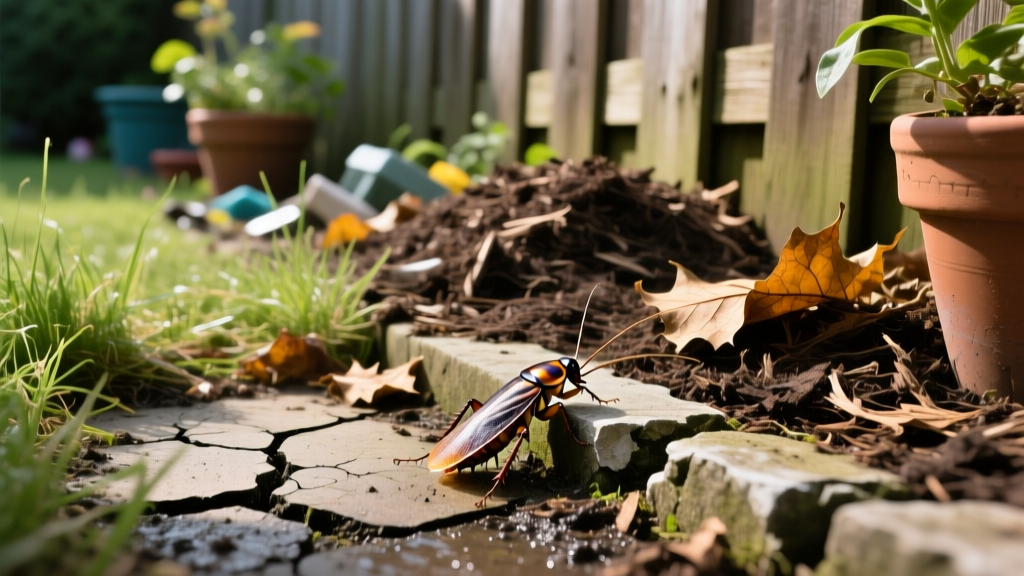
Do Roaches Live Outside? Identifying Yard Habitats & Control
The Short Answer: Yes, Roaches Thrive Outdoors
While most homeowners associate cockroaches with indoor kitchen cabinets and bathroom drains, the vast majority of cockroach species are actually outdoor insects. They only invade homes when outdoor conditions become hostile—typically due to extreme heat, drought, or heavy rainfall—or when they are accidentally carried inside via firewood, potted plants, or grocery bags. Understanding outdoor roach behavior is the foundational step in perimeter pest control.
Key Industry Insight: According to the National Pest Management Association (NPMA), over 70% of outdoor-foraging cockroach infestations originate from yard micro-habitats located within 15 feet of the home's foundation. Treating the interior without addressing the exterior perimeter is a primary reason for recurring infestations.
Outdoor Roach Species: Who Is Living in Your Yard?
Not all roaches are created equal. The German cockroach (Blattella germanica) is almost exclusively an indoor pest, but several larger species are native to outdoor environments. Identifying the specific species in your yard dictates your treatment strategy.
American Cockroach (Periplaneta americana)
Often misnamed the "palmetto bug," this is the largest of the common pest roaches, measuring up to 2 inches in length. They prefer warm, moist environments and are frequently found in municipal sewer systems, storm drains, and damp mulch beds. They are strong fliers and will readily migrate indoors through weep holes and damaged weatherstripping during late summer.
Smokybrown Cockroach (Periplaneta fuliginosa)
Uniformly dark brown to black and measuring about 1.5 inches, the smokybrown roach is a notorious outdoor dweller, particularly in the southern United States. They are highly dependent on high humidity and are commonly found in tree hollows, woodpiles, and dense ground cover. As noted by University of Florida IFAS Extension, they are strongly attracted to light and frequently enter homes through attic vents and eaves.
Oriental Cockroach (Blatta orientalis)
Unlike the heat-loving American and Smokybrown roaches, the Oriental cockroach thrives in cooler, damp climates. They are dark brown, almost black, and roughly 1 inch long. They cannot climb smooth vertical surfaces, so they are strictly ground-dwellers, harboring under debris, stones, and patio slabs, often entering homes via basement floor drains.
Asian Cockroach (Blattella asahinai)
Closely related to the German cockroach but adapted for the outdoors, the Asian cockroach is a prolific flier attracted to porch lights. They live primarily in leaf litter and shaded lawn areas. Because they fly toward light, they frequently end up inside homes at night, though they do not typically establish indoor breeding colonies.
| Species | Size | Coloration | Primary Outdoor Micro-Habitat | Flight Ability |
|---|---|---|---|---|
| American | 1.5 - 2.0 in | Reddish-brown w/ yellow halo | Sewer grates, damp mulch | Strong glider |
| Smokybrown | 1.25 - 1.5 in | Uniform dark brown/black | Tree hollows, woodpiles | Strong, active flyer |
| Oriental | 1.0 - 1.25 in | Glossy dark brown/black | Under stones, patio slabs | Flightless |
| Asian | 0.5 - 0.6 in | Light to medium brown | Leaf litter, shaded lawns | Strong, light-attracted |
The 4 Primary Outdoor Roach Micro-Habitats
Roaches do not randomly wander through your yard; they seek out specific micro-environments that provide three critical elements: moisture, shelter from UV light, and decaying organic matter. Eliminating these micro-habitats is the core of cultural pest control.
- Thick Mulch and Leaf Litter: Mulch retains moisture and provides a dark canopy. As it decomposes, it generates heat and food. Piles of wet autumn leaves against the foundation act as a luxury roach hotel.
- Woodpiles and Tree Hollows: Firewood stacked directly on the soil, especially near the house, harbors smokybrown and wood roaches. Tree hollows that collect rainwater are prime breeding sites.
- Utility and Irrigation Valve Boxes: The plastic boxes housing your sprinkler valves or water meters are warm, damp, and undisturbed. They are notorious hotspots for American cockroaches.
- Sewer Grates and French Drains: Subterranean drainage systems provide a continuous moisture source and a protected highway for roaches to travel from municipal sewers directly to your foundation.
Step-by-Step Yard Perimeter Defense Strategy
As of 2026, integrated pest management (IPM) protocols heavily favor exterior habitat modification combined with targeted, low-toxicity baiting over broad-spectrum liquid barrier sprays, which degrade quickly in UV light and harm beneficial insects. Follow this exact protocol to secure your yard.
- Establish a Dry Perimeter Buffer: Remove all mulch, soil, and vegetation within an 18-inch radius of your home's foundation. Replace this area with crushed gravel or river rock. Roaches avoid dry, exposed, and abrasive surfaces.
- Cap Mulch Depth: In the remaining landscape beds, strictly limit organic mulch depth to a maximum of 2 inches. Rake the mulch weekly to break up the moist, compacted lower layers and expose them to drying sunlight.
- Deploy Targeted Granular Bait: Instead of spraying liquid bifenthrin (which repels but rarely eliminates colonies), apply a high-quality granular bait like Syngenta Advion Insect Granular Bait (retailing around $35 for a 2 lb shaker). Apply at a rate of 0.5 lbs per 1,000 square feet directly into mulch beds and around utility boxes. The indoxacarb active ingredient is transferred through the colony via coprophagy (feces consumption) and cannibalism.
- Seal Structural Entry Points: Inspect the exterior foundation for weep holes, pipe penetrations, and utility gaps. Stuff weep holes with Stout Wire Copper Mesh (approx. $12 per roll), which roaches and rodents cannot chew through, unlike steel wool which rusts and stains brick.
- Modify Lighting: Replace standard mercury vapor or bright LED porch lights with yellow "bug bulbs" (sodium vapor or specific 2700K warm LEDs). This drastically reduces the attraction of flying Asian and Smokybrown roaches to your entryways.
Pro-Tip on Bait Rotation: Cockroaches can develop behavioral aversion or physiological resistance to specific bait matrices over time. Rotate your active ingredients every 6 to 12 months. If you use Advion (indoxacarb) in the spring, switch to a fipronil-based granular or a boric acid dust in the fall to maintain maximum efficacy.
When to Call a Professional
DIY perimeter defense is highly effective for maintenance and minor populations. However, you should hire a licensed pest control operator if you observe the following thresholds:
- Seeing more than 3 to 5 large roaches on your exterior walls at night despite baiting.
- Noticing roaches emerging from interior floor drains, toilets, or basement sump pumps (indicating a severe municipal sewer breach or main line collapse).
- Professional exterior power-spraying and subterranean dusting typically costs between $250 and $450 for a single perimeter treatment, which is often more cost-effective than replacing ruined landscape materials and dealing with indoor remediation.
For further guidance on safe outdoor pesticide application, always consult the Environmental Protection Agency's (EPA) guidelines on cockroach baits and local university extension offices.
Frequently Asked Questions
Do roaches die in the winter outdoors?
Most outdoor roach species do not die in the winter; they simply enter a state of reduced activity called diapause. They burrow deep into leaf litter, under concrete slabs, or into sewer systems where the ambient temperature remains above freezing. Once spring temperatures consistently exceed 70°F, they emerge and resume breeding.
Can keeping my yard clean prevent roaches entirely?
While sanitation drastically reduces the carrying capacity of your yard, it is nearly impossible to prevent 100% of roaches from entering a property, especially if you live near wooded areas, golf courses, or municipal waterways. The goal of yard maintenance is to keep the population below the threshold where they feel compelled to migrate indoors.
Are outdoor roaches dangerous to my garden plants?
No. Outdoor cockroaches are detritivores, meaning they feed on decaying organic matter, fungi, and dead plant material. They do not chew on living plant leaves, stems, or roots, and are entirely harmless to your lawn, vegetable garden, and ornamental shrubs.

