
Pest Control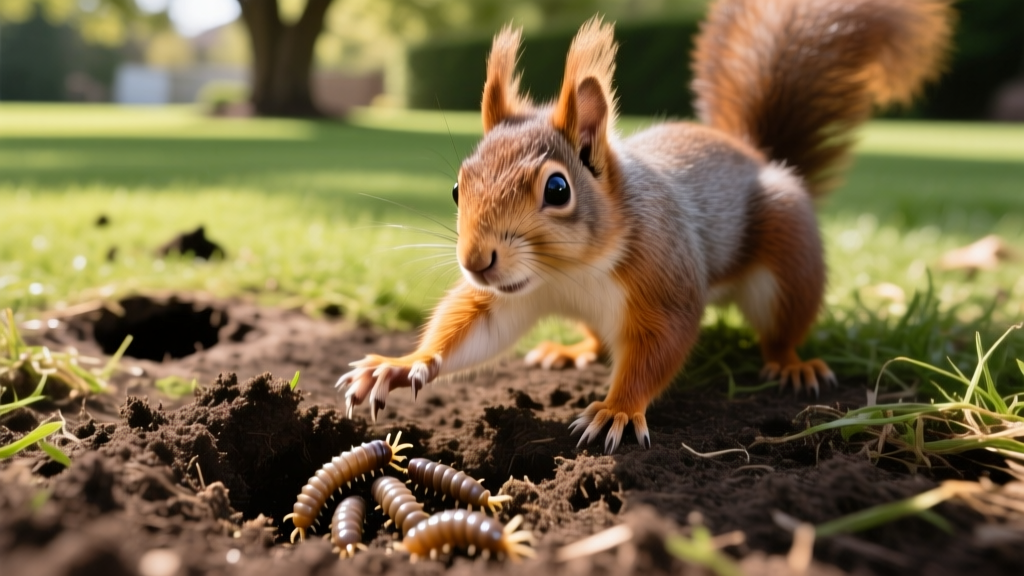
Do Squirrels Eat Grubs? Identifying Lawn Damage & Stopping Diggers
The Short Answer: Do Squirrels Actually Eat Grubs?
When homeowners discover dozens of small holes pockmarking their pristine turf, the immediate assumption is often a grub infestation attracting foraging wildlife. But do squirrels eat grubs? The short answer is yes, but with a major caveat: grubs are an opportunistic snack, not a primary dietary target. According to the National Wildlife Federation, tree squirrels are primarily granivores and herbivores, relying heavily on nuts, seeds, fruits, and fungi.
While the Eastern Gray Squirrel (Sciurus carolinensis) is technically an opportunistic omnivore and will consume a protein-rich white grub if it uncovers one while digging, it is rarely the reason they are tearing up your lawn. If your turf is being excavated, the squirrel is almost certainly engaged in caching behavior (burying or retrieving nuts) or hunting secondary targets like earthworms, cicadas, or bulbous plants. If you have a severe grub problem attracting heavy wildlife traffic, the primary culprits are usually skunks, raccoons, or crows—not squirrels.
Forensic Turf Analysis: Identifying the Digger
Before deploying expensive grub treatments or wildlife repellents, you must correctly identify the animal causing the damage. Misdiagnosing the pest leads to wasted money and ineffective control. Use the morphological markers below to differentiate squirrel damage from actual grub-hunting predators.
| Wildlife Culprit | Hole Size & Shape | Sod Damage Pattern | Primary Motivation |
|---|---|---|---|
| Squirrels | 1-2 inches wide; neat, round vertical shafts | Scattered individual holes; soil piled neatly in a small ring around the perimeter | Caching nuts, retrieving cached food, or opportunistic insect foraging |
| Skunks | 3-4 inches wide; shallow, cone-shaped depressions | Precise, shallow digging often in a grid-like pattern; minimal soil displacement | Actively hunting and consuming grubs and soil-dwelling larvae |
| Raccoons | 5-10 inches wide; ragged, torn edges | Large sheets of sod peeled back, flipped over, or completely uprooted | Mass harvesting grubs using their dexterous front paws |
| Crows / Birds | No distinct holes; surface-level pecking marks | Pulled up grass blades, scattered soil clumps, and visible beak marks in the dirt | Snatching surface-level larvae or pupae |
The Real Culprit Behind Squirrel Holes: Spatial Chunking
If the holes in your lawn are 1 to 2 inches wide and perfectly round, you are dealing with squirrel caching behavior. Squirrels utilize a survival strategy known as "spatial chunking," where they bury thousands of individual nuts across a wide territory to ensure that the loss of one cache to a predator doesn't wipe out their entire winter food supply.
Expert Insight: The Decoy Caching Phenomenon
Squirrels are highly aware of being watched. If an Eastern Gray Squirrel feels observed by a predator, a competing squirrel, or a homeowner, it will frequently engage in deceptive caching. It will dig a perfectly formed 2-inch hole, leave it completely empty, and carefully cover it back up to trick thieves. Consequently, up to 30% of the fresh dig marks in your lawn may be entirely empty decoy holes.
Dual-Action Eradication: Managing Grubs and Squirrels
If your lawn is suffering from both a genuine grub infestation (indicated by spongy turf and skunk/raccoon damage) and secondary squirrel digging, you must tackle the root cause and the symptom simultaneously. Here is a precise, two-phase protocol for turf recovery.
Phase 1: Eliminate the Grub Buffet
If grubs are present, they will continually attract destructive wildlife like skunks and raccoons, which cause far more turf damage than squirrels. According to the University of Minnesota Extension, biological controls are the most sustainable long-term solution for white grubs (such as Japanese beetle and June bug larvae).
- Beneficial Nematodes (Heterorhabditis bacteriophora): These microscopic worms actively seek out and infect grub larvae. Purchase a commercial formulation containing at least 10 million nematodes (costing roughly $35 to $50). Apply at a rate of 25,000 nematodes per 1,000 square feet. Critical timing: Apply in the late afternoon when soil temperatures are between 60°F and 85°F, and water the lawn immediately with at least 1/4 inch of water to wash the nematodes into the root zone before UV light degrades them.
- Milky Spore (Paenibacillus popilliae): Specifically targets Japanese beetle grubs. Applied via a grid pattern using a drop spreader or specialized injector tube. While it takes 2 to 4 years to fully establish in the soil food web, a single application provides 15 to 20 years of biological control.
Phase 2: Deploy Squirrel-Specific Deterrents
Once the grubs are managed, address the squirrel digging to allow your turf's root system to recover. Squirrels rely heavily on their olfactory senses and tactile feedback when deciding where to dig.
- Capsaicin-Based Liquid Repellents: Products containing capsaicin (the active heat component in chili peppers) deter squirrels without harming them. Apply a commercial hot pepper wax or liquid capsaicin spray directly to the soil surface and the base of ornamental plants. Reapply every 14 days or immediately after heavy rainfall exceeding 0.5 inches.
- Physical Exclusion for High-Value Zones: For garden beds or specific lawn patches that are repeatedly targeted, install 1/2-inch galvanized hardware cloth. Bury the cloth 2 inches below the soil surface and cover it with a thin layer of topsoil or mulch. Squirrels cannot dig through the steel mesh, forcing them to relocate their caching activities to softer, untreated ground.
- Bulb Protection: If squirrels are digging up spring-flowering bulbs (like tulips or crocuses), avoid using bone meal as a fertilizer, as its scent attracts them. Instead, coat bulbs in a liquid repellent containing thiram or blood meal before planting, and top the soil with a 2-inch layer of sharp crushed gravel.
Frequently Asked Questions
Will feeding squirrels in my yard stop them from digging up my lawn?
No. Providing supplemental food (like corn or sunflower seeds) actually increases the local carrying capacity, leading to a higher population density of squirrels in your immediate area. Furthermore, it habituates them to human environments, making them bolder and more likely to forage in your garden beds and lawn rather than reducing their digging behavior.
How deep do squirrels dig compared to skunks?
Squirrels rarely dig deeper than 2 to 3 inches, which is just deep enough to bury an acorn or walnut. Skunks, actively hunting grubs that reside in the root zone, will routinely dig 4 to 6 inches deep, creating the distinct cone-shaped craters that severely damage turfgrass roots.
Can I use mothballs to keep squirrels out of my lawn?
Using mothballs (naphthalene or paradichlorobenzene) outdoors is illegal in most jurisdictions and highly dangerous. These chemicals leach into the soil, contaminate groundwater, and are toxic to pets, children, and local wildlife. Stick to EPA-registered, capsaicin-based repellents or physical barriers for safe and legal squirrel management.

