
Pest Control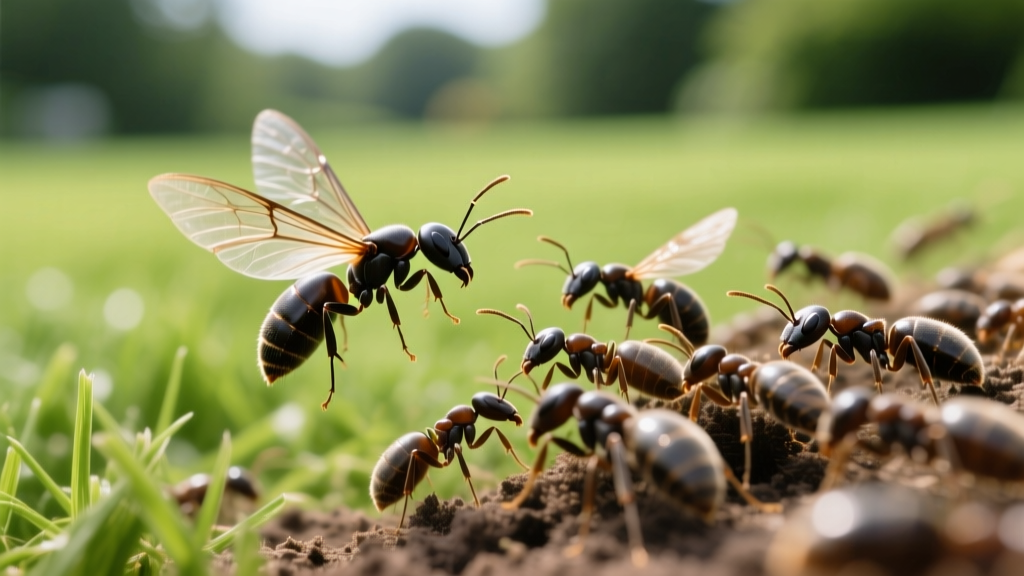
Do Termites Have Wings? How to Identify Flying Swarmers
The short answer to whether termites have wings is yes—but only a specific, temporary caste within the colony. While the worker and soldier termites that silently consume your home’s structural lumber are entirely wingless, the reproductive members, known as alates or swarmers, develop two pairs of translucent wings. Understanding the biology of these winged termites is the first critical step in distinguishing them from harmless insects and identifying an active infestation before catastrophic structural damage occurs.
The Biology of Termite Swarmers (Alates)
A termite colony operates on a strict caste system. For the first three to five years of a colony's life, it produces only workers (which forage and eat wood) and soldiers (which defend the nest). It is only when the colony reaches maturity and a critical population threshold that it begins producing alates. These winged termites are the future kings and queens, tasked with a single biological imperative: the nuptial flight.
According to the University of Kentucky Entomology department, alates are physically distinct from the rest of the colony. They possess dark, heavily pigmented bodies to protect them from UV radiation during flight, and their wings are often twice the length of their bodies, featuring a distinct, heavily veined membrane. Unlike many other flying insects, a termite's forewings and hindwings are identical in size, shape, and venation.
Flying Termites vs. Flying Ants: The Identification Matrix
Homeowners frequently mistake winged carpenter ants for termite swarmers. While carpenter ants do not eat wood (they merely excavate it for nesting), misidentification can lead to delayed treatment for a highly destructive termite colony. Use the following 3-point matrix to accurately identify the insect.
| Feature | Termite Swarmer (Alate) | Flying Carpenter Ant |
|---|---|---|
| Wings | Four wings of equal length and shape; translucent, milky, or smoky gray; easily break off. | Two pairs of unequal wings; front wings are longer than hind wings; dark, heavily veined, and firmly attached. |
| Antennae | Straight, bead-like (moniliform), resembling a tiny string of pearls. | Elbowed (geniculate) with a distinct 90-degree bend near the base. |
| Body Shape | Thick, uniform waist; the thorax and abdomen blend together seamlessly. | Distinct, sharply pinched waist (petiole) separating the thorax and abdomen. |
Species-Specific Swarming Behaviors
Not all termites swarm at the same time of year or under the same conditions. Identifying the species based on swarming behavior provides vital clues for pest control professionals designing a treatment protocol.
Eastern Subterranean Termites (Reticulitermes flavipes)
- Timing: Early spring (February to May), typically in the morning hours.
- Triggers: Swarms usually occur the day after a significant rainfall when soil temperatures reach 65°F to 70°F.
- Visuals: Dark brown to black bodies with pale, smoky wings. Swarms are highly visible and often mistaken for swarming ants.
Western Drywood Termites (Incisitermes minor)
- Timing: Late summer through early fall (August to November).
- Triggers: Often triggered by warm, sunny days and they are highly attracted to artificial light sources at night.
- Visuals: Reddish-brown heads and dark brown bodies. Because they nest entirely inside dry wood, you will rarely see mud tubes, making the emergence of swarmers a primary detection method.
Formosan Subterranean Termites (Coptotermes formosanus)
- Timing: Late spring (May to June), primarily at dusk or after dark.
- Triggers: High humidity and warm evening temperatures.
- Visuals: Yellowish-brown bodies. Formosan swarms are notoriously massive, often numbering in the tens of thousands, and are frequently seen swirling around exterior porch lights.
The 'Discarded Wing' Phenomenon
If you do not see the live insects, you will likely find their wings. Termite wings are designed for a one-way trip. They possess a natural fault line called the basal suture. Once the alates land, they intentionally snap their wings off at this suture to shed the aerodynamic drag before crawling into soil or wood crevices to mate and start a new colony.
Warning: Finding piles of identical, translucent wings measuring 1/4 to 1/2 inch long on windowsills, near exterior doors, or caught in spider webs is a definitive indicator of a mature termite colony nearby. Do not ignore discarded wings, even if no live bugs are present.
Step-by-Step Action Plan for Homeowners
If you confirm the presence of winged termites, immediate and calculated action is required. Over-the-counter reactions often exacerbate the problem.
- Contain and Collect: Do not sweep them up and throw them in the trash. Collect 5 to 10 intact specimens (including discarded wings) and place them in a small, sealable glass vial filled with 70% isopropyl alcohol. This preserves the morphological features required for precise species identification by an entomologist.
- Document the Event: Take clear photos of the swarm location, the discarded wings, and the exterior perimeter of your home. Note the time of day, recent weather patterns, and exact date.
- Avoid OTC Aerosol Sprays: Spraying Raid or Ortho Home Defense on a swarm will only kill the 50 visible alates. It does absolutely nothing to the 500,000 hidden workers in the soil, and the chemical repellent can cause the colony to fracture and create satellite nests deeper inside your foundation.
- Schedule a Professional Inspection: Contact a licensed pest control operator who specializes in WDO (Wood Destroying Organism) inspections. Request a comprehensive assessment that includes moisture meter readings and thermal imaging.
Modern Treatment Costs and Active Ingredients
As of 2026, professional termite eradication relies on non-repellent liquid termiticides or advanced bait matrices. Expect to invest between $1,200 and $2,500 for a liquid soil treatment using Termidor SC (9.1% Fipronil), which utilizes a transfer effect to poison the entire colony over 90 days. Alternatively, bait systems like Sentricon Always Active (using 0.5% Hexaflumuron to disrupt molting) range from $1,500 to $3,000 for initial installation, plus $300 to $500 for mandatory annual monitoring.
Frequently Asked Questions
Do winged termites bite humans or pets?
No. Termite alates do not possess the mandible strength to bite humans or pets, nor do they carry stingers. They are entirely harmless to living tissue; their threat is strictly structural.
Do the flying termites eat wood?
The swarmers themselves do not eat wood. Their digestive tracts are optimized for reproduction, not cellulose digestion. However, their presence guarantees that a wood-eating worker caste is actively consuming your property nearby.
How long do termite swarmers live after they fly?
According to the University of California Agriculture and Natural Resources, the vast majority of alates die within 24 to 48 hours from dehydration or predation by birds and insects. Only a tiny fraction successfully mate and establish a new, viable colony.
Can I prevent termites from growing wings?
You cannot alter their biology, but you can prevent the colony from reaching the maturity required to produce alates. The Environmental Protection Agency (EPA) recommends eliminating wood-to-soil contact, fixing leaky exterior spigots, and ensuring proper grading to keep soil around your foundation dry, as moisture is the primary catalyst for subterranean colony expansion.

