
Pest Control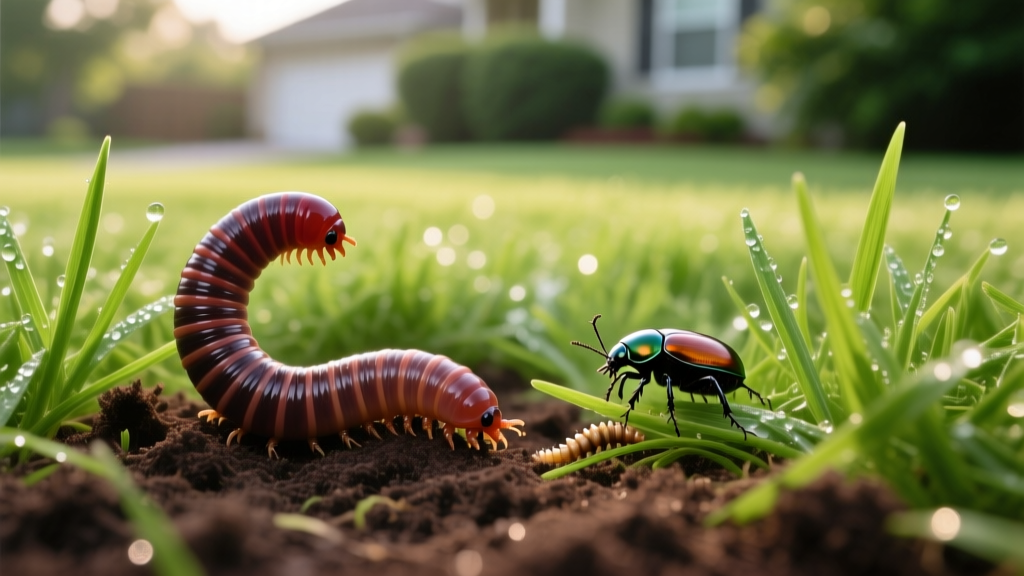
Do Worms Eat Grass? Identifying Earthworms vs Lawn Pests
The Short Answer: Earthworms vs. Destructive "Worms"
If you are asking, "do worms eat grass?", the answer depends entirely on what type of worm you are looking at. True earthworms (Lumbricus terrestris and related species) do not eat living grass. They are detritivores that consume decaying organic matter, thatch, and soil microbes. However, the colloquial term "worm" is frequently misapplied to several highly destructive turf pests—specifically cutworms, armyworms, and lawn grubs—which can decimate a lawn in a matter of days.
Identification Rule of Thumb: If the "worm" is segmented, reddish-brown or grey, and retreats into a vertical burrow when disturbed, it is a beneficial earthworm. If it is a fleshy, green/brown caterpillar curling into a C-shape, or a white, C-shaped grub with brown mandibles, you are dealing with a turf-destroying pest.
Beneficial Earthworms: Why They Don't Eat Living Grass
Earthworms are vital for soil health. According to the University of Minnesota Extension, earthworms improve soil porosity, increase water infiltration, and break down thatch. Their digestive process produces castings (vermicompost) that are rich in available nitrogen, phosphorus, and potassium.
The Nightcrawler Foraging Misconception
Homeowners often see nightcrawlers pulling grass blades down into their burrows at night and assume the worms are eating the living grass. In reality, nightcrawlers are harvesting dead or senescing leaf tissue to drag into their burrows, where it softens and becomes coated in microbes before consumption. They are actively clearing your lawn of dead material, not attacking healthy crowns or roots.
The Real Culprits: Pests Often Mistaken for Worms
When turfgrass suffers from unexplained thinning, severing at the crown, or root loss, the damage is usually caused by larval insects that resemble worms.
1. Cutworms and Armyworms (Caterpillars)
Cutworms (such as the black cutworm, Agrotis ipsilon) and armyworms (Mythimna unipuncta) are the larval stages of moths. These pests chew directly through the grass stem at the soil line, effectively "cutting" the blade off from the root system. A single cutworm can destroy multiple grass plants in a single night. They are most active at dusk and hide in the thatch layer during the day.
2. Lawn Grubs (Beetle Larvae)
Grubs are the immature stage of scarab beetles (Japanese beetles, June bugs, European chafers). While they look like fat, white worms, they live entirely underground and feed on grassroots. A heavy infestation (more than 8-10 grubs per square foot) will cause the turf to feel spongy underfoot and roll back like a loose carpet because the root system has been entirely severed.
3. Parasitic Nematodes (Microscopic Worms)
Nematodes are actual microscopic worms. While beneficial nematodes are used as pest control, parasitic species like the root-knot nematode (Meloidogyne) and sting nematode (Belonoaphus) feed on grass roots, causing stunted growth, yellowing, and localized dead patches that fail to respond to fertilizer or irrigation.
Identification Matrix: What is Actually Damaging Your Lawn?
Use this diagnostic matrix to determine which "worm" is responsible for your turf damage before purchasing any treatments.
| Symptom / Damage Sign | Probable Culprit | Active Season | Visual ID |
|---|---|---|---|
| Grass blades severed at soil line; small green/brown pellets (frass) visible. | Cutworms / Armyworms | Late Spring to Early Fall | 1-2 inch fleshy caterpillars; curl into a tight C-shape when disturbed. |
| Turf pulls up easily like carpet; spongy feel; crows/skunks digging holes. | Lawn Grubs | Late Summer to Mid-Fall | White, C-shaped larvae with brown heads and six legs near the head. |
| Small mounds of fine soil (castings) on surface; lawn is bumpy but green. | Earthworms (Beneficial) | Spring and Fall (moist periods) | Segmented, reddish-brown/grey worms; retreat rapidly into vertical holes. |
| Yellowing, stunted turf in sandy soils; no visible above-ground pests. | Parasitic Nematodes | Peak summer heat | Microscopic; requires soil lab assay to confirm. |
Action Plan: Managing Destructive Lawn "Worms"
If your diagnostic confirms the presence of cutworms, armyworms, or grubs, follow this targeted eradication protocol.
Step 1: The Soapy Water Flush Test
Before applying pesticides, confirm pest density. Mix 2 tablespoons of liquid dish soap (lemon-scented Dawn works exceptionally well) into 1 gallon of water. Pour the solution evenly over a 1-square-foot area of damaged turf. Wait 10 minutes. The soap irritates the pests' skin, forcing them to the surface. If you count more than 5 cutworms or armyworms per square foot, chemical or biological intervention is required.
Step 2: Targeted Biological and Chemical Treatments
- For Cutworms & Armyworms (Bt Kurstaki): Apply a spray containing Bacillus thuringiensis var. kurstaki. The Environmental Protection Agency (EPA) recognizes Bt as a highly targeted biological control that only affects caterpillars, leaving earthworms, bees, and pets unharmed. Product Recommendation: Monterey B.t. (Model #8001), priced around $18-$22 for a 16 oz bottle. Apply in the late afternoon, as UV light degrades Bt rapidly. Do not irrigate for 48 hours.
- For Lawn Grubs (Beneficial Nematodes): Apply Heterorhabditis bacteriophora (Hb) nematodes. These microscopic hunters actively seek out and infect grubs in the soil. Product Recommendation: BioLogic Ecomask, costing roughly $35-$45 for 10 million nematodes (covers 2,000 sq ft). Apply when soil temperatures are between 60°F and 90°F, and irrigate immediately to wash them into the root zone.
- Chemical Fallback (Grubs): For severe grub infestations exceeding 10 per square foot, a preventive application of Chlorantraniliprole (e.g., Scotts GrubEx1) in late spring provides systemic root protection for up to 4 months, costing approximately $25 for a 5,000 sq ft bag.
Dealing with Earthworm Castings (Bumpy Lawns)
While earthworms do not eat grass, their castings can create an uneven, bumpy lawn surface that dulls mower blades and creates tripping hazards. Never use a heavy lawn roller to flatten castings. Rolling compacts the soil, driving bulk density above 1.6 g/cm³, which suffocates grassroots and restricts water infiltration.
Instead, manage castings using these agronomic practices:
- Drag Matting: Use a flexible drag mat (or a chain-link fence section) across the lawn when the castings are dry to break them up and distribute the nutrients evenly.
- Core Aeration: Aerate annually to relieve compaction and integrate the castings into the soil profile.
- Topdressing: Apply a thin layer (1/4 inch) of fine compost or sand to level the turf canopy over time without smothering the grass.
Frequently Asked Questions
Will standard grub killers hurt beneficial earthworms?
It depends on the active ingredient. Products containing Chlorantraniliprole are highly specific to turf-destroying insects and have negligible toxicity to earthworms. However, older broad-spectrum insecticides containing Carbaryl or Trichlorfon (often sold as fast-acting grub curatives) are highly toxic to earthworm populations and should be avoided if soil ecology is a priority.
Why do I see dead worms on my driveway after it rains?
Earthworms breathe through their skin and require moisture, but they can drown in fully saturated soil. During heavy rains, they migrate to the surface to avoid suffocation. The concrete or asphalt of a driveway dries out rapidly once the rain stops, trapping them and leading to desiccation before they can return to the soil.

