
Pest Control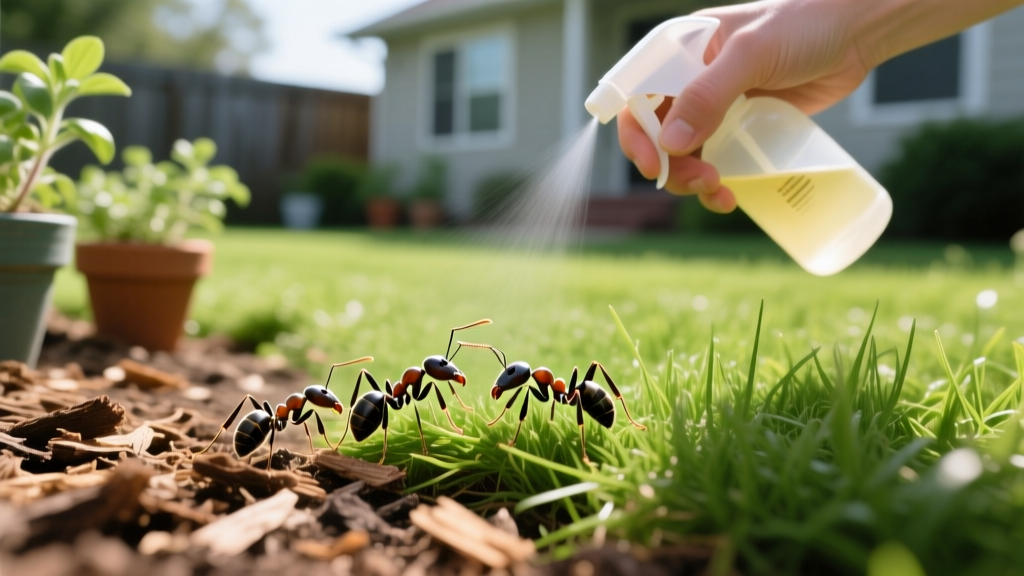
Does Ammonia Kill Ants? Science-Backed Facts & Safe Alternatives
Homeowners frequently ask: does ammonia kill ants? The short answer is no. While household ammonia (ammonium hydroxide) can kill individual foraging ants on direct contact, it is entirely ineffective at eradicating an ant colony. Relying on ammonia for pest control is a persistent DIY myth that often results in damaged turfgrass, harmful chemical exposure, and a rapid rebound in ant populations.
To effectively manage lawn and garden ants, you must understand the biological limitations of household cleaners and pivot to science-backed transfer toxins. This guide breaks down the exact chemistry of why ammonia fails, the hidden costs of using it on your lawn, and the specific professional-grade alternatives that guarantee colony elimination.
The Chemistry of Household Ammonia vs. Ant Biology
Standard household ammonia is a 5% to 10% solution of ammonium hydroxide in water. It is highly alkaline, with a pH typically between 11 and 12. Ants, like all insects, do not have lungs; they respire through a network of tracheal tubes connected to external pores called spiracles.
When you drench an ant in liquid ammonia, the fluid physically blocks the spiracles, causing suffocation. Furthermore, the high alkalinity can degrade the waxy epicuticle of the ant's exoskeleton, leading to rapid desiccation (dehydration). However, this mechanism of action is strictly limited to contact killing.
Foraging worker ants represent only 5% to 10% of a mature colony. The queen, the brood (eggs and larvae), and the nurse ants remain deep underground or inside structural wood, completely insulated from surface sprays. Because ammonia lacks a 'transfer effect'—meaning it cannot be carried back to the nest and shared via trophallaxis (mouth-to-mouth feeding)—the colony simply replaces the lost foragers within 48 hours.
⚠ CRITICAL SAFETY WARNING:
Never mix ammonia with bleach or any product containing chlorine. This chemical reaction produces chloramine gas, a highly toxic respiratory hazard that can cause severe lung damage or death. According to the CDC NIOSH Ammonia Guidelines, even brief exposure to chloramine vapors in poorly ventilated areas requires immediate medical attention.
Three Critical Failure Modes of Ammonia on Lawns
Beyond its failure to kill the queen, applying ammonia to outdoor ant mounds introduces severe secondary problems for your landscape.
- Severe Phytotoxicity (Turf Burn): Ammonia is a concentrated nitrogen compound. Pouring it directly into an ant mound creates a massive, localized spike in soil nitrogen and pH. This causes immediate 'nitrogen burn,' killing the surrounding turfgrass and leaving dead, brown patches in your lawn that can take months to recover.
- Destruction of the Soil Microbiome: The extreme alkalinity of ammonia sterilizes the soil. It wipes out beneficial mycorrhizal fungi and nematodes that are essential for nutrient uptake in your grass and garden beds, as documented in soil science research referenced by the University of California Statewide Integrated Pest Management (UC IPM) program.
- Temporary Pheromone Masking: The pungent odor of ammonia temporarily overwhelms the ants' olfactory receptors, disrupting their pheromone trails. This forces the colony to establish new foraging routes, often pushing them deeper into your home's foundation or toward your garden beds rather than driving them away.
Ammonia vs. Proven Ant Baits: A Head-to-Head Comparison
When evaluating pest control strategies, the goal is always colony elimination, not just surface clearing. The table below compares household ammonia against the three most effective active ingredients used by lawn care professionals.
| Treatment Type | Active Ingredient | Transfer Effect? | Colony Kill Rate | Avg. Cost (2026) |
|---|---|---|---|---|
| Household Ammonia | Ammonium Hydroxide (5-10%) | No | < 10% (Foragers only) | $3 / gallon |
| Liquid Borate Bait | Sodium Tetraborate (5.4%) | Yes (Slow-acting) | 90-100% (Sugar ants) | $6 / 6-pack |
| Non-Repellent Liquid | Fipronil (9.1%) | Yes (Highly lethal) | 95-100% (All species) | $42 / 20oz bottle |
| Granular Bait | Methoprene + Hydramethylnon | Yes (Targeted) | 95-100% (Fire ants) | $25 / 1.5 lbs |
Safe, Science-Backed Alternatives for Lawn and Garden Ants
The EPA's guidelines on safe pest control strongly advise against using unregistered household chemicals as pesticides. Instead, utilize EPA-registered products specifically formulated to exploit ant biology. Match the product to the specific ant species invading your property.
1. For Sugar Ants and Odorous House Ants: Borate Liquid Baits
Sugar ants are attracted to sweet, carbohydrate-rich foraging trails. Terro T300B Liquid Ant Killer utilizes 5.4% sodium tetraborate decahydrate (borax). Boric acid acts as a slow-acting stomach poison. Foragers ingest the sweet liquid and carry it back to the nest, feeding the queen and larvae before the toxin crystallizes in their digestive tracts.
- Application: Place bait stations directly on the trail, within 2 feet of the foundation.
- Timeline: Expect a massive swarm of ants at the bait for the first 24 hours. Do not kill them; let them feed. Colony collapse occurs in 3 to 5 days.
2. For Carpenter Ants and Large Outdoor Mounds: Fipronil Suspensions
Carpenter ants and aggressive mound-building species do not always respond to sweet baits. For these, a non-repellent liquid like Taurus SC (9.1% Fipronil) is the industry standard. Because ants cannot detect Fipronil, they walk through the treated soil, picking up the chemical on their legs and bodies, and transfer it to the colony through grooming and physical contact.
- Dilution Rate: Mix 0.8 fluid ounces of Taurus SC per gallon of water to create a 0.06% suspension.
- Trenching Method: Dig a trench 6 inches deep and 6 inches wide around your home's foundation. Pour the solution into the trench (approximately 4 gallons per 10 linear feet) and backfill with soil.
3. For Red Imported Fire Ants: IGR Granular Baits
Fire ants require specialized treatment due to their aggressive nature and multiple-queen colony structures. Extinguish Plus Fire Ant Bait combines Hydramethylnon (a metabolic inhibitor) with Methoprene (an Insect Growth Regulator). The IGR prevents the queen from laying viable eggs, leading to a gradual, total collapse of the mound over 4 to 6 weeks.
- Application Rate: Broadcast 1 to 1.5 pounds per acre using a rotary spreader.
- Timing: Apply in the late afternoon when fire ants are actively foraging and the ground is completely dry. Moisture degrades the bait matrix rapidly.
Step-by-Step Outdoor Baiting Protocol
To maximize the efficacy of commercial baits and avoid the mistakes that lead to treatment failure, follow this strict protocol:
- Identify the Trail: Locate the exact path the ants are using. Do not spray them with water, vinegar, or ammonia, as this will cause the colony to 'bud' (split into multiple new colonies).
- Deploy the Bait: Place the bait matrix (liquid or granular) directly adjacent to the trail, not on top of it. Ants are more likely to investigate objects near their established highways.
- Enforce a 'No-Spray' Zone: Cease all use of contact killers (including essential oils, diatomaceous earth, and ammonia) within 10 feet of the bait. Contact killers will kill the foragers before they can transport the bait back to the queen.
- Monitor and Replenish: Check liquid baits every 12 hours. If the station is empty, replace it immediately. A large colony can consume multiple stations before the toxic threshold is reached.
Expert Insight: 'The most common reason DIY ant treatments fail is impatience. Homeowners see a few ants, panic, and apply a fast-acting repellent spray or household ammonia. This kills the visible scouts but triggers the colony's survival mechanisms, pushing them deeper into wall voids or root systems. Slow-acting transfer baits require 72 to 120 hours to work, but they are the only reliable method for total eradication.'
When to Call a Professional Exterminator
While the products listed above are available to consumers and highly effective, certain scenarios require professional intervention. If you are dealing with Pharaoh ants (tiny, pale yellow ants often found indoors), DIY baiting is notoriously difficult because Pharaoh ants are highly prone to colony budding if exposed to the wrong bait formulations. Additionally, if carpenter ants are actively excavating structural timbers in your home, or if fire ant mounds are located within high-traffic areas where children and pets play, hiring a licensed pest control operator to apply commercial-grade micro-encapsulated pyrethroids is the safest and most cost-effective long-term strategy.

