
Pest Control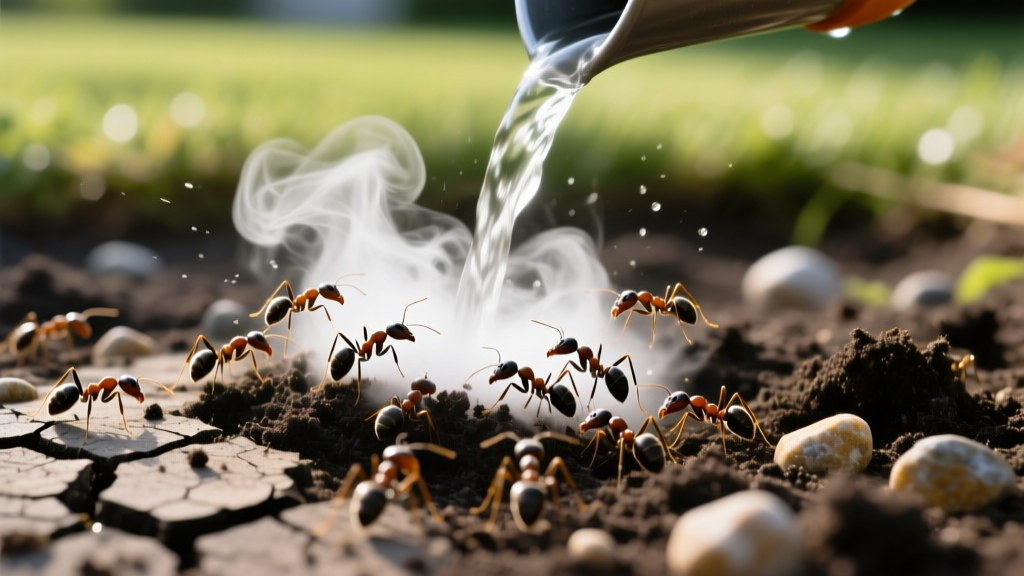
Does Boiling Water Kill Ants? Effectiveness, Soil Risks, and Fixes
The Thermodynamics of Heat Transfer in Ant Mounds
The short answer to whether boiling water kills ants is yes—but with a massive caveat regarding colony survival. Water boils at 212°F (100°C) at sea level, and insect proteins begin to denature and cells rupture at temperatures exceeding 113°F to 122°F (45°C–50°C). When boiling water makes direct contact with worker ants on the surface or in shallow tunnels, it is instantly lethal.
However, soil acts as a highly effective thermal insulator. The specific heat capacity of soil means that as boiling water penetrates the ground, it loses heat rapidly. According to research from the Texas A&M AgriLife Extension Fire Ant Project, the temperature of boiling water drops below the lethal threshold for insects within 8 to 12 inches of depth, depending on soil moisture and composition. Because the queen and the brood (eggs and larvae) are often housed deep within the colony's central chamber to protect them from temperature fluctuations and predators, surface-level heat treatments rarely reach them.
Nest Depth vs. Lethal Temperature Penetration
Understanding the architecture of the specific ant species invading your lawn is critical before attempting a thermal treatment. Not all ants build the same structures, and boiling water efficacy varies wildly by species.
| Ant Species | Typical Nest Depth | Boiling Water Efficacy | Colony Survival Rate |
|---|---|---|---|
| Pavement Ants (Tetramorium caespitum) | 12 – 18 inches | Moderate to High | 40% – 60% |
| Red Imported Fire Ants (Solenopsis invicta) | 36 – 72 inches | Very Low | 85% – 95% |
| Argentine Ants (Linepithema humile) | Shallow, widespread | Low (Supercolonies) | 99% (Rebounds quickly) |
| Carpenter Ants (Camponotus spp.) | Inside wood/roots | Zero | 100% |
For deep-nesting species like the Red Imported Fire Ant, pouring boiling water on the mound will kill the foraging workers and damage the upper galleries, but the queen will simply relocate the surviving colony a few feet away, resulting in a new mound within weeks.
The Hidden Cost: Turf Scald and Soil Sterilization
⚠️ WARNING: Severe Turf Damage
Applying water above 140°F (60°C) to a lawn will instantly cook the crowns of turfgrass, killing the plant down to the root zone. Furthermore, the Cornell University Soil Health Initiative notes that extreme heat sterilizes the soil, wiping out beneficial mycorrhizal fungi, nematodes, and nitrogen-fixing bacteria required for grass recovery. A treated mound area will often remain a dead, barren patch of dirt for an entire growing season.
How to Execute a Boiling Water Treatment (If You Must)
If you are dealing with a shallow pavement ant nest in a non-turf area (like a gravel driveway or patio crack) and insist on using boiling water, you must optimize the water's physical properties to maximize penetration.
- Reduce Surface Tension: Add 2 tablespoons of liquid dish soap (like Dawn) per gallon of boiling water. Ant exoskeletons are coated in a hydrophobic wax. Soap acts as a surfactant, breaking the water's surface tension and allowing it to coat and suffocate the ants rather than beading off their backs.
- Calculate Volume: You need a minimum of 2 to 3 gallons of boiling water per mound to achieve any meaningful depth penetration. A standard tea kettle (1.5 liters) is entirely insufficient.
- Target the Center: Use a metal watering can with a narrow spout. Pour directly into the center of the mound's primary entrance holes, not over the outside slopes, to force the heat down the main shafts.
- Follow Up: Monitor the site for 48 hours. If worker activity resumes, the queen survived, and you must switch to a chemical bait.
Superior, Targeted Alternatives for Lawn Ant Control
Rather than destroying your soil microbiome with heat, modern pest control relies on slow-acting toxicants and biological controls that the worker ants carry directly to the queen.
Granular Baits (Indoxacarb)
Product: Syngenta Advion Fire Ant Bait (0.04% Indoxacarb)
Pros: Exploits the ants' trophallaxis (food-sharing) behavior. Workers carry the bait deep into the nest, feeding the queen. Highly effective against deep mounds.
Cons: Requires 24-48 hours to see results. Must be applied when ants are actively foraging (soil temps between 70°F and 90°F).
Cost: ~$45 for a 25lb bag, treating up to 100+ mounds.
Biological Control (Nematodes)
Product: Beneficial Nematodes (Steinernema carpocapsae)
Pros: 100% organic and safe for pets, children, and earthworms. Microscopic worms enter ant larvae and release lethal bacteria.
Cons: Requires strict soil moisture management. UV light kills them, so they must be applied at dusk and watered in immediately.
Cost: ~$35 for 10 million nematodes, covering roughly 2,000 sq ft.
Frequently Asked Questions
Does adding vinegar to boiling water make it more effective against ants?
No. While acetic acid disrupts ant pheromone trails, mixing it with boiling water does not increase thermal penetration. The vinegar will dissipate quickly, and the boiling water will still fail to reach the deep queen chamber while simultaneously lowering the soil pH, which can lock up essential nutrients like phosphorus for your surrounding grass.
Can I use boiling water on ants in my vegetable garden?
It is highly discouraged. According to the University of Minnesota Extension, pouring boiling water near the root zones of shallow-rooted vegetables (like peppers, tomatoes, and squash) will cause immediate root necrosis. Use Spinosad-based organic baits (like Monterey Garden Insect Spray) in edible landscapes instead.
Why did the ant mound reappear three days after I poured boiling water on it?
Ant colonies possess a survival mechanism where, upon detecting a thermal or chemical threat to the upper galleries, worker ants immediately evacuate the queen and brood to deeper, pre-dug satellite chambers or lateral tunnels. The mound you see rebuilt is the workers excavating the collapsed upper tunnels to restore ventilation.

