
Pest Control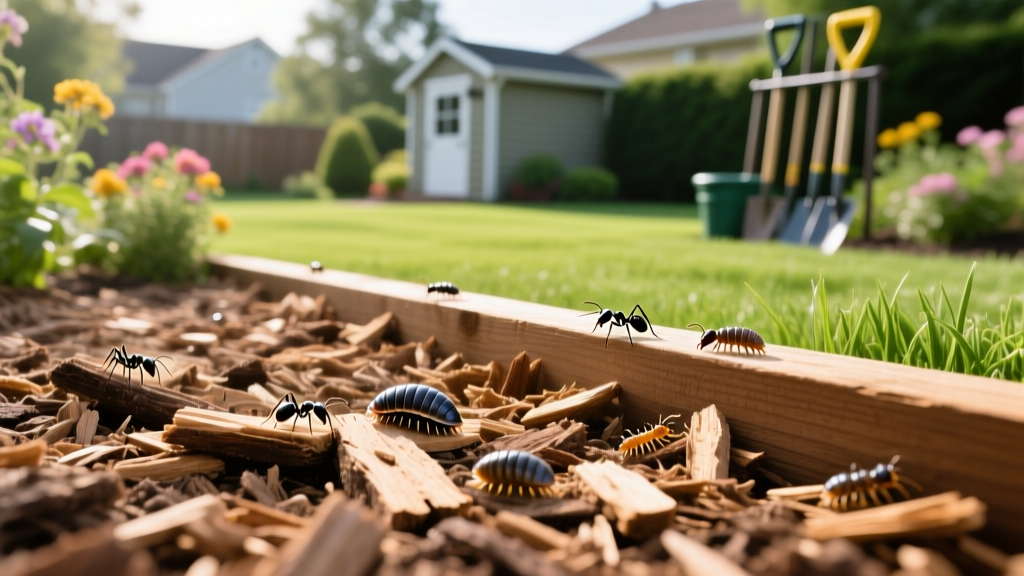
Does Mulch Attract Insects? The Truth About Wood Chips and Pests
The Direct Answer: Does Mulch Attract Insects?
The short answer is yes, but not for the reason most homeowners think. Mulch itself is rarely a food source for structural pests. Instead, does mulch attract insects because it creates an ideal microclimate. Wood chips retain soil moisture, buffer extreme temperature fluctuations, and provide dark, undisturbed shelter. When you ask if mulch brings pests to your yard, you are really asking if your mulching practices are creating a five-star resort for detritivores, predators, and wood-destroying organisms.
According to Penn State Extension, proper mulching depth and placement are the primary variables in pest management. A 2-inch layer of organic mulch suppresses weeds and retains moisture without creating the deep, saturated environments that drive insects toward your home’s foundation. When mulch is piled 6 inches high against siding (a practice known as "volcano mulching"), it bridges the gap between the soil and your home, inviting carpenter ants and subterranean termites to bypass your chemical barriers.
The Microclimate Factor: Why Pests Seek Out Mulched Beds
Insects are cold-blooded and highly susceptible to desiccation (drying out). Bare soil in direct sunlight can reach 110°F in mid-July, killing soft-bodied insects. Mulch insulates the soil surface, keeping the top 2 inches at a stable 75°F to 80°F while trapping evaporating moisture. This specific combination of high humidity and moderate temperatures triggers foraging behavior in pests like earwigs, sowbugs, and centipedes.
⚠️ The Termite Myth vs. Reality: A persistent myth claims that termite-resistant mulch will starve out a colony. Subterranean termites (Reticulitermes flavipes) do not primarily eat landscape mulch; they use it as a moisture-retaining canopy to build mud tubes safely toward your home's cellulose framing. The mulch isn't the meal; it's the highway.
Mulch Material Breakdown: What Attracts and What Repels
Not all wood chips are created equal. The botanical source of the mulch dictates its natural resistance to decay and its chemical profile. Below is a data-driven comparison of common landscape mulches and their pest attraction vectors.
| Mulch Type | Insect Attraction | Repellent Properties | Avg. Cost (per 2 cu. ft.) |
|---|---|---|---|
| Western Red Cedar | Low | High (Thujone oils) | $5.00 - $7.00 |
| Bald Cypress | Low-Medium | Medium (Slow decay rate) | $4.50 - $6.00 |
| Pine Bark Nuggets | Medium | Low (Acidic, but decays) | $4.00 - $5.50 |
| Shredded Hardwood | High | None (Rapid decay) | $3.00 - $4.50 |
| Recycled Rubber | Very Low | N/A (Inorganic) | $6.00 - $9.00 |
While rubber mulch eliminates insect harborage entirely, it can leach heavy metals and VOCs into garden beds over time, making it unsuitable for edible landscapes or sensitive ornamental root zones.
The "18-Inch Buffer" Protocol for Foundation Protection
If you are dealing with structural pests like carpenter ants or termites, your mulch placement is just as critical as the material you choose. University of Kentucky Entomology recommends maintaining a strict dry zone around your home's perimeter. Follow this exact protocol to break the pest bridge:
- Clear the Perimeter: Remove all existing mulch, leaf litter, and soil buildup within 18 inches of your foundation wall.
- Establish the Gap: Leave 18 inches of bare soil, or better yet, install a 2-inch layer of crushed gravel (3/4-inch angular stone). Gravel drains rapidly and offers zero moisture retention, creating a hostile desert for moisture-seeking pests.
- Grade the Soil: Ensure the soil in the 18-inch gap slopes away from the foundation at a 5% grade (a 6-inch drop over 10 feet) to prevent water pooling.
- Apply Mulch Outside the Zone: Lay your chosen organic mulch starting at the 18-inch mark, extending outward into the yard.
- Cap the Depth: Never exceed 3 inches of mulch depth in the outer beds. Use a landscaping rake to level it.
Identifying the "Mulch Bugs": Friends vs. Foes
Finding insects in your mulch does not automatically require a chemical strike. Many mulch-dwelling arthropods are vital decomposers that break down organic matter into plant-available nitrogen.
The Beneficial Decomposers (Leave Them Alone)
- Sowbugs and Pillbugs (Roly-Polys): Crustaceans that consume decaying wood and leaf litter. They cannot damage living plants or structural wood. If they migrate indoors, it is purely an accidental moisture-seeking behavior.
- Millipedes: Detritivores that process high-cellulose mulch. They are harmless to humans and pets, though they can become a nuisance if they migrate en masse during heavy autumn rains.
- Ground Beetles: Fierce nocturnal predators that hide under wood chips during the day and hunt destructive soft-bodied pests (like slugs and cutworms) at night.
The Destructive Invaders (Take Action)
- Carpenter Ants (Camponotus pennsylvanicus): They do not eat the mulch, but they nest in the moist, decaying hardwood chips before expanding their satellite colonies into the water-damaged wood of your home’s sill plates.
- Earwigs: While they eat decaying matter, high populations will migrate to your garden beds and chew irregular holes in the leaves of dahlias, marigolds, and young vegetable seedlings.
- Subterranean Termites: As noted, they use mulch as a moisture canopy. Finding discarded termite wings or mud tubes on the surface of your mulch bed is an immediate red flag requiring professional inspection.
The Thujone Decay Timeline: When Cedar Stops Working
Many homeowners buy Western Red Cedar mulch specifically for its insect-repelling qualities, but they fail to account for chemical degradation. Cedar repels insects primarily through thujone, a volatile organic compound. According to NC State Extension, these aromatic oils are highly water-soluble and evaporate rapidly when exposed to UV light and rain.
The Information Gain: Freshly milled cedar mulch will repel ants and roaches for approximately 12 to 18 months. By year two, the thujone has largely dissipated, and the cedar begins to decay just like hardwood, eventually attracting the very pests it once repelled. To maintain a pest-resistant perimeter, you must top-dress cedar mulch beds with 1 inch of fresh material every spring, or plan for a complete mulch replacement every 24 months.
Targeted Treatments for Mulch-Borne Infestations
If an inspection reveals a severe infestation of destructive pests within your landscape beds, targeted interventions are required before the pests migrate indoors.
- For Crawling Insects (Earwigs, Ants): Apply food-grade Diatomaceous Earth (DE) in a thin, continuous line along the outer edge of the mulch bed, just before the 18-inch gravel buffer. DE destroys the waxy exoskeleton of insects. Note: DE must be reapplied after heavy rain, as it loses efficacy when wet.
- For Soil-Dwelling Pests (Grubs, Fungus Gnats): Drench the mulched beds with beneficial nematodes (Steinernema carpocapsae). Apply at a rate of 1 million nematodes per 1,000 square feet in the early evening when soil temperatures are between 60°F and 85°F.
- For Severe Perimeter Ant/Ant Nest Control: Use a liquid bifenthrin perimeter spray (0.1% concentration). Spray the foundation wall up to 1 foot high and the adjacent gravel buffer. Do not spray bifenthrin directly onto the mulch, as it will bind to the organic matter, rendering it useless and potentially harming the beneficial decomposer populations in the soil below.
Pro Tip for Irrigation: Overhead sprinklers keep mulch perpetually wet, driving pests upward and indoors. Switch mulched landscape beds to drip irrigation lines buried 1 inch under the wood chips. This delivers water directly to plant roots while keeping the surface mulch dry and inhospitable to surface-foraging pests.

