
Pest Control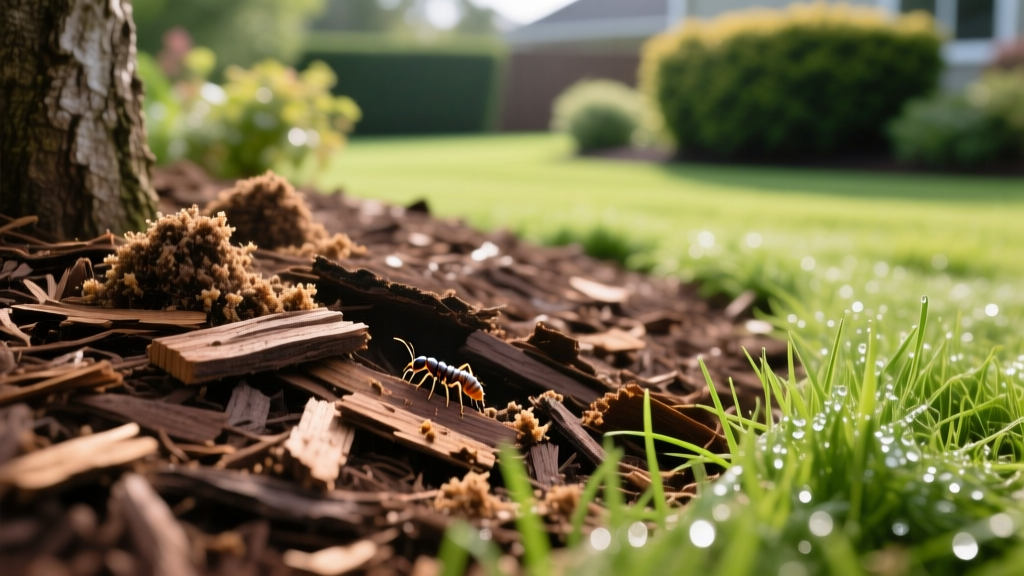
Does Mulch Attract Termites? The Truth About Wood Chips and Pests
The Short Answer: Attraction vs. Harboring
The Verdict: Mulch does not chemically "attract" termites from a distance. Subterranean termites forage blindly through soil in a random, star-like pattern. However, mulch creates the ideal harboring environment by retaining moisture and moderating soil temperature. This allows existing, undetected termite colonies to thrive, multiply, and safely bridge the gap to your home's wooden structure without drying out.
The relationship between landscaping wood chips and structural pests is widely misunderstood. Homeowners often assume that laying down fresh pine bark will act as a beacon, drawing termites from neighboring properties. Entomological science tells a different story. The real danger of mulch is not its ability to lure pests, but its capacity to sustain them once they randomly encounter your foundation.
The Science of Subterranean Termite Foraging
To understand why mulch is a risk factor, you must understand how subterranean termites (Reticulitermes spp. and Coptotermes spp.) operate. According to research from the University of Kentucky Department of Entomology, worker termites are entirely blind. They do not possess the olfactory sensors required to smell a wood chip bed from fifty feet away. Instead, they tunnel randomly through the top few inches of soil, searching for cellulose.
When a foraging tunnel intersects with a layer of wood mulch, two critical things happen:
- Moisture Retention: Termites are highly susceptible to desiccation (drying out). They require a constant moisture level to survive. A 3-inch layer of mulch traps ground moisture, creating a humid microclimate that allows termites to forage above ground level without building protective mud tubes.
- Temperature Moderation: Mulch insulates the soil, keeping it warmer in the winter and cooler in the summer. This extends the active foraging season of the colony, allowing them to feed on your landscaping and eventually your home's sill plates for more months out of the year.
Therefore, mulch does not invite termites to your property; it simply rolls out the red carpet and provides a safe, humid highway for the ones that are already there.
Mulch Types Ranked by Termite Vulnerability
Not all mulch is created equal. The palatability of mulch to termites depends heavily on its cellulose content, the presence of natural deterrent resins, and its physical density. Below is a structural comparison of common landscaping materials and their actual risk profiles.
| Mulch Material | Termite Palatability | Moisture Retention | Best Use Case |
|---|---|---|---|
| Pine Bark / Wood Chips | High | High | Distant garden beds only |
| Cypress Sapwood | High | Moderate | Avoid near foundations |
| Cypress Heartwood | Low | Moderate | Near foundations (if verified) |
| Melaleuca (Australian Pine) | Very Low | Low | Excellent foundation buffer |
| Cedar Mulch | Low (initially) | Moderate | Moderate risk zones |
| Rubber Mulch | None (Non-cellulose) | Low (but traps subsoil heat) | Play areas, not plant beds |
| Gravel / Crushed Stone | None | Very Low | Direct foundation perimeter |
The "Termite-Resistant" Cypress Myth
One of the most expensive mistakes homeowners make is purchasing generic "cypress mulch" under the assumption that it repels termites. Termite resistance in cypress trees comes exclusively from the heartwood, which contains specific resins and oils that are toxic or unpalatable to insects. The outer sapwood, however, is highly nutritious to termites.
Because cypress heartwood is highly valued for furniture, cabinetry, and premium lumber, commercial mulch producers often grind up the leftover sapwood, branches, and stumps. Consequently, a bag labeled "100% Cypress Mulch" may actually be a termite buffet. If you want the protective benefits of cypress, you must source premium, kiln-dried cypress heartwood, which is significantly more expensive and harder to find than standard bagged mulch.
The 6-Inch Rule: Proper Application Techniques
If you choose to use organic wood mulch, strict adherence to spatial boundaries is your primary defense. The University of California Integrated Pest Management (UC IPM) program emphasizes maintaining a visual inspection zone around structures. Follow this exact protocol to mitigate risk:
- Establish the Exclusion Zone: Measure exactly 6 inches outward from your home's foundation, siding, or brick veneer. This strip must remain completely bare or be covered only in inorganic gravel.
- Control the Depth: In the remaining landscaping beds, never apply mulch thicker than 3 inches. Deeper piles hold excessive moisture, promoting fungal growth and creating an ideal subterranean termite nursery.
- Keep it Off the Siding: Ensure no mulch touches wooden siding, stucco weep screeds, or door frames. Termites can use a single piece of bark resting against the wood as a hidden bridge into your walls, bypassing soil-based chemical treatments.
- Aerate Annually: Rake and turn your mulch beds every spring. This breaks up compacted layers, disrupts early-stage mud tubes, and allows the underlying soil to dry out temporarily, discouraging colony establishment.
Warning: If your home is protected by a liquid termiticide soil barrier (such as Termidor or Altriset), piling mulch against the foundation can "bridge" the chemical trench. Termites will simply travel through the moist mulch above the treated soil layer, rendering your expensive pest control treatment entirely useless.
Signs You Have a Mulch-Induced Termite Problem
Because mulch hides the soil, it can obscure the early warning signs of a subterranean termite invasion. When inspecting your mulched beds, look for these specific indicators:
- Exploratory Mud Tubes: Thin, vein-like structures made of soil and saliva running across the surface of the mulch or up the foundation wall. These are roughly the width of a pencil.
- Frass (Kick-out Holes): While more common with drywood termites, some species push out small, granular fecal pellets that can accumulate on top of dark mulch, resembling fine coffee grounds.
- Hollow-Sounding Wood: Tap the wooden borders of your landscaping beds or the base of your fence posts with a screwdriver handle. A dull, papery thud indicates internal galleries have been hollowed out.
- Discarded Swarmers' Wings: In the spring, reproductive termites swarm. Finding piles of translucent, equal-length wings resting on top of your mulch is a definitive sign of an active, mature colony nearby.
Frequently Asked Questions
Does cedar mulch repel termites?
Cedar contains natural oils (thujone) that can deter termites initially. However, as the mulch ages, weathers, and begins to decompose, these oils dissipate. After one to two years, aged cedar mulch becomes just as palatable to termites as standard pine bark. It is a temporary deterrent, not a permanent solution.
Should I remove old mulch before adding new mulch?
Yes. Removing the bottom layer of decomposed, highly compacted organic matter every two to three years prevents the buildup of a permanently damp, spongy layer that sits directly against the soil. This practice disrupts established moisture gradients that termites rely on.
Are termite bait stations effective in mulched beds?
Termite bait stations (like the Sentricon System) are highly effective and are often installed directly within mulched landscaping beds. The mulch actually helps keep the soil around the bait station moist, which encourages termite foraging. However, the stations must be monitored by a professional; they do not eliminate the need for the 6-inch bare soil perimeter against the foundation.

