
Pest Control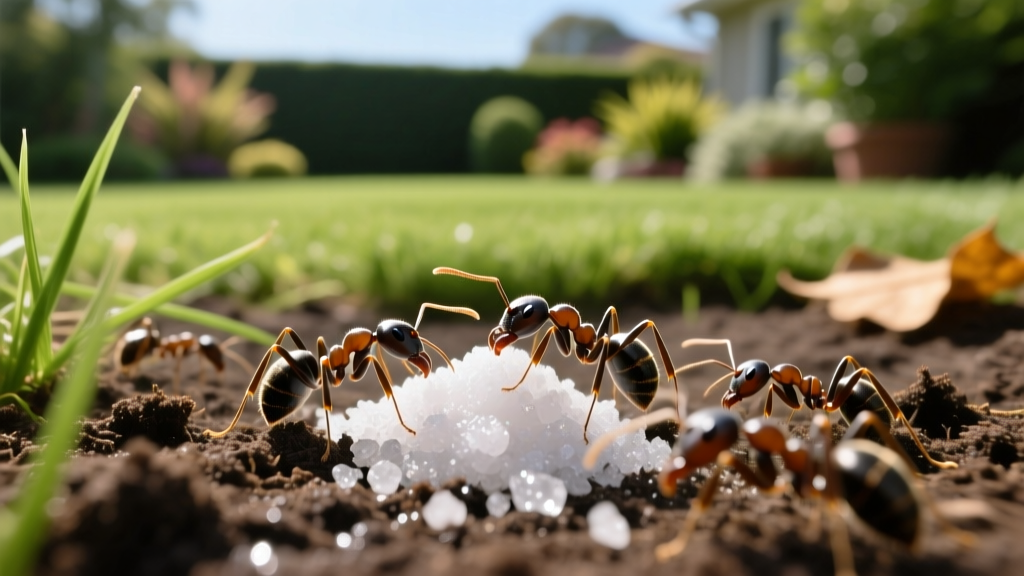
Does Salt Kill Ants? The Science Behind Sodium and Ant Control
The internet is saturated with DIY pest control hacks, and one of the most persistent myths in home gardening is the idea that common household salt can eradicate ant colonies. Homeowners dealing with pavement ants, odorous house ants, or carpenter ants often pour lines of sodium chloride across driveways, patios, and entryways, expecting a lethal barrier. However, entomological science and field testing tell a different story. The short answer is no: salt does not kill ants in any practical, reliable, or efficient manner. While high concentrations of salt can act as a mild, temporary deterrent due to its hygroscopic properties, it lacks the biological mechanism required to penetrate an ant's exoskeleton or disrupt their colony structure.
This guide breaks down the exact biology of why sodium fails as an insecticide, the severe damage it causes to your lawn and garden soil, and the specific, science-backed alternatives you should use instead to achieve total colony elimination.
The Biology of Ants and Sodium Chloride
To understand why table salt (NaCl) fails to kill ants, we must examine the anatomy of the ant's outer shell. Ants are protected by an exoskeleton made of chitin, which is coated in a microscopic layer of lipids and waxes known as the epicuticle. This waxy layer serves two primary functions: it protects the insect from environmental pathogens and, most importantly, prevents internal water loss (desiccation).
Why Salt Cannot Penetrate the Exoskeleton
Many DIY guides falsely claim that salt kills ants by absorbing the moisture from their bodies, causing them to dry out and die. This confuses the chemical properties of salt with the physical properties of desiccant dusts like Diatomaceous Earth (DE).
- Diatomaceous Earth: Composed of fossilized algae, DE has microscopic, razor-sharp edges that physically scratch and abrade the ant's waxy epicuticle. Once the lipid layer is compromised, the ant rapidly loses moisture and dies of desiccation.
- Table Salt: Sodium chloride crystals are smooth and cubic at a microscopic level. They cannot abrade or scratch the waxy cuticle. While salt is hygroscopic (it attracts water), it cannot pull moisture through an intact, healthy exoskeleton. An ant walking across a pile of salt will simply groom the crystals off its body using its tarsi and mouthparts without suffering any lethal dehydration.
⚠️ Warning: The Hidden Cost of Salt on Turfgrass
Applying salt to your lawn or garden beds to deter ants will cause catastrophic damage to your soil biology and turf. According to the University of Minnesota Extension, excess sodium in soil causes osmotic stress. Salt lowers the soil's water potential, making it impossible for grass roots to absorb moisture, effectively inducing 'physiological drought.' Even salt-tolerant grasses like Bermudagrass will suffer severe root necrosis and yellowing when exposed to the volume of NaCl required to create a continuous ant barrier.
Comparing Household Powders: Salt vs. The Alternatives
Homeowners frequently conflate various white, powdery household substances when attempting DIY pest control. Below is a direct comparison of how these common compounds interact with ant biology and colony structures.
| Substance | Lethal to Ants? | Mechanism of Action | Lawn Safety |
|---|---|---|---|
| Table Salt (NaCl) | No | None (smooth crystals cannot abrade cuticle) | Highly Toxic (Causes soil salinity) |
| Epsom Salt (Magnesium Sulfate) | No | None (often acts as a mild fertilizer) | Safe in moderation |
| Baking Soda (Sodium Bicarbonate) | Rarely | Alters internal pH if ingested, but ants avoid eating it plain | Safe (can raise soil pH slightly) |
| Diatomaceous Earth (DE) | Yes (Contact) | Physical abrasion of the waxy epicuticle causing desiccation | Safe |
| Borax (Sodium Tetraborate) | Yes (Ingestion) | Disrupts digestive system and metabolism; transferred to queen | Moderate (Toxic to plants in high doses) |
Proven, Science-Backed Alternatives for Ant Eradication
If salt is ineffective and dangerous to your landscaping, what should you use? According to the University of California Integrated Pest Management (UC IPM) program, successful ant control requires targeting the colony's reproductive center—the queen—rather than just killing the visible foraging workers. Here are the two most effective methods for residential ant control.
Method 1: Slow-Acting Borax Liquid Baits (For Sweet-Eating Ants)
Borax (sodium borate) is a naturally occurring mineral that is highly lethal to ants when ingested, yet it acts slowly enough that foraging workers can carry it back to the nest and share it with the queen and larvae via a process called trophallaxis. Fast-acting contact sprays fail because they kill the foragers before they can alert the colony, causing the nest to simply bud and create new queens.
🧪 Exact Borax Bait Recipe
- Dissolve 1 cup of granulated white sugar into 1 cup of warm water.
- Stir in exactly 1 teaspoon of 20 Mule Team Borax (do not exceed this ratio; if the bait is too strong, it will kill the foragers before they reach the nest).
- Soak cotton balls or small pieces of sponge in the solution.
- Place the soaked materials in shallow plastic bottle caps or commercial bait stations directly on the ant trail.
- Timeline: Expect a massive increase in ant activity for the first 24 hours as they swarm the bait, followed by total colony collapse within 48 to 72 hours.
Method 2: Non-Repellent Liquid Perimeter Barriers (For Structural Invaders)
For aggressive species like carpenter ants or massive Argentine ant supercolonies that are invading the home's structure, liquid baits may not be enough. Professional pest controllers rely on non-repellent liquid insecticides containing Fipronil (0.06% concentration), such as Taurus SC. Unlike repellent sprays (like Raid or bifenthrin) that ants can detect and avoid, Fipronil is undetectable to their sensory organs.
The Transfer Effect: Ants walk through the treated zone, pick up the microscopic Fipronil particles on their tarsi and bodies, and return to the nest. Through grooming and physical contact, the active ingredient spreads exponentially through the colony, resulting in a secondary kill rate that wipes out the queen.
Application Specs: Dig a trench 6 inches deep and 6 inches wide directly against the home's foundation. Apply 4 gallons of the diluted Fipronil solution per 10 linear feet of trench. Backfill the soil. This single application provides 6 to 12 months of continuous ant protection.
Decision Framework: Which Treatment Should You Choose?
Use this diagnostic flowchart to determine the exact treatment protocol based on your specific ant behavior and infestation type.
- Scenario A: You see a steady trail of small, sweet-seeking ants (Odorous House Ants, Argentine Ants) on your kitchen counters or patio.
➔ Action: Deploy Borax Sugar Liquid Baits. Do not spray them with contact killers, as this will cause colony budding. - Scenario B: You see large, black ants (Carpenter Ants) emerging from baseboards, window sills, or wood piles, often with frass (sawdust-like debris).
➔ Action: Deploy Fipronil perimeter trenching outdoors and use protein-based gel baits (like Advance Carpenter Ant Bait) indoors. Locate and treat the satellite nest directly if visible. - Scenario C: Ants are nesting in the cracks of your driveway or paver stones (Pavement Ants).
➔ Action: Apply Diatomaceous Earth (food grade) directly into the cracks using a bulb duster, or use a non-repellent foaming insecticide (like Alpine WSG) injected into the crevices.
Frequently Asked Questions
Does Epsom salt kill ants?
No. Epsom salt is magnesium sulfate. It lacks the abrasive qualities needed to damage an ant's exoskeleton and is not toxic when ingested in the small amounts an ant might encounter. In fact, Epsom salt is frequently used in gardening as a magnesium supplement to correct yellowing leaves in tomatoes and roses.
Will pouring boiling saltwater into an ant mound work?
The heat of the boiling water will kill the ants it directly contacts, but the salt is entirely irrelevant to the kill mechanism. Furthermore, pouring boiling saltwater onto your lawn will sterilize the soil, killing the grass roots and beneficial soil microbes, leaving you with a dead patch of dirt that will take months to remediate via gypsum applications and heavy leaching.
Can I mix salt with vinegar to make a stronger ant spray?
While white vinegar (acetic acid) disrupts the pheromone trails ants use to navigate, adding salt to the mixture does not increase its lethality. Vinegar is strictly a contact killer and trail disruptor; it has zero residual effect and will not eliminate the hidden queen or the brood deep within the nest.
Summary Takeaway
Skip the salt shaker. Sodium chloride is biologically incapable of penetrating an ant's waxy exoskeleton and will only succeed in destroying your lawn's soil structure through osmotic stress. For rapid, colony-level eradication, rely on slow-acting Borax baits for interior trails and non-repellent Fipronil barriers for exterior structural defense.

