
Pest Control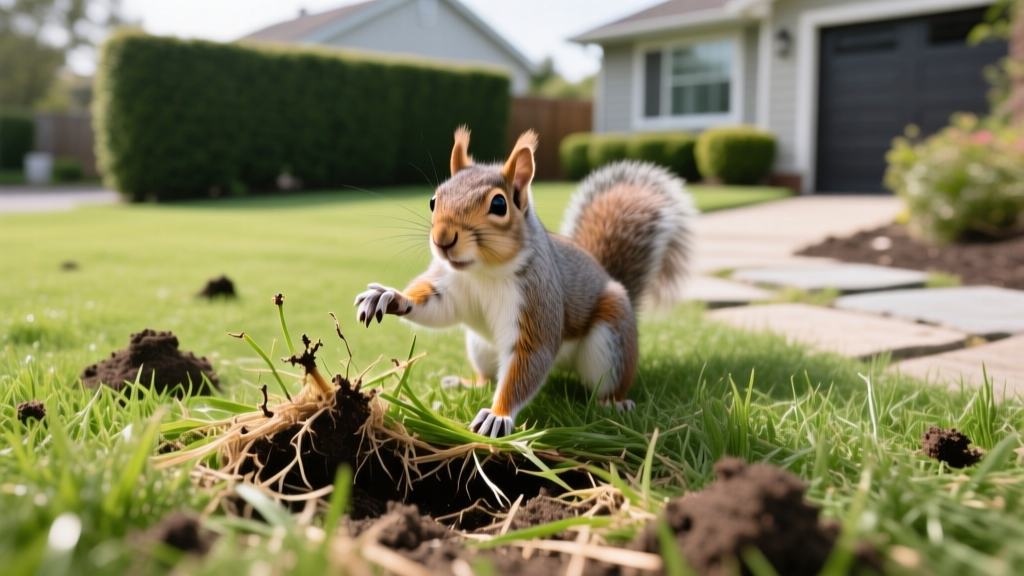
Does a Squirrel Eat Grass? Identifying Lawn Damage & Fixes
The Short Answer: Do Squirrels Actually Eat Grass Blades?
When frustrated homeowners ask, "does a squirrel eat grass?", the short answer is no. Squirrels do not graze on mature turfgrass blades like rabbits or deer do. Their digestive systems are not optimized for breaking down the high cellulose content found in mature Kentucky bluegrass, bermudagrass, or tall fescue. However, if you are finding uprooted turf, shallow craters, and scattered soil across your yard, squirrels are likely the culprits.
Rather than consuming the grass itself, tree squirrels (such as the Eastern Gray Squirrel or Fox Squirrel) interact with your lawn for three primary reasons: caching (burying nuts and acorns for winter), retrieving previously buried food, and foraging for protein-rich soil grubs. They will also occasionally nip off newly germinated grass shoots or consume grass seed directly from the soil surface before it takes root, which mimics the appearance of grazing damage.
⚠️ Pest Control Warning: Before applying lethal traps or harsh chemical repellents, confirm the pest. Misidentifying squirrel digging as grub damage can lead to unnecessary pesticide applications. Always verify the presence of white, C-shaped grubs by performing a 1-square-foot sod peel test before treating for insects.
Why Squirrels Dig Up Your Lawn (The Real Culprits)
Understanding the motivation behind the damage is the first step in effective pest management. According to the University of Minnesota Extension, tree squirrels are scatter-hoarders. A single squirrel can bury up to 10,000 nuts per season, and your soft, aerated lawn provides the perfect medium for digging. Furthermore, if your lawn has an active population of Japanese beetle or June bug grubs, squirrels will act as opportunistic predators, digging through the thatch layer to reach the larvae beneath.
Squirrel Lawn Damage vs. Other Pest Damage
Accurate identification prevents wasted time and money. Use this diagnostic matrix to determine exactly what is tearing up your turf.
| Pest | Hole Dimensions | Soil Displacement | Pattern & Timing |
|---|---|---|---|
| Tree Squirrel | 1 to 2 inches wide; 1 to 3 inches deep | Small mound of loose dirt beside a clean, round hole | Scattered randomly; peaks in autumn (burying) and early spring (retrieving) |
| Skunk | 3 to 4 inches wide; conical shape | Deeper excavation; often smells of musk | Clustered in grub-heavy zones; occurs almost exclusively at night |
| Raccoon | Large, irregular patches | Entire flaps of sod rolled back like a carpet | Massive destruction in a single night; searching for grubs or earthworms |
| Birds (Crows/Starlings) | Tiny, shallow peck marks (less than 0.5 inches) | No significant dirt mounding; grass blades pulled up | Grid-like pecking patterns; highly visible during early morning hours |
Identifying Squirrel Activity: 4 Key Field Signs
If the holes match the squirrel profile above, look for these secondary indicators to confirm their presence before deploying deterrents:
- Half-Eaten Acorns or Nuts: Squirrels often discard the tops of acorns or hickory nuts near their digging sites. Look for jagged, chewed nut shells resting on the grass.
- Bird Feeder Debris: Squirrels are notorious for raiding bird feeders and dropping hulls. If the digging is concentrated in a 10-foot radius beneath a feeder, squirrels are likely searching for dropped sunflower seeds.
- Runways in Tall Grass: In overgrown areas or near fence lines, squirrels create 2-inch wide packed-dirt runways. These are distinct from vole runways, which are usually hidden beneath the thatch or snow.
- Visual Confirmation of Caching: Watch for squirrels performing a "false bury"—a deceptive behavior where they dig a hole, pretend to drop a nut, and cover it to fool watching predators, before moving to the actual burial site.
Proven Strategies to Stop Squirrels from Destroying Turf
Once you have confirmed that squirrels are the issue, implement these targeted, science-backed pest control strategies. According to the UC Agriculture and Natural Resources Integrated Pest Management program, exclusion and habitat modification are vastly superior to lethal control for tree squirrels.
1. Eradicate the Grub Food Source
If squirrels are digging for grubs, removing the grubs eliminates the attractant. Perform a sod peel test: cut a 1-foot by 1-foot square of turf and roll it back. If you count more than 5 to 10 white, C-shaped grubs, treatment is necessary.
- Preventative Chemical Control: Apply Chlorantraniliprole (commonly sold as Acelepryn or Scotts GrubEx) in late May or early June. This targets Japanese beetle eggs before they hatch and is highly safe for earthworms and pollinators.
- Organic Control: Apply Milky Spore (Bacillus popilliae) or beneficial nematodes (Heterorhabditis bacteriophora) in late summer. Note that milky spore takes 2 to 3 years to fully establish in the soil profile.
2. Modify Bird Feeder Attractions
Standard black oil sunflower seeds and corn are squirrel magnets. Switch your bird feeders to seeds that squirrels find unpalatable due to their bitter taste or difficult hulls.
- Safflower Seed: Cardinals and chickadees love it; squirrels hate the hard, bitter shell.
- Nyjer (Thistle) Seed: Ideal for finches. The tiny seed size and bitter taste make it entirely unappealing to rodents.
- Install a Slinky Baffle: Mount a 6-inch wide metal stovepipe baffle at least 5 feet off the ground on the feeder pole to physically block climbing access.
3. Deploy Capsaicin-Based Taste Repellents
For localized digging (such as in newly seeded flower beds or specific lawn patches), use a capsaicin-based repellent. Look for sprays containing a minimum of 0.05% capsaicin concentration (the active chemical in hot peppers). Apply it directly to the soil surface and the base of nearby plants. Reapply every 14 days or immediately after heavy rainfall. Note: Wear a mask and goggles when spraying concentrated capsaicin to avoid respiratory irritation.
Repairing Squirrel-Dug Lawns: A Step-by-Step Protocol
Ignoring squirrel holes leads to uneven mowing, scalped turf, and compacted soil rings. Follow this exact repair sequence for seamless turf restoration:
- Clear the Debris: Remove any buried nuts, acorns, or discarded shells from the hole to prevent future rot or fungal issues.
- Mix the Fill: Do not use pure sand or heavy clay. Mix 2 parts screened topsoil to 1 part fine compost. This ensures proper drainage while providing immediate nutrients to the surrounding grassroots.
- Fill and Tamp: Fill the hole until the soil mixture is level with the surrounding thatch layer. Lightly tamp it down with your boot to eliminate air pockets, but avoid over-compacting.
- Overseed: Sprinkle a pinch of grass seed that perfectly matches your existing turf (e.g., turf-type tall fescue for cool-season lawns, or bermudagrass seed for warm-season zones). Press the seed into the topsoil.
- Protect the Patch: Lay a 4-inch square of biodegradable jute netting or a small piece of 1/2-inch galvanized hardware cloth over the hole, pinning it with landscape staples. This physically blocks the squirrel from re-digging the exact same spot while the seed germinates over the next 7 to 14 days.
Frequently Asked Questions
Will mothballs keep squirrels out of my lawn?
No. Using mothballs (naphthalene or paradichlorobenzene) outdoors is illegal in most jurisdictions, highly toxic to soil biology, and ineffective against squirrels. The active gases dissipate rapidly in open-air environments and leach harmful chemicals into your groundwater.
Do ultrasonic pest repellers work for lawn squirrels?
Field tests consistently show that ultrasonic devices fail to deter tree squirrels. Squirrels quickly habituate to the high-frequency sounds, especially when driven by the biological imperative to bury food or hunt for protein-rich grubs. Physical exclusion and habitat modification remain the only reliable methods.
Does a squirrel eat grass seed?
Yes. While they ignore mature grass blades, squirrels will actively consume raw grass seed scattered on the soil surface before it germinates. If you are overseeding your lawn in the fall, you must cover the seed with a thin layer of straw or compost to hide it from foraging rodents.

